
The Bannerman

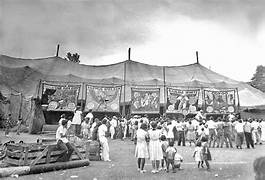
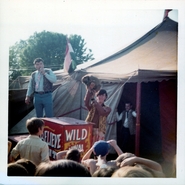
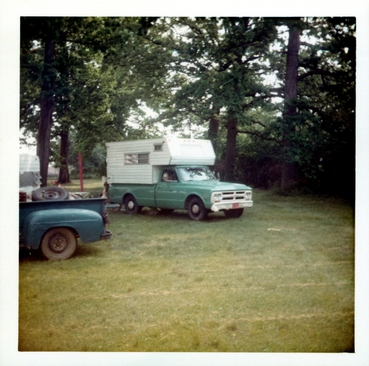
Advertising in any proximity that the locals gather is a strategy many businesses utilize. A sense of community dedication associated with civic groups is created with these gestures. Hand painted paper signs with the names and ads of these local merchants hanging in the big top is one way of making extra money around the traveling circus. Becoming the banner salesman on the Royal Bros Circus season of one day stands in 1973 was an enterprise that required my sister’s participation to fit into our routine. Our custom was already up early in the morning – Paula would wake me and crawl into the cab of the pickup to resume her sleep while I drove to the next town. When we arrived at the next town, I would jump out of the truck downtown with my steno pad and begin to visit the merchants in all the stores. Paula would then drive the pickup truck with camper pulling the trailer with the calliope and drums, to the edge of the show grounds where the big top was being set up. There she would recruit the canvas boss to drive the rig into position on the lot near the “back door” of the tent.
DAVE 3 2

      At the beginning of the season, John Frazier had given me a spiel to use and sent me downtown to do my best. I simply found the decision maker in each store and rattled off my memorized pitch, wrote down the particulars of each sign and announcement and collected eighteen dollars for each one. Downtown, my role took me in and out of each store and business, to give the spiel for buying a “banner ad” that would hang in the big top, and the accompanying announcement that would give merchants presence during the afternoon and evening presentation of the circus. I was learning presentation skills plus how to get around the employees in charge of intercepting disruptions and deflecting them. I learned to not disclose my purpose until I got around to talk to the boss.        

As the circus banner salesman in a new town every morning, I had the opportunity to meet an endless stream of interesting people. In Perth, at a candy store, I entered an old time glass store front, going through a heavy wooden door that triggered a bell that rang each time it was opened.        

After listening to my memorized spiel, the elderly woman who otherwise beamed in response to my presence responded with “I’m not going to buy one of your banners.”        

After asking me about my role with the circus, I was then invited to listen as she told me about herself and sat down at the piano. Prior to World War I she had been a piano player for the silent films shown in the local theater. Emotion, drama, excitement, danger and elation were communicated through the flavor of the music created by a live piano player in these theatres. As she played, these examples of how music enhanced this genre of entertainment, my mind was transported to a time when this was state of the art. During the war, she became a bus driver for the war effort and when the war was over, “talkies” had arrived on the scene, so she had to pursue another vocation. This was just one of the many encounters with interesting people that imprinted my heart.       

While I was in town selling banners, Paula had one duty during set up, and that was to take two pullies with long loops of rope and snap them into the lace lines of the big top while it was going up. This facilitated hanging the paper signs later, and was a duty that forced her out of her shell to interact with the crew during set up.        

When I got back to the lot with all the orders, I had to scramble to get the rig backed into the tent and the drums set up, while Paula got busy painting signs on large pieces of white paper with a shoe polish applicator and getting them hung in the big top before the show.        

Paula never did become an enthusiastic showman, partly due to her reclusive nature and partly because I had become a hot headed teenager that had never learned to be gracious as we attempted to get all these tasks done together on a daily basis. Perhaps I was following the example of our father’s strict perfectionist manner of wanting everything done just right, and that added to the already frustrating situation of her being in the turbulent outdoor entertainment business. All I could see was the “perfect” way it could have been done.        

Our comfort was at the mercy of the weather and plagued with egoic whims, moods influenced by situation and selfish ambitions of others, which was more of what we had found on the playground of our youth, yet on a grander, rawer scale. The rigors of one day stands, relentless demands from me and the multitude of twists that occurred in this turbulent lifestyle began to wear on her. Something in my sister had been hurt. She could not show enthusiasm. She remained frustrated and became referred to as poor Paula amongst my trooper friends.        

One morning after having a successful series of banner sales, I returned to the lot to begin with the process of setting up and getting ready for the show, but I could not find the rig on the lot anywhere. I asked the canvas boss if he knew anything, and he sent me to see the elephant man.      

When I asked Dick, he said, “The rig is over there” and pointed north of the lot.        

So I began to walk.    

About a mile from the lot, I found my sister completely frustrated, sitting on the ground, with the truck stuck up to the axels in someone’s front yard. Apparently while driving the rig from where she dropped me off downtown and heading for the lot, she missed the entrance. Thinking she could just go around the block, Paula continued down the road and instead found that it went straight for miles with no place to turn around. Exasperated, she pulled up someone’s driveway and attempted to make a big loop in their front yard. But the lawn was soft, and the truck sank up to the axels.       

When I got there, I was not the loving, supportive brother that she needed at that low point in her life. I became a hot head and screamed and yelled at her. I had to hike back to the lot and recruit the help of the elephant to pull the rig out of that situation. As I look back at my behavior of that day, I realize that my response did more to damage my sister, who already had the tendency to shut down and withdraw. This event caused her to retreat even further into the security of isolation. If I had it all to do over again, I would have become comforting, compassionate and lovingly explained to her that we all make mistakes. The damage of that event set the tone for the rest of our lives. My sister never saw an admirable trait in me from that point on. When I did see her years later, warmth and regard was gone.        

Holding a grudge seems to be a sin of our father, who had his front teeth knocked out on a family water ski excursion by his brother (interestingly, who became a dentist). Making amends or entering the procedure of forgiveness, as taught by Jesus, was not exampled in our family in spite of our father being a minister. Resentment persisted becoming depression as part of our father’s experience.    

After an otherwise busy and fun summer season across picturesque Ontario, we had much to relish and savor from this adventure but a contemptuous “not knowing” for both of us, forced self reliance to the front and we grew apart. My sister and I had survived a turbulent childhood exposed to the vast spectrum of behavior coming from others, to prefer a smaller circle of influence. At the end of that season on the circus in Canada, we trucked back to the Quad cities where, after dropping her off, she began her next semester of college. That was her only experience on a circus.        

I headed east to pursue a fall tour on another show, a small circus with a five week tour through Michigan that performed in school gymnasiums. At the end of that turbulent year, I ventured to Indiana, gathered up the new crop of babies at the Palomino farm, picked up the harness commissioned at Shipshewana and headed for Michigan.        

At Hayes farm, I unloaded the “wiener” babies and prepared to gather up the now grown “yearlings.” One colt had died.        

Hayes told me the story of Lewis Bros Circus, a show owned locally that thrived during the thirties and forties that wintered east of Jackson on Fox Road. He had gone out there in the past to snoop around but the owner of the farm wasn’t keen about visitors. Fortunately the farm had changed hands again and Hayes made friends with the new owner. He saw the left over equipment that had sat for several decades but not before many of the rotting wagons had been burned.        

Since he was friendly with the current owner of the farm, during one of my visits to Clarklake, he suggested that we drive up there and look around. In his green station wagon we went to Fox Road. Behind the large white home in a rural part of the county, a sunken driveway lead past a row of tall trees up to the back where two large barns stood. Inside the first one was a low ceiling and a labyrinth of aisles and stalls, obviously where the animals for the show lived during the winter.        

The other barn was a massive, high ceiling structure with sheet metal on the floor where the elephant was housed. Up on the second floor, a large room was where the wardrobe, canvas repair and other preparations took place.      

As Hayes and I explored the place we saw and inverted elephant tub being used as a coal hopper and recognized other pieces of equipment strewn around. The owner told us to take what we wanted. I found a complete set of liberty horse harness and an elephant bracelet.        

Part of the challenge of living on the road involved an inability to collect things. My choice to keep something usually meant that another belonging would have to get discarded, but this find was too good to pass up.        

After some additional artistic projects Hayes had accumulated for me to complete, I headed for Oklahoma with four yearlings to begin the creation of my new palomino liberty act. I was about to begin the experience that would positively imprint my life in many amazing ways.

       This business I had selected in an effort to make an improvement came filled with extremes; from encouraging friends that would become a positive influence for my lifetime, to crooks with agendas that inflict selfish devastation. Instead of receiving wisdom from the lessons learned on the road, our response was more of what we had established as children. To seek on our own, to cherish self reliance and independence for surviving in this turbulent society. The ponies would teach me something vastly different.

Circus Paula

 After three seasons of working hard, making money and accumulating additional skills, my parents became used to my being on a circus. They thought that a summer outdoors would be good for my sister Paula, who, as the only child left at home, had become a recluse. Between her freshman and sophomore years in college, rather than spend another summer at home in her room, our parents encouraged her to join me for a tour on the circus. Once again, we were to be a team, but this was a much more turbulent situation. With three years’ experience accomplishing tasks in a variety of extreme situations with catastrophe being a regular part of the scene, I had developed through it all the necessary drive to continue with a show must go on mentality. Hopefully I could be a good example to my sister.

I rendezvoused late spring after the disaster in Texas at our parent’s home (now in Kansas City) to implement this plan. After making many last-minute preparations, including outfitting the recently purchased cargo trailer with comforts for my sister, we scrambled from Kansas City across the Midwest to get to the opening town in Ontario.

                Equipped with a calliope, we were to be the band on a big top upstart in Canada, a tour the perfect length to fill the summer until my sister went back to college. After driving all night, we arrived at the Port of Entry. The circus owner met us at the Canadian border to satisfy Customs, Immigration and arrange for us to enter the country. We then followed him to the venue. We arrived on a grassy lot at the edge of town to find a raggedy show, hastily assembled from various usable components and local resources. Although I had three seasons experience, upon sizing up this disheveled enterprise, I saw how it could work, but my sister was perhaps horrified.

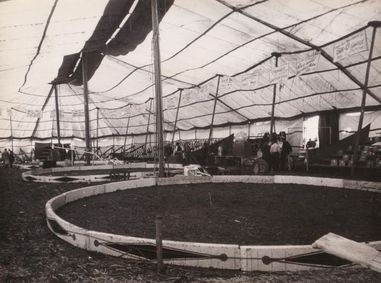
The first few days we hastened to assume tasks on the tour already underway, and our cherry pie in the familiar custom of one day stands. Paula was thrown into this rigorous routine that I was already familiar with. We got up early every morning to drive to the next town, where everything with this tented city was set up again. Then give two shows, tear it down and load it each night. The big top was best described as a patchy sky in the air, held up by poles that were young trees only weeks ago. Seating was an antique variety of jacks and planks. Rigging, banners, ticket boxes, ring curb, platforms, props, trucks, lighting and curtains were all of the same pedigree. She observed my relentless zeal and joined in to contribute what she could. Soon as a team we were making contributions on several fronts of what the entertainment hungry patrons of rural Canada got to see. The summer of one day stands on this raggedy circus required lots of creativity. 

My sister did step forward out of her shell. Prior to show time at the side show, I became David McDavid the Scottish highlander who plays the bagpipes and she became the Punch and Judy puppeteer. An old suitcase with some beat up puppets were meticulously brought back to enjoy a new life with her sewing repairs, wardrobe upgrades and some fresh paint to bring smiles and laughter to the children and the entire crowd in the side show. As the circus puppeteer, she created her own version of the traditional story line that accompanied the presentation. Then, after our acts were over, we raced back to the big top to get ready for the show.

The crowds were already filing into the tent by the time Paula and I returned from the side show to climb on the bandstand to prepare to play the music for the big show. The drums were set up on a platform in front of the calliope that enjoyed a prominent position at the side of the big top, next to the performer’s entrance. During the two shows we gave daily, she played the calliope, pounding out the peppy tunes learned during her adolescent piano lessons and experimented with personal favorites such as show tunes from “Fiddler on the roof” and “Cabaret.” I played the drums, enhancing her music with percussion effects and punctuating each performer’s efforts. In addition, I also announced the show. As each act shared their developed specialty and enthusiasm with the crowd, the tunes and effects created improved the appearance of their labors. 

The circus was populated with four families that had lots of children and all of them performed in the show. The Michael family had toured with me on Fisher Bros Circus and became our haven among these families. Dennis and Lynnie radiated the same level of love and concern for their daughters towards us, and even included us on special family excursions. The Lang troupe proved to be the most fun both with their teeter board act that featured kids flying through the air to arms, shoulders and elevated chairs, and in the backyard during the regular cookouts. The Frazier family was made up of red-headed meanness, our token source of chaos and this carried through with the antics in their trampoline act. Bob Rayborn was our canvas boss and with his wife Virginia had two boys that also added to the relentless fun going on. My sister wasn’t inclined to want to make friends. Instead she maintained her pattern of reluctance around others as a reminder of what we had experienced as children. 

I had found alcohol in the early years of being on the road away from home. Discovering relief from the awful taste of shame, humiliation and the feelings of being less than, after a few beers, I felt like I was able to fly, to rise up, and interact with others in a happy, confident manner and join in and be part of the group. Between and after the shows, there were campfires and bar-b-ques with lots of pot-luck to go around. The parents visited, many also enjoying the stout Canadian brew while the children played and we all got along famously. It was truly a fun season.

During the jump between towns, many times we drove through virgin wilderness. Seeing pristine lakes of crystal clear water proved to be too tempting for me to pass by. After stopping the rig, I dove into the clean water with my bar of soap to scrub up only to discover that the water had probably been completely frozen only months ago. Refreshed and invigorated, the trip would resume towards our next destination in this magical land. 

The tour through Canada introduced us to a new flavor of society, vastly different from the United States. The British form of monarchy was evident in the characteristics of the language of the highways, merchants, businesses, and community infrastructure of government, police and firemen along with subtle architectural differences. By far the most spectacular feature of this land was the natural beauty. The way each community interacted with the terrain years ago to become the thriving pockets of humanity evidenced by distinct manners of co-existing with their surroundings.

A Wrench in the Works

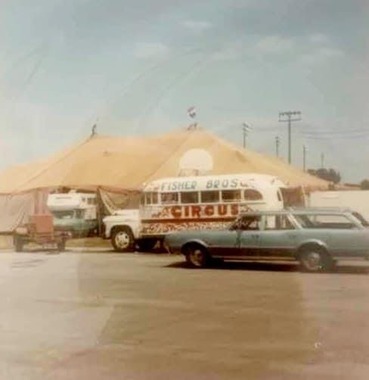
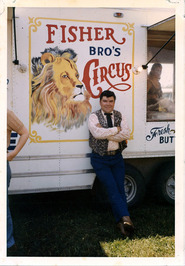
  The Fisher Bros Circus side show during the second season of 1972 was earning a respectable amount of money, with its sheer size and ability to receive a large volume of people fast. The opening spiel by Melvin, the introduction of bally feature King Kong and the announcement that we were going to waive the adult ticket prices for a limited time and admit everyone for child’s admission turned everyone standing in the midway into a customer. Already wearing my change apron, once I had the baboon back in his cage, I returned to the ticket box to sell tickets for a quarter as fast as I could. Because I received a percentage of the till, I was motivated and making good money for an eighteen year old. Once the side show was full and I had the last quarter, I raced to the big top to put on my announcers hat, grab my sticks and prepare to start the performance.

200308311347450.Fisher Bros. Circus Truck

      We typically gave a 6 and an 8 o’clock show back to back, which meant with my duties around both shows, I was working continuously from before and during the big top shows, back to the midway between shows, and until tear down was over each night.        At the end of the season, while I was putting the pieces into motion that would eventually become my liberty act, a calliope to put on the midway and painting the set of banners for the side show banner line, the show found a place to winter in south Texas at the quarters of Clara Stevens, a tough old widow show broad that had elephants in her past and plenty of circus in her story. In the proximity of the showmen of south Texas, Melvin began to have conversations with others, among them, those that wanted the side show. In my absence, I was unaware that dissention was growing for an ambitious teenager making big money that began to erode any future with Fisher Bros Circus for season three.       After a busy winter of finding out what to do, procuring ponies, commissioning harness, a calliope, cargo trailer, fence building and even a stint at marionette puppet presentations, I finally made the jump to south Texas.       Upon arrival in winter quarters, I received disappointment in regard to my third season with Fisher Bros Circus. They let me show up to paint the fleet but as the time arrived to open season three, I was told that I would be on Clark & Walters. This was my first lesson in manipulative show business procedure. The anticipation of implied “how it will be,” prior to arrival, and upon showing up, discovering the deal is different, I was to ascertain as a regular, disturbing part of this business. “Show up and it will be different” seems to be a prevalent motto. My side show banners never got painted.          After the usual series of activities of getting everything ready for the road, and opening in a nearby town, I discovered a new experience in show business. This attempt at a circus season started with drumming, led to getting stranded in Texas, switching to another show, relying on my painting skills for a while, coming up with another strategy and jumping across the country to another show.        The Silverlake family produced some talented individuals, not all of them had business prowess. During the years together as a family, the Clark & Walters Circus enjoyed success. Relational stresses over time caused family members to choose their own direction. Melvin was the first to leave and launch his own show and was fortunate to have his father in law booking the towns. Raymond Duke had a working knowledge of small town America, the place where he knew this small circus would thrive and the ability to make selections with short jumps between them. Melvin’s brother Jimmy left the family to launch Lewis Bros Circus with a partner that soon thereafter morphed into his own venture called Barnes and Daily Circus. This left only Franklin and Joe to help mom and dad run Clark and Walters.        With only remnants of the family left, the Clark & Walters circus attempted the long jump into Texas for the winter but without any capable family members left at the helm, would die a slow death attempting to jump back out of that state in the spring (Texas in the spring is not as entertainment hungry as the fertile towns in the Midwest).

CLARK WALTERS

       Franklin was the remaining family member who assumed being in charge of the show. Although quite talented, his consumption of hard liquor impaired sound business decisions. As the primary decision maker, as the show began playing the towns in Texas in the spring, the wind was always blowing and that seemed to be the excuse Franklin needed to not put up the big top. Instead he put up some seats and some sidewall and all the performers had to attempt to perform in the open in the wind.        Buzz Barton came to visit the lot one day with some small tents to sell. I bought one and even had a conversation with him about playing the drums in a completely different venue; a traveling girl show. Buzz had married the gorgeous daughter of a carnival burlesque show producer and had framed his own show. Morphing from vaudeville entertainment, the girl show had been a traditional part of county fairs for years but was on the way out due to local night clubs in every urban area beginning to offer a glimpse of nude and near nude women. If I would have become his drummer, I would have experienced the last remnant of that facet of show biz.        Day in and day out, the seats and the ring curb went up without a big top and the performers attempted to work in the wind. Aerial acts did not work at all. The show looked pathetic on the lot and the compromised performance was sad. Other dissention began to erode the attitudes of everyone on the show. Impaired judgment caused by alcohol consumption caused a wreck one morning between the elephant semi and the generator truck pulling a performers travel trailer. The huge semi ended up on its side smashing the other trailer underneath. The elephant was unhurt but the female performer’s belongings were scattered and smeared flat alongside the road.        Apparently, the booking agent was just as incompetent as the canvas boss and the show ran out of route several weeks into the season. The experience was pathetic; the show limped along with holes in the route until it died its inevitable death on a muddy lot, halfway up the east coast of Texas. Stranded without a circus, I was to discover the real value of having developed my skills with paint and brushes.
       I found out that Daily Bros Circus was on the road nearby. After finding the show, I got a job painting on their fleet for a few weeks while I scouted out another situation for the season. They didn’t have a problem putting up their big top each day. Although Gopher enjoyed having my beautiful artwork on his show trucks, he didn’t need my talents in the performance. After the fleet was decorated, I drove my camper to the beautiful areas of east Texas – Aransas pass, Victoria and Roll-over pass – to enjoy some quiet time with my dog at the beach before gradually moving north.        The Michael family had spent their previous summer on a circus in Ontario. Pleased, they were returning for another season. Lynnie got word to me that Royal Bros Circus needed a band. I had commissioned a cargo trailer in Elkhart to mount my new calliope in. In an effort to help me out, my dad went to get it with his station wagon and take it to his home in Kansas City, where they had moved the year before. They had a concern about my sister who had withdrawn into simply remaining in her room and thought that an adventure with the circus would do her good. The plan was to have her at the keyboard and me at the drums. We would become the band for Royal Bros Circus in Ontario.        I was learning that switching shows mid stream and changing my strategy midstride was sometimes a necessary part of this business. On my way to Canada with the recently purchased calliope and my sister, I had the opportunity to stop enroute to see the baby ponies in the field at Hayes farm. The boss met us at the Port of Entry and after the immigration and Customs people were satisfied, we followed him to the lot. 

Bob Grubb

Bob Grubb was an old, tall and bald cowboy in faded dungarees with a perpetual chew in his mouth. His lack of teeth gave the act of chewing extra visual facial animation. When I met him, he drove a 42 Ford pickup that was a dull olive color, filled to the brim with an assortment of interesting, useable, valuable items that would make a hardware man envious. I spent a few days with Bob finding out the best procedure to begin putting together a pony act. A friendly enough host, he showed me around town and the fairgrounds, where I saw his horses and where we would keep my livestock, and to a farm where he fed cattle.
       In worn and patched blue jeans, he was quite content to bounce over the bumpy city streets of Hugo at a snails pace in his old truck. Still a teenager, my manner of thinking about driving was that an engine ought to be wrapped up to run at a high RPM, in order to produce efficient torque and not put any strain on the valves from a too rich fuel to air mixture. Evidently, from what I was experiencing, Bob had no intention of driving like I did. Pulling away from a stop sign, he would barely be crawling into that intersection, and already be shifting the column-mounted stick into second gear. Soon thereafter, hardly going 15 miles an hour he would shift into third gear and it was only a three speed. This is how I became familiar with Hugo, Oklahoma, bouncing in the passenger seat of an old pickup truck, looking over a mountain of useful items laying on the dash, putt-putt lugging along in third gear.
       Hugo was a small town, divided into neat little squares, dotted with modest homes amidst the dust. The fairgrounds were only a dozen blocks from downtown and in the center was a barn, typical of the architecture of this area. Rough sawn boards and telephone poles made up the skeleton of the building, corrugated galvanized steel provided the skin. The barn had rows of stalls on three sides and a large area in the center intended for livestock auction sales and an erect inclined seating area for spectators to gather at the front. The central area was the perfect size for a circus ring and several wintering circus acts shared the otherwise unused barn for practice each day. Aerial rigging for trapeze and web performers hung from the rafters. Bob’s time slot for using the ring was first thing each morning. A paint mare he called “Sue” and her colt named “Bingo” were boarded here. With great pride Bob showed me his impeccably groomed animals and the bow he had taught the young horse.
       Bob explained to me as best he could the ideal procedure for putting together a group of animals that, as a matched set, he could then begin training to become a liberty act. I learned the best way to start was with babies, about 18 months old. Animals without any previous training are ideal because their mind is uncluttered and fresh. Males are preferred because mares have cycles that make them emotionally inconsistent. Selecting animals for color, size and temperament from a large group has advantages to increase the likelihood of finding the best suited individuals. Not every animal on the face of the earth is ideal for this business. Harness and accessories, a facility to haul them in, provisions, sustenance, and ongoing maintenance were also topics that Bob covered in detail.
       Armed with this information, I left Hugo and set out on a road trip to begin accumulating. I recalled someone had seen a field full of yellow ponies as the show made its way through Indiana earlier in the year. It would be simple enough to trace the route of the circus through that area of the state and inquire at the local feed stores about such a place. I found the farm, west of Indianapolis, with 22 Palomino mares and several leopard spotted Appaloosa horses. The couple that raised these animals had the aspiration to breed smaller and smaller babies each year. They had five colt (males) babies on the ground that day and I bought all of them for $38.00 each. Before leaving, I requested that they also save all the colts from the next year’s crop for me. I had to rent a trailer, load the six-month-olds inside and head for Michigan. Hayes had announced to me earlier that year that I could raise the ponies on his farm.
       When I arrived in Clarklake, I began the fence building chores needed around the place and got my babies settled in. One of Hayes boyhood friends had a pursued a career in the carnival business and found out about my artistic tendencies. He had asked Hayes to have me make a paper pattern for a large sign he could have his workers use to paint the masthead of the show on a few of his trailers. I designed and perforated the large shield shape with a crown on top and some fancy circus letters complete with serifs and spurs that announced “W.G.Wade Shows.” All this was carefully drawn on heavy butcher paper on the floor of Hayes living room. When the pattern was complete, I perforated it with a pounce wheel so they could transfer the design easily. Hayes also had me paint portraits of his champion birds on fancy boards and design a logo or two to assist him with his advertising specialties business.
       With the threat of snow looming, I took my leave to head to south Texas to a warmer climate.

New Ambitions


The original purpose of a side show was to give the crowds something to do when they arrived on the lot. A hundred years ago the crowd would follow the circus street parade to the show grounds and then stay all day. Other patrons came on special excursion trains that had them on the grounds an hour or two early. Others simply made a day of it. The circus during the golden era represented the place to go the see amazing things that included not only exotic animals, strange people and attractions of all kinds but also modern innovations such as electric lights, refrigerators and automobiles. The traditional side show had advertising banners along one side of the midway with exaggerated hand painted depictions of the attractions inside. 

During the first two seasons of Fisher Brothers Circus we had no banner line in front of the side show. A banner line is a set of these canvas advertising signs set up on the midway.  As the side show manager and the show painter, I was aware of this. I recognized yet another creative opportunity I was ideally suited to fill.

With the expectation of a longer season and a winter in south Texas, the show stayed out much later that year. We traveled across Illinois, Missouri and Arkansas during late summer. September took us across Kentucky, Tennessee and by October we were in Louisiana. At one town the show was set up near the old civil war battlegrounds where old earthen trench works were still intact. By November the show was playing the bayou country of Louisiana headed toward Beaumont, Texas. Then we headed south into the Lone Star state a little each day. 

South of Houston, the show played Navasota where I met a canvas fabricator and commissioned several double-decker banners and an entrance banner, enough to make a 70-foot banner line. I paid a deposit and made plans to return to pick up my order when the season was over. Part of my ambition for the upcoming winter was to paint this set of banners to complete the appearance of the sideshow. 

The objective when placing paint on canvas for show banners is for the end result to be pliable, because it must get folded and packed away daily. By following the proper procedure, the canvas will not get soaked with paint and get stiff and crack when folded. The procedure involves sizing the canvas first. Sizing begins by using a special mixture of starch and water to soak the canvas in prior to painting. The fibers of the fabric are filled with liquid size to ensure that only a portion of the paint permeates each fiber. While painting the banner, the artist keeps the canvas fibers at proper saturation point by periodically wetting the back side of the canvas with a water hose. This keeps the fiber and sizing pliable so the paint adheres more like a dye than a paint. This is an old circus banner painting trick.

78 Side Show bannerline

The strategy of painting a banner is to design the work so that the canvas receives only one coat of paint on any one area rather than the usual system of painting the entire background first. Then place the sign work and imagery on top of the painted background. That way, it creates an accumulation of two or three coats in some places and that makes the banner stiff because the canvas has too much paint on it. This can be avoided by laying the entire design out with chalk on wet canvas first, and then start by cutting in the background around the subject areas and work from background to foreground. 

While the show played the final towns on the route, I began to visualize how accomplishing this monumental task could be done over the winter. But first, I had plans that included a trip to Hugo, Oklahoma to talk to Bob Grubb, buy ponies in Indiana, commission the building of a calliope in Danville, Illinois and visit my parents outside of Chicago.

Billie had a turkey in the oven in the cookhouse ready to serve on Thanksgiving Day at the next town. Our morning jump was hampered by a freezing rain that coated every windshield and made the roads slippery like a sheet of ice. Each circus truck had to stop occasionally to scrape the ice off the windshield. After driving only a few miles that morning, the decision was made to scrap the remaining route to find a place to park the entire fleet for the day. We found a large gravel parking lot and parked the fleet, then set up the cookhouse and had our turkey dinner in this cold area of respite. The next day the roads were clear and since the season was over, as the rest of the fleet began the trip south, I went north, first to Navasota to pick up my preordered canvas and then headed to talk to Bob Grubb about training a horse act.

Aspirations for the future would keep me busy. In Hugo, Oklahoma I began to talk with Bob about creating a pony act. He revealed the strategies involved with my ambition. I found out about attempting to put together a matched set of ponies, assuming responsibility for their care and transportation was a lot of work.  Undaunted, I would find with Bob’s help training them to perform a precision routine and learning presentation skills of a circus performer would rocket me into a whole new chapter of circus life.

Season Two of the Circus


The plan for the second season was to spend another summer in Michigan, and then pursue a route that would take us to Texas where we would winter in the sunshine of the Rio Grande Valley. The season opening meant that I changed roles, morphing from fabricator and decorator into assuming the set-up and tear down of the side show on the one day stand routine that brought circus entertainment to small towns. During the Fisher Bros Circus season of 1972, I was moving a 30’x60’ tent, had eighteen animals on foot, eighteen animals in cages with two men working for me. Soon a hippopotamus would be among the component of animals.       

63 FBC 1972

The second season also introduced twin bandstand trucks to flank the back door of the big top. Marie Loter was on organ and myself as drummer and announcer.

Another attraction was added to the concessions for the second season of Fisher Bros Circus.  Jim Kernan brought his small Wienie Wagon concession stand. Jim’s presence offered candy apples and hot dogs to the audience in the seats. Each afternoon Jim would sing in a pleasant baritone while he made the candy apples.

Jackie also showed up from the rodeo scene with her tight and bright metallic looking western wardrobe. She presented a whip cracking act and commanded a lot of favorable attention. Jackie was a good-looking lady and her traveling companion was a large white dog.

During the first season, our show had no water wagon.  Raymond Duke was the show’s agent who always booked the show on a lot with a water access. One of the new pieces of equipment in season two was a water tanker. In order for my camper/bandstand pickup to qualify for paid fuel on the show, I was recruited to pull the water wagon. The wagon was made from a pickup truck frame with an elongated square tank resembling a box. Towing the water wagon required that I stop prior to coming onto the lot to fill it each morning. I quickly learned how to divine water from unfamiliar towns and counties.  

I discovered that getting water for the circus would get bogged down in red tape if I sought permission. I figured out how to speed things up. During the week, all churches were mostly vacant. To find a church with a hose bib on the outside of the building provided fast and easy access to water. Weekends, when church was busy, I would look for a school to get water in the same manner. But filling up a several hundred-gallon tank with a water hose took time. So to not hang around looking suspicious while the water filled the tank, I began to take early morning walks once the tap had been turned on. This allowed me to enjoy exploring the new town while not arousing suspicion that water stealing was going on. On the walks I discovered old remnants of feed mills, thriving downtowns and lunch counters in the local drug stores. Neighborhoods provided an endless variety of visual wonder for me to observe. I found I could enjoy olfactory stimulation while the water tank was filling.

Circus entertainment in the early seventies still had influences that lingered from the day of horse and carriage. Famous jungle explorers had brought exotic animals to the forefront of the imagination of every child. The exploration of the world brought many live attractions for touring entertainment productions.

Believe it or Not

Northern Ohio contained the winter quarters and farm of exotic animal showman Tony Diano. The opportunity to purchase his hippopotamus included a large animal cage semi-truck that sported a large water pool and a platform for the feeding and comfort of Ava the hippo. She was named after a popular movie star of that era.

Ava the hippo needed a change of water in her pool daily. I received more cherry pie with the support duties of Ava. Every morning the swampy water had to be dumped on the edge of the lot to lighten the load before the jump to the next town. Once at the next lot, I began the erection of the side show tent and one of my men scooped the hippo cage clean. Then, I took the hippo semi downtown to the fire department and asked them to hose down the hippo and fill the tank. This task was always met with enthusiasm and drew a local crowd. When the tank was full, the heavy rig was carefully driven back to the lot and positioned adjacent to the side show for the paying patrons. 

 Animal presentations with various creatures accomplishing all manner of feats were part of traditional circus performances during the golden era and they were appreciated because the general population still had horse sense, due to their connection with horses.  People revered and cherished the special gifts of a trainer who coaxed his animals to accomplish amazing feats.  I developed a passionate interest observing the unique skills of the trainer of circus animals while drumming for these acts during the show. Discussions between shows and particularly at the cookhouse with trainers reflected this.

Billie Grubb was our cook. She was plump, short and her perpetual smile accompanied plain cotton clothes. She had a sprout of short grey hair. Her country accent radiated from the kitchen in a converted white school bus with red lettering and scrollwork down the sides. A small tent with portable tables was set up beside this galley each day. Breakfast was a challenge sometimes, depending on the lay of the land. The largest and flattest area on the lot was primarily used for the big top and seats, and the show cookhouse tent was sometimes set up on a hill. Because of this, the dining tables were often slightly tilted, creating a challenge when eating pancakes. Instead of pouring syrup onto the stack and having it run off the side of the paper plate, we learned how to first cut a square hole in the middle of the pancake stack and pour the syrup into the hole.

A peek at my future occurred while standing in line at the cookhouse. Billie always graced us with encouraging conversation. She noticed my interest in trained animal presentations. As I inched toward the kitchen window, I heard an innocent enough observation about my interest with performing livestock.

“Hey Drummer Boy, you ought to have a pony act of your own” suggested Billie the cook as she dished up my meal.

The others on the show observed my fascination with Liberty Horses. The harmony between the trainer and a group of horses performing At Liberty, or without any tethers or restraints of any type. This is traditionally regarded as being the most elite of the circus performing arts.  From the bandstand, I observed these liberty routines at every show and in the backlot, interacted with the same animals as I helped the trainer with his chores.

“My husband could train them for you,” Billie continued as I left her proximity with my meal and sought a seat.

Our cook was from Hugo, Oklahoma. She was the wife of Bob Grubb, an old-time cowboy and horse trainer. Together they had a liberty horse acts and other performing horses in many shows over the years. She suggested that I might want to meet her husband Bob someday and see if he could help me train an act of my own. This invitation prompted a new flood of ideas.

Bigger Better Brighter

The first season of the 1971 Fisher Bros Circus was a huge success. Mel and BK even took off mid-summer for a few days and returned with a new Suburban truck and a Holiday Rambler trailer. The old Chevy panel truck that had been used to pull their travel trailer was replaced with this fancy Suburban and the panel truck began to pull the generator trailer. 

51 FBC1 2

During the tour, the raggedy old big top was replaced with a new large tent. Same with the side show. The 20×30 tent was replaced with a 30×50 tent that allowed for other additions. Inside the bigger tent I had room for the elephant to be on display. This provided a boost in attendance and an opportunity to sell peanuts. Other attractions were steadily added during our lucrative season in Michigan. 

We acquired some caged monkeys. Among them was a green, dog-faced baboon who we named “King Kong.” King Kong helped with the opening procedure of the side show.  

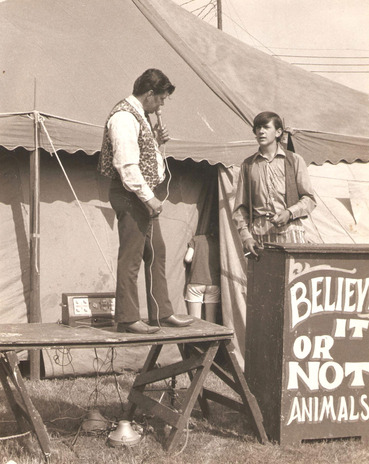
Before the big show, Melvin would stand on the platform in front of the side show tent and announce, “Ladies and Gentlemen, you are going to want to bring the children up close to see this very special attraction… right here, right now that is absolutely free!” 

Boisterous best describes the fourth of the Silverlake children. With a passion for old westerns, Melvin dressed the part. Perpetual boots and a cowboy hat were augmented at showtime with a gun belt, string tie, bandana and an exotic fur vest. 

He could recite classic lines from film stars of the genre he loved and often did when he entertained. With the help of a sixteen-millimeter film projector, he loved showing us western movies up against the side of the ticket trailer during the occasional Sunday evening after a matinee only.     

Melvin took a wide stance that included his face flanked by dark shiny hair that imitated Elvis and infectious enthusiasm. This demeanor was perfect in his role as host of the circus. His interactions with crew and staff resulted in enthusiasm that permeated throughout. At show time on the side show platform this exuberance served well as the audience got caught up and responded to his calculated charm. 

“Since there is still plenty of time before the doors open for the big show,” he continued, “And in an effort to bring a little entertainment out here for you, while you are waiting, we are going to bring King Kong right out here for everyone to see.”

54 King Kong 1971

I waited inside the tent at his cage for the right moment in Melvin’s presentation, I snapped a leash to his collar and led him out at just the right moment. Kong jumped on the ticket box responding to the facial expressions of the crowd with some expressive behavior of his own. Kong jumped up and down and showed them his teeth. King Kong proved to be a real crowd pleaser and effective to drive patrons inside to see the attractions. 

The result of receiving a percentage of the side show revenue was an incentive for me. I fashioned flags to dress up the front and lettered Believe It or Not on an old bally cloth.

After that summer in Michigan, we headed south. An interesting cross section of the circus industry had come and gone. Performers, friends and fans had visited and wished us well.  The sister show – Clark & Walters – closed early. They returned the equipment to Indiana and some of the personnel showed up on Fisher Bros including Ralph the mechanic. The show meandered south and west before returning to Medora. When the season ended in the fall, we contributed ideas and plans for improvements.  

Once back at winter quarters in Medora, Indiana, the combined equipment for both circuses packed that hilly place and a brief reunion of personnel began to swap stories of the season’s highlights before leaving for the winter. 

At the seasons end, with my portion of the proceeds from the side show, I purchased a GMC pickup from Ralph the mechanic, made plans to travel to Elkhart, Indiana to see how RVs were made and buy supplies needed to build my own camper. Then I returned to my parent’s home to begin building my special camper that would open up into a bandstand for my drums.

I also set out to learn another skill that would make me a more valuable showman. Torchy, a retired aerialist asked me what it was that I was going to add to my repertoire that winter.  

Out of the blue I blurted, “I’m going to become a bagpipe player.” 

She knew a couple in the Chicago suburbs of Wheaton that used to troupe and now had a music store. She made a phone call. Yes, they could get me a set of bagpipes. With Torchies help I began to plan my attraction for the side show. 

During a phone call to my parents to announce that I would be coming home for the winter, I asked my mother to find me a bagpipe teacher. That winter, among my many projects, I met Scotty regularly over the next two months. Scotty taught me how to play Gaelic melodies on the Chanter. I learned special fingering techniques and how to blow and squeeze the air bag with my arm to maintain constant pressure. He also instructed me in how the reeds in each pipe were tuned and maintained. Scotty also suggested a great way to build a storage box to protect my pipes.  

I still remember his last comment; “Ya got de guts kit, larnin’ de pipin’ for da bally hooin’.” 

At my parent’s house out in the garage, I set up my workspace. I cut two by twos to length and created a series of interlocking notches and glued and screwed the entire skeleton together for my bandstand/camper. The finished skeleton was then lined with paneling, insulated and covered with corrugated aluminum. Windows, a propane system and a bunk over the cab was installed. The entire back of the camper was designed to lift open to create a large area for my drums. This was to ensure that I would be out of the weather and have greater visibility while playing during the show. 

67 First Camper

By February, I had completed my camper/bandstand and drove over to Michigan to visit Bev. I met her the previous summer and stayed in contact. I showed her family what I had accomplished. While enjoying snowmobiling and holding tightly to my girl, I saw huge snowflakes drift down to transform this beautiful country I knew from warmer days.   

After our togetherness, I drove to visit friend Hayes in Clarklake, and then on to Medora. 

Winter quarters consisted of a block building dug into the side of a hill with a large area inside for the two elephants named Norma Jean and Dixie who were in the back. These two stood for long hours chained in the barn. In order to cope, they developed an animated swinging behavior using their entire bodies, swaying side to side. Trigger, the five-footed horse, was also tied next to them. He developed the same habit of swinging in order to avoid getting bumped. The front half of the barn housed bundles of canvas from both shows, piled high along one side, and there was a central work area for construction projects. 

This is where I began painting signs, banners, and ticket boxes during the cold weather. On warmer days I worked outside on the new popcorn trailer and then lettered all the doors of the trucks. The second season of the Fisher Bros Circus appeared in sharp contrast to the ragged upstart of just a year ago. As the opening date loomed closer, the new canvas, seats and improved trucks promised to produce a better all-around show.

Meeting Hayes

The year was 1971. I was on the first season of the Fisher Bros Circus, a show I helped build. During the only free time between set up and two shows, I had been tipped off that a fan was on the lot and had some circus pictures to see. Most of the circus people had an attitude toward any fan wanting to see the show for free, but I usually joined them to share their enthusiasm. As I rounded the corner of the tent, I found a friendly, tall man standing behind a green station wagon 

I was greeted with; “Do you want to see some circus pictures?”

Instantly captivated, I pored through the albums stacked on the open tailgate of the wagon. In awe, I peeked at the recent history of the big top shows that he had seen and photographed.

Alien names like Sells & Gray, Hoxie Bros. and Kelly-Miller came to life as I turned each page scrutinizing each carefully considered image. What was valuable was the content. The layout of the support vehicles in regards to their context to the big top and the unique manner in which each semi was racked for a specific task or load. Or the action of the stake driver and spool truck. There were pictures of livestock trailers in repose, the cook house shown as a social center and the action at the concession department. Also depicted was the light plant, and bunk house and performers handling the activities of their specialty. As I studied these images, my mind started working coming up with additional ideas and plans for my career.

 â€śIt rhymes with Spaniard,” interrupted my focus.

I looked up, completely absent from the conversation. I was totally engrossed with looking at an amazing collection of photos. I glimpsed a grinning face, partially shaded beneath a well-worn hat. Fidgeting with a long brown thin cigarette, Hayes produced a cackle of nervous laughter, the result of self-satisfaction with his joke.

Beaming, and wanting me to understand him, he repeated the well-worn rhetoric.

“Ganiard,” he double-clutched, “My name rhymes with Spaniard, Hayes Ganiard.”

66.1 Hayes 2

As I pored over the many photographs this man had witnessed, I had questions. These photos opened up a whole new world. With each question about a detail in a photograph, my host did his best to explain what he knew about the picture. I had seen old photos in books before, but this collection of traveling truck circus photos shot personally by this man made it seem more real – like seeing the rings of Saturn through a telescope for the first time. As Hayes explained the various aspects noticed and captured masterfully in his photographs, together we discovered a common ground upon which to build a connection.

The images accommodated a friendship with this round, friendly and beaming Michigander. Hayes Ganiard was a friend to the circus, providing help to the showmen who traversed southern Michigan in any way he could. I learned that he booked dates for Al G Kelly & Miller Bros Circus, became fast friends with circus greats Stu Miller, Ted Lavelda and others. I learned later that Hayes even convalesced an injured camel on his farm one summer. That act of chivalry made Hayes a local celebrity.

Hayes came to visit Fisher Bros Circus several times that first summer while we were in Michigan. With each visit, I found more to admire in the heart and soul in this middle-aged farmer with flat feet. He told stories about situations he saw, personalities he had gotten to know and as an admirer of everything circus, he found his love for the circus.

Hayes Ganiard was born into the wealthy family of the founder of the Hayes Wheel Company, that later became Hayes Industries, Kelsey-Hayes, and finally; Hayes-Albion. Hayes had a boyhood friend named Jack Paar. They both enjoyed tending to the homing pigeon hutch on the top of Hayes large home in Jackson, Michigan. Raising the birds filled the boys time that otherwise did not have a chance to become idle. Together they swapped birds and wrote little messages to tie to their legs. The boys often rode on their bicycles to release the birds and raced home to retrieve them. These pigeons often flew long distances. Jack Paar went on to become the host of the Tonight Show preceding Johnny Carson. Every New Year’s Eve he made a phone call to his boyhood friend Hayes.

During the depression, Hayes was one of the only kids at school who had nice shoes. He was teased mercilessly promoting a distain for family wealth. Hayes was inspired one summer by the circus. While enjoying the summer with family in the Hamptons, his father took him to New York to see a gigantic tented circus. It moved by train and included an army of people, elephants and horses. He saw the monumental task of setting up the tented city each day to give two performances before being taken down and loaded back on the train. Experiencing the Ringling Bros Barnum & Bailey Circus was love at first sight. From that point forward, deep down inside, Hayes had a secret longing to go and belong to the circus.

                When Hayes grandfather was ready to nurture him for a life in business, Hayes announced that he wanted to be a farmer. His grandfather then bought a thousand acres of farmland on Jefferson Road near Clark Lake and a large Jersey dairy herd imported directly from the Isle of Jersey as a wedding gift. The pattern of up before dawn for the milking routine seven days a week became firmly established. He had the top dairy herd in the state for five years standing. Hayes and his wife Virginia raised three girls.

Their home always had an orphan baby being nurtured. Either an injured bird or squirrel convalescing in the kitchen, or snakes, frogs, guinea pigs, rabbits, goats, raccoon and a weasel. There was an endless stream of mice caught in a humane, live trap. The joke was that Ginny was simply catching the same mouse over and over. This was something Hayes finally proved with a little red nail polish applied to the mouse.

                When his career as farmer and father changed, Hayes had the time, energy and resources to pursue his secret love. He began to make a photographic record of the circus for posterity. He took pictures of quaint big tops, nicely painted semis, flashy but seductive costumes and exotic animal attractions. He also had anecdotes associated with each one and was ready to enlighten me, an enthusiastic seventeen-year-old. Hayes was a natural born storyteller who had the keys that opened the door to this fascinating world.

The circus would leave the proximity of my new friend in south central Michigan, but we stayed in touch. Hayes extended hospitality with an invitation to visit him at his home. A half a year later during the winter, I drove to Michigan. With a light covering of snow blanketing the territory the circus had covered, I found my way to Clarklake to visit my friend at his home.

His elegant white Greek revival home on Jefferson Road sat on a rise in the shade of large Oaks, Austrian pines and evergreens. The first time I stopped by, I was somewhat reluctant to park my camper where Hayes insisted, on the front lawn of his house. I entered the five-pane beveled glass wooden front door and went through the formal foyer, where the old grandfather clock from the C B Hayes estate seemed to greet me.  

The home was warm and felt lived in with many antiques. The wallpaper and paintings on the walls reflected themes of fox hunting.  The living room had a shiny broad plank wooden floor. The comfortable sofa became a warm refuge for me for a couple of nights. Over the large stone fireplace hung a Revolutionary War era rifle with a wooden ramrod and flint clamped into the hammer.

Also, prominent in the living room was Hayes father’s baby grand piano. The girls still had fond memories of when their grandfather came to visit and played for them. They remember their grandfathers carefully trimmed fingernails making a delicate sound whenever they came into contact with the ivory keys. While in close proximity, this nuanced sound added a special touch not available to most audiences. During my visits, Hayes daughter Julie often filled the home with lovely music as the result of her prowess at the Steinway.

My two-day stay revealed the world of a big-hearted storytelling, family man with broad interests. In addition to talking more about the circus, Hayes elaborated on the wheel making business that his family was involved in. The Hayes Wheel Company made breakthroughs from the time of the spoked handmade wheel that followed the wagon and carriage trade into the automobile era with a stamped one-piece steel wheel. Farming and many related specialties were a source of fascination and fodder for more tales.  His one-eyed dog “Nipper” was cautiously alert and always by his side. He was the subject of several of his stories.

Hayes had three daughters, two of which were married and out of the house. He had a lovely wife, Ginny. Although she was less than enthusiastic about my stay at their home, Hayes made up for it to her with his enthusiasm that suggested a hidden longing for a son. A son interested in many of the same things he was passionate about. He approved of my ambitions.

Encouragement for my ideas was something I hadn’t received from my own father, who instead insisted and hoped upon an entirely different direction for my life. Hayes became a mentor. Listening to my ideas and becoming a conduit for many other connections, Hayes would broaden my world in Jackson County. I received encouragement from Hayes to become a better artist, animal lover and showman. He listened to my ideas and encouraged me to pursue these ambitions. Our friendship continues to this day.…

No People Like Show People

It takes many people to move a circus. Years ago, labor was plentiful and cheap. This made possible the Golden Era of the giant railroad circuses to emerge. They transformed an empty grass field into a magical tented city each morning. 

Melvin Silverlake promoted personnel from the tiny town of Medora, Indiana which was home of their winter quarters.  Jack Brock, the canvas boss came from Medora. He had been recruited a few years earlier for the Clark & Walters Circus where he learned the ropes of handling the big top and was now going to be in charge of tents with Fisher Brothers Circus.  

Jack’s mother owned a local tavern. That little tavern supplied many circus workers. One, a little man named Elmer enjoyed drinking White Port. He was recruited along with the rest of his family. Elmer’s posture was droopy and stooped over. He had a slouch hat covered in dirt. His coveralls were dirty and he sported a perpetual beard. His heavy mountain accent seemed to make every word he uttered undistinguishable. Guttural syllables flowed as communication between his role as an assistant to the canvas boss.  

Elmer’s wife Janie had a steely face, wild wooly red hair, squinty eyes, few teeth and an appetite for chew tobacco. She helped BK in the cook house. Willie was their son age 12 who proved helpful with the side show. Their daughter Judy was age 8 and had a crooked arm as the result of being broken but never being set. Bunks for the entire family were at one end of a refurbished school bus. 

Mike Gaska was an elderly performer from Mexico who had an offbeat manner that always connected with the audience. He dressed as a trampy clown wearing a minimum of makeup. His act consisted of seemingly struggling with juggling clubs and rolling hoops. He had a little dog that would sit up and steal the show. Later in the show Mike’s plate spinning act added sizzle to his silly. If the circus had a heartbeat, the steadfast rhythm that drove the lifeblood of the show would be Mike. He was always present, sometimes patiently waiting with a pipe clenched between his teeth as he watched the progress of the show while waiting for his turn to perform.   

He had a visual way of communicating and radiating kindness. He always provided encouragement to others whenever needed.  Having been around the Clark & Walters Circus, he was considered family to the Silverlakes. Mike lived in an Airstream trailer with several little dogs. During set up he pulled the electric cables, hoisted the light chandeliers in the tent and set up the midway lights as he maintained the light plant. 

As the show ended each night, the crew began dismantling the seats and making room for the pole and seat trailer to move into the tent on the heels of the crowd. Virtually everything was loaded while the rig was under the tent with the exception of a few side poles and two center poles that were holding the tent up. Mike Gaska waited patiently to lower the lighting chandelier, thus allowing the workers the last remnants of the remaining light. When the pole truck moved out he lowered the lights. This created elongated shadows of the remaining workers and Dixie the elephant, who arrived to pull the remaining center poles out. Standing near the only raised portion of the edge of the tent, Mike was seen holding the lights in the opening as the elephant emerged rapidly, pulling out the two poles as the canvas mushroomed behind her. The air would whoosh out and the tent gently fall to the ground. As the crew began to untie the knots from the guy ropes on the stakes, they threw the ropes on the tent. Mike would walk with the lights and load them onto the generator trailer. Then he coiled up the cables.       

  Emma Duke was the wife of the circus agent and the mother of BK. Emma put on full clown makeup daily and dressed in big shoes, a funny wig and a colorful costume. At the beginning of the season her camper pulled the generator trailer. She often showed up in the performance and her colorful presence would fortify the premise of circus. She presented her gags and sometimes acted as part of a duo with Mike Gaska, to reinforce the funny clownish elements of the show. 

The 1971 season of the Fisher Bros Circus began with me on drums and just an amplified record player. Every hand on the show was expected to be useful. During the show many people came and went to cue the record player. Whoever was my assistant was responsible for the song changes for each act and inevitably preceded each musical selection with an unnerving needle scrape across the grooves of the LP disc. This would follow with the scratchy music of the song playing to accompany the act. 

One week, a man claiming to be a musician and a magician was hired. The amazing Marquis had a reed organ that looked like a suitcase on legs and a drinking problem to boot. When inebriated it became difficult to sync with his music. Changes supposed to accent segments of the acts became sloppy. One especially sloppy episode involved him falling off the bandstand in the middle of a song. When Melvin rushed over to help him get back on the bandstand. I yelled an indication of my frustration with, “leave him down there” 

But when sober, George Marquis was an amazing hypnotist who could do his act with up to a dozen people from out of the audience. To this day I remain amazed at his antics. He made post hypnotic suggestions to each of the volunteers. He would suggest that the volunteers became hot, or were standing on an anthill, or viewing an inviting aqua colored swimming pool with no one watching. This would produce a variety of amazing and often comical behaviors. George only lasted a few weeks before his career on the show abruptly ended. Thank goodness, a professional traveling organist with her own pickup and Airstream trailer showed up on our lot and filled the position he left behind.  

Marie Loter had a full Hammond B-3 organ with a Leslie speaker system mounted in the truck cap on the back of her pickup. She was set up for this kind of job as she came from a circus family and had relatives on many other traveling circuses. I helped her back this rig into the big top each day and set my drums up alongside. We were the band for the show and became good friends. Between shows her television would be on in her Airstream trailer with coffee percolating. Marie would tell stories of the adventures she had on other shows. 

Harry Haag Jr. was cousin to the Silverlakes and was the last remnant of another circus family. His grandfather had a mighty show at the turn of the century until 1938. He had a huge old school bus with a horse trailer behind it. Once parked, his family tumbled out. With his wife Pat, they had three daughters; Cheryl, Kimberly, Ruby and one son named little Harry. In addition to the four kids were dogs of all sorts and one large pony. They were here to add to the show in any way they could.  

Cheryl was a pre-teen with big feet, who soon had her single trapeze act in the show. The entire time Cheryl was in the air performing, Pat was seen standing in the back door looking up, while acting like the concerned mother. Kimberly had aspirations to be an animal trainer. With this goal in mind, she would often place one of the dogs on the roof of the horse trailer and entice the canine to jump down into her arms. Her dad was our mechanic who would take time to teach Kimberly how to lunge the pony and get him to do some basic liberty work. Ruby was small but seemed to always have a smile on her dirty little face. Little Harry was still in the crib that set alongside the bus.   

Mister Clean best described Bob Walker who arrived on the show with his wife Sandy and their two boys. This muscular man helped Jack and Elmer with managing the big top. They lived in a travel trailer pulled behind their car. The healthy and optimistic attitude of this family raised the attitudes of everyone on the show. Sandy had a creative streak and expressed an interest in my decorative painting accomplishments 

A few weeks into the season, a red and white school bus arrived on the lot to join us. Inside was a family of performers, mom, dad, and two daughters. The Michael family had an outstanding juggling routine. The girls did aerial acts. The parents did a comedy act called the Senzanys that was an addition to the show. As the drummer and announcer, I witnessed every accomplishment of every act. 

Prior to the comedy act, Dennis was positioned as a stooge up in the seats appearing to be part of the audience. When Lynnie made her entrance as an overstuffed nurse clown entering the circus ring, Dennis began to laugh. In addition to being loud and boisterous, he acted drunk. As soon as this was established in the mind of the audience, he received a challenge from nurse Lynnie to come down into the ring to assist her. Dennis would then come down from the seats in a hilarious way and enter the ring that exaggerated his drunkenness. These antics were followed by classic examples of slapstick reminiscent of the days of vaudeville with some folksy circus clowning thrown in.  

One morning while moving my drums into position near the big top, I had the opportunity to observe one of the girls interact with her mother. 

“Mom, I had a dream last night about being on a bridge that went up into the sky and the wind was howling and blowing,” Mandy announced, “And the raging waves of the sea kept rising up trying to get me” 

“Oh, that’s an interesting dream,” Lynnie, her mother, responded, “There must be some hidden meaning in such a scenario.” 

“What’s a sce-na-ri-o?” she carefully plodded out this new word. 

“Oh, you know, the story line,” she would add, “The sequence of all the events going on.” 

“Oh, yeah,” Mandy agreed, “Probably my scen-a-rio means that a secret good fairy keeps watch over me and that is why there was a magical bridge to take me over the sea.” Mandy continued, “And there was this cat with a silver mane but he was a house cat, and when he blocked my path I told him to move out of the way” 

While I overheard this interaction between mother and daughter, I waited for the inevitable reprimand, such as I would have received at my parent’s home for having such wild imaginative thoughts. But none ever came. Instead, her mother remained encouraging. 

  â€śThat seemed to be a scary dream,” Lynnie offered, “I’m glad that you made it safely through” 

“Oh mom,” Mandy replied, “You’re silly, it was just a dream.” 

The big top was soon up and I began to erect my drum platform and move the components of my kit into place, thinking about what I had just witnessed. 

The cookhouse was for telling stories, or in my case, listening to the sometimes-fascinating tales of life on the circus. The daily dining experience became a time of wonder with plenty of new families. The stories were referred to as jackpots. The tour progressed and occasionally traveling performers would stop by enroute to other destinations to visit and rest their animals. 

Mike Gaska’s brother visited between his Shrine Circus dates that had him busy crisscrossing the country. While on the show, Mike’s brother Oscar volunteered to perform his balancing act that started with a one finger stand. This was the first time many of us saw this amazing feat.  

Our guests were always invited to join us in the cookhouse where the jackpots were exchanged. Some of the old timers remembered the horse and wagon days and told tales of the ongoing rigors that were part of life on a mud show. During these conversations I gained much road wisdom. 

This unique society has unwritten laws, closely guarded secrets and traditions that reflect highly regarded values. Ideas like “finish your act no matter what,” “the show must go on,” and “animals come first,” were foremost. The unifying response to the occasional calamity that was an inevitable part of this lifestyle was to stick together. Everyone would work in response to anything that threatened the momentum of the show.  

I applied these observations to my personal life. This environment gave a reclusive teen, a place to shine and evolve past the issues that threatened to block the essence of my greatest gifts. As this quality entered my focus, clarity and courage began to reveal a bright future. 

I had an opportunity to experiment with disclosing some of my thoughts to Lynnie that summer. She listened patiently to my ideas and, true to form, responded with encouragement. The result of this opening for personal disclosure was the beginning of developing my ability to reveal my innermost thoughts. I had an audience for secrets, dreams and creative ambitions. Lynnie became a close, cherished friend and confidant. She became a muse who appreciated everything creative and proved it with the life that she lived. 

At the end of the summer, the Michael family left the show so the girls could start school. Melvin encouraged them to meet George and Lucille Cole and become marionette puppeteers in the Chicago area. I would see them on another show in a couple of years. In the meantime, I became a pen pal with Lynnie, who remained a source of encouragement and became instrumental in my life.  

I found these special folks who made up the colorful spectrum of the circus like family. Each individual made their unique contribution to the traveling community, each with their vast and varied backgrounds. Their gifts rounded out the show. We all had aspirations for the future, a longing to become better at what we did. That seemed to be the common denominator for circus folks, to become greater as we went along. 

The Same but Different

The cycle of erecting, tear down and consequent load-out of the tented city drove equipment design that had, over the decades, become a testament to efficiency, durability and simplicity. Portable cookhouse tables, easily assembled components of bleacher seating, platforms that placed an entertainer in front of and above the crowd combine with simple tent poles, stakes and rope, lots of rope. The specific way rope is used and threaded through rigging blocks were unique to the circus and the knots used to secure the guys, lash jump ropes to the poles, were a manner of hooking specific rigging up inside the tent had evolved from the era of sailing.

Using vehicles and attractions to funnel the crowd past enticements was a developed art. The showmen were masters of the science of opportunity as crowds made their way toward the big top.

I became aware of efficiency. I sought to achieve economy of motion during the daily set-up.  Each day the 20×30 tent was spread, poles unloaded and put in place and the stakes were driven. Then the tent went up and the rest of the attraction put into place.

I couldn’t keep a wrist watch working. No problem on a circus. Every day was a routine. Responsibilities drove the day. Near showtime, the activities of the concession department served as the only time piece needed. It coincided with the crowd arriving. The midway was the receiving area. With patrons present we opened the side show and the snake show up for business. For a quarter they could see the unusual attractions inside of what we called the Believe It or Not Show. The tent housed “Trigger,” a five-footed horse. We also had a five-legged cow, a midget bull, and a llama with curious ears that were another wonder of nature.

The Snake Show was in a big box truck that had a two-bunk sleeper in the front that I shared with the big top canvas boss. The large snake was kept in the back. The patrons would climb the stairs that led into the back of the truck where they would look down into a pit to see the enormous python on display. Because of the configuration this was called a pit show.

We were awakened daily just before sunrise to start the trucks and begin the trip to the next town. The big top and crew went first. I loaded the animals into the back of the elephant truck and then coiled the picket line and loaded the stakes while Melvin loaded “Dixie” the elephant. We were ready to begin our trip out of town. I rode shotgun.

We started the trip in the dark. The terrain was revealed as the morning light exposed the surrounding area. This was a special way to start each day.

The rolling countryside of southern Indiana softened gradually as we went north between flat fields. Sprouts of young crops were punctuated with barns, silos and tree shaded dwellings. The communities that had sprung up at the crossroads were our target. Each little town had similar characteristics but arranged with details in different ways. Noticing nuance became a source of fascination for my observant eye.

The days of small town mom and pop businesses of all types had impact because they exerted a personal relationship with their community. Integrity thrived. Although each day was routine, the ever-changing scenery during the jumps to the next small town revealed interesting sights, quaint communities and spectacular natural beauty. We traversed most of Michigan next.

Upon arrival at the next showgrounds, the process of laying out the big top and the arrangement of ancillary equipment had begun. Each morning, the steady rhythmic, metallic sound of sledge hammers hitting steel stakes was heard. The performer’s rigs arrived and they parked adjacent to the performer’s entrance. They had to wait for the big top to go up. While they waited, they visited with one another and the children on the show would play.

The side poles that held up the outside edge of the tent were going up and it created a bowl out of the tent. This was an opportunity for the crew to go underneath to put in the quarter poles. Dixie, the work elephant, wore a tug over her shoulders with chains attached to each side that joined behind her with a hook on the end. When needed, she was guided into position under the canvas and this hook was secured to a loop at the base of the first quarter pole. As she pulled the bottom of the pole, the canvas slowly rose into the air.

This style of setting up a tent was called push-pole. This process was repeated until all the quarter poles were in place. Thus, the elephant was part of the team. 

The cookhouse was usually set up first and by about ten o’clock, the big breakfast meal was ready to be served. The signal was then sent to come and get it. For decades, most circuses had a flag that was run to the top of the cookhouse tent to signal that the morning meal was ready. We had no flag but the shout flags up, went out all over the lot to inform those working to come and eat.

Each day became a steady rhythm of activities. Inevitable situations arose that required immediate attention and became the punctuation of the day. Mechanical breakdowns, drivers getting lost, local municipal hurdles and other uncontrollable situations threatened the rhythm of the show. 

The weather played an interesting role. Rain would render the need for a creative solution to provide comfort for the audience. It also forced other considerations during load out and could create difficulty with moving of vehicles off the lot. Wind was our least favorite.  No matter what was happening, the circus trudged forward with determination.

The circus personnel were intriguing. Traveling throughout the country with this diverse group of people provided a constant mix among ever changing situations. A feeling of family was felt in each new place. The epic tale of our traveling populous was often more interesting than the performance.