My First Blog Post

This is the first post on my new blog. I’m all about the circus, living my life as a creative artist and how wonderful my life with horses has been. I have many stories to share about my interesting life and have finally begun getting this new blog going, so stay tuned for more and let me hear from you. Subscribe below to get notified when I post new updates.

The Sign King

       I weighed many options after discovering that my anticipated job on the circus didn’t exist. Last minute upheaval seems to be a constant part of this business. Ultimately, I would use this hiatus to my advantage. But at first I panicked. Beth and I had been planning to troupe together again. Her job existed so I had to make other plans. I did want to learn fine sign lettering skills, so after investigating many opportunities, I made my selection. Instead of going to the Great American Circus, my job in the spring of 1979 at the Sign King started immediately.
       This was a busy shop. Orlando had no sign regulations and clusters of gaudy advertising flanked all the roads. Real estate and building was booming and sign work was in evidence everywhere. This was a good time to be a sign maker. The Sign King was a sign store with many examples on display in the showroom in a shopping plaza. Consumers beat a path to the door. Forrest the owner, an effective businessman from Connecticut, wore a pleasant face up front and was gruff, precise and demanding in the back. His wife was the receptionist/secretary and had a curious, slow manner of talking, doubling the number of syllables in each word as her intentional manner of talking may have been influenced by a stroke. The work took place in the back. Several work bays were filled with easels for the lettering men, sawhorses and woodworking tools for the carpenters, screen printing tables and racks for the production runs and space for sign board painting preparation.
       In this environment, I started as the low man on the totem pole learning new skills. The other sign painters told me that a good sign man has at least five alphabets memorized that would handle most sign making situations. Many good font reference books existed. I began to get familiar with the variety of lettering styles and additional sign making skills from these men at the shop.

SIGN KING 1

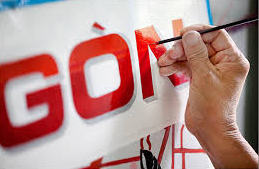
       The boss was always nagging us to hurry up. I was immune to his impatience. All I wanted to do was paint pretty letters all day. Being next to the other busy journeymen painting signs at the bench was the perfect placed to learn. These men who possessed the skill and knowledge of not only brush manipulation but letterform began to rocket me into the next dimension of my developing abilities. Some of them were fast and sloppy and others made better looking letters. I zeroed in on the men with a handle on what I wanted to learn and a personal style that I admired.
       Crisp letterform occurs with the right brush, trained by the way it is manipulated to maintain its chisel edge shape. By using the proper handling techniques, the natural tendencies of the brush influence the style of the letters formed. By starting each stroke with deliberate contact with the surface and traveling through the stroke consistently, additional natural behaviors of the brush bring about subtle variations that end up qualifying as an individual style of letter. I was making the big signs, with five inch and up letters. I began by drawing each letter in its entirety and then “building” the letter with brush strokes and paint. The journeymen were painting vast collections of small copy on menu, informative, rules and regulation signs using a “one stroke” alphabet, knocked out fast. As I admired what was going on around me, I was also noticing and being encouraged with the nuance that would eventually develop into my personal style and ability to letter in a new way.
       While I developed my individual fashion of block, script, casual “quick stroke,” serifed roman and modified old English, an additional opportunity for rapid growth occurred.
       One day, a new guy showed up at the shop. A tall guy with a confident air and a “Joisey” accent who soon became our supervisor. Gary Herpst had grown up in New Jersey, with a father who was an excellent sign painter and started this trade as a youth. Because of his background and ability, he was assigned to a role at the top of the shop hierarchy.
       Compared to the others, I was still struggling as I formed letters using my hand over hand technique with a lettering brush. This manner of painting took both of my hands as I would rest my lettering hand over my left hand. Plus, I had to use a little cart to hold my paint.

SIGN KING 2

       One day Gary walked over to where I was working, still holding his lettering brush, with pallet and paint cup in the other hand, and gave me a command; “Start painting with one hand!”
       He then gave the half smile of a person containing a laugh and gestured for me to follow him to his work bench. He then demonstrated to me what he was talking about, using the brush with one hand with an extended pinkie finger to steady.
       “Learn to paint with one hand and you will become faster,” he encouraged me, “Plus, you can hold the paint and pallet with your other hand.”
       I attempted this style of painting immediately. Although awkward at first, I soon became comfortable painting this way. I credit Gary as being the most influential of all the sign men I ever met. Another thing he mentioned would influence my future.
       He asked me, “Do you know the difference between a common sign painter and an excellent one?”
       When I tumbled, he answered,” whether they drink or not”

ArtDev

Thank goodness our trip back to Florida was uneventful. Beth and I landed first at the circus winter quarters in Deland and parked near our old friends Captain Freddy Logan and his family. After getting settled, in an effort to make a good impression when asking for a job at a local sign shop I had my long hair cut off. I borrowed Beth’s station wagon and drove into town and found a local sign company and went inside. I showed the owner photos of my work and expressed an interest in learning more about the sign painting trade. I immediately landed a job at ArtDev Advertising. I had plenty to learn. 

I became part of a trio of men in the back of the shop that got the work done. Bill was the carpenter, Carroll the crane truck operator/installation man and I became the sign painter. All of our duties overlapped. I also learned how to use crane trucks and help with installation. 

Each day began to resemble a routine different from what I was used to. I was up early each morning. After my drive into work I spent the day at the shop accomplishing a variety of duties. The work mentality here revolved around providing a specific number of hours at the shop each day, instead of the timeless, all-consuming aspect of life at the circus. 

I found and bought an old tomato soup colored VW bus that became my commute to work vehicle. By Christmas time, Beth and I were encouraged to find an alternative place to park the trailer for the winter. A nearby fish camp near the river had trailer sites and room in the woods for Beth to put up her rigging and practice. Working close to where we lived was handy when Beth wanted to see what I was doing. One day the sixty-five-foot service ladder truck was up against a tall building downtown, Beth, the aerialist, climbed the ladder in her clogs, along with the rest of us, up to the roof to see the project underway. 

Among the sign making projects going on at ArtDev was the creation of large hand painted billboards that utilized the talents of a local retired pictorial painter named Pete. He arrived at the shop one day with his kit to tackle the waiting blank billboard.  

Once he got settled in, he came over to where I was working and looked down at my kit.  

“I know some shops that would not hire you,” He said flatly, “because of the condition of those brushes.” 

He was referring to my bristle fitches, the stiff brushes used to paint a rough surface like a brick or cement block wall. My fitches were rounded off from wear on all sides. Fortunately, Pete showed me his fitches and how a properly worn brush is supposed to look. He taught me how one corner was reserved from wear and also showed me the discipline of how to hold the brush for cutting in, like with a sash brush. Most painters know to use it flat either way in its entirety but when on edge for crisp lines and points, go one direction, reserving one corner for a sharp tip. Then, that corner is available for a precise point. By using this technique, the rounding wear only occurs on one side and the remaining corner stays sharp. 

The manner in which large pictorials were created in those days was referred to as wet-blended and included the use of oil colors that dried slowly. This would allow the artist a long window of opportunity to merge the colors.  While Pete was up on the catwalk painting large letters and images on the boards, he was always telling a story about his days as a pictorial man for a large outdoor advertising firm in Las Vegas. His wife would drop him off at the shop in the morning and before going home, she would grab a broom and sweep his work area clean. He would be talking the whole time.  

He told stories about painting large portraits of the famous stars appearing in concert at the various theaters in Vegas, often returning to the same billboard before the paint had even dried to paint another portrait on top. 

I still laugh every time I think about one story. One day Pete was up on the cat walk lettering five-foot letters with the name of a home builder – let’s say the name he was painting was James Robinson. That day Pete was telling a story about a sign painter he used to know. As he worked and shared this anecdote, his mind went blank as he struggled to remember his old friend’s name. As each letter assumed its finished condition from our vantage point in the shop we could see the large name revealed that I mentioned earlier. As Pete neared the last letter he paused, due to the revelation occurring. Out of the blue we heard him blurt out, “James!” 

“I just remembered his name,” he announced, “James Robinson “  

  Pete took me under his wing and taught me many things including the basics of scaling up from the comp, or composition sketch. He taught me how a sign man enlarges a design using math and a yard stick.  

The routine at the sign shop was far different from the around-the-clock routine on the traveling circus. I was only at the shop eight hours a day and every evening was free. Beth and I still continued our regular consumption of beer, and each evening I was expected to bring home a supply on my trip back from work. With little to do in the evening to keep my hands busy, the evening routine soon involved little more than beer and conversation. 

I had observed couples that had a relational style of arguing and had never understood it. I recall while lettering a circus trailer on Gopher’s circus years ago, listening in on the conversation between Snooks & Kennedy, who were taking a break from being the band between shows. Their relational style was an argumentative banter that had grown to fill their leisure time together. It sounded like arguing but they seemed to stay calm about it. I hadn’t grown up around such a style. Beth and I began to display a similar argumentative rhetoric fueled by our mutual inebriated condition.  I’m sure that a fly on the wall would wonder about our sanity due to the topic of those conversations. I admit that while driving home after working all day, my creative imagination would begin composing rebuttal from where our conversation had left off that morning. So I was certainly a player. I recognized that consumption was part of the problem but didn’t have an alternative to suggest. So, we continued our disruptive doggerel. 

Henry Thompson lived nearby in his travel trailer that winter too. The circus used him in the winter time to paint pictorials for the side show banners along with festive clown and animal images on the show trucks. As he drank more and more, he became filled with happy recollections that inspired an attempt at singing the lyrics of a popular song. As he belted out “only yooouuuu,” the stanza would inevitably be followed by drunken laughter. I would often find him and Beth laughing about this at the little tavern near the railroad station after my workday was done. 

Beth and I were counting on our jobs with the Great American Circus for the 1979 season that spring as promised by Jim Silverlake. But at the last minute, I was told they didn’t have room for me and my livestock. It was too late to find another circus, so I planned to remain in Florida to continue as an apprentice sign painter for that year while Beth went out on the road. A friend at a neighboring shop to ArtDev, who made dental bridges, had a neighbor who needed a roommate. I could live there. Beth found a pickup truck to pull her trailer and replace her station wagon. At the sign shop, I welded a trailer hitch on the back. I got her on her way and then paused at the brink of the year ahead to consider other opportunities to learn this trade.  

I began to do some research, expand my territory, visit other sign shops and ask questions. At a big outdoor advertising place, I saw where the Coppertone billboards were painted. The owner was confident about my emerging career and predicted that he would see me again.  

I worked a short time with a talented man creating visual masterpieces for the amusement parks and discovered the stereotypical alcoholic sign man. I heard about a busy shop near Orlando that had a grumpy owner with several journeymen lettering men inside at the bench. Curiosity piqued, I went to the sun-bleached metal building in a strip plaza, met Forrest Brown and his wife, and saw the work that was taking place. I made my decision. 

Our Colorful Tradition : part 2

One day a young fellow came looking for a job. All the positions on the big top crew were filled, so they sent him over to me. John Elder became my groom and also helped with the setup of props in the interior, with particular emphasis on getting the ring curb exactly round for the sake of my pony act. He moved into the back of my rig and rode over land with me. With his help, the awning went up in the dark after we arrived at the next town. The procedure was identical each night.

After stopping, I would get out and pump up the Coleman lantern and soon have it lit. With this tremendous source of light, I could find the layout markings on the lot that indicated where the big top was going and from that indication, find my parking spot. The parking sequence for all the rigs was the same every day. By placing the lantern in a strategic spot, I would then move the rig into my parking position. Once I was stopped, Beth could then park her station wagon and travel trailer.

By opening the side doors on the Fruehauf trailer, I had access to the first items needed for set up. By driving a stake in the ground, sliding a pipe over it and placing inside a device with a hook on top, I had a stand for the Coleman lantern. The work area was then bathed in bright light.

CLARK WALTERS

John would climb up to the roof of the trailer as I unloaded and unrolled the bundle of canvas. After I tossed up a rope, he could pull the corner of the awning up and begin to fasten the first of many snaps to the eyes up top. Working his way down the top edge, soon the blue and yellow awning hung flat against the side of the trailer, while I drove the tent stakes into the ground.

With these procedures complete, the next step was to place the side poles into each location on the edge of the awning and tie the guy-lines to the stakes. Soon with the awning up, the poles straight and the ropes tight, we were able to begin unloading the rest of the features that would soon be the pony and horse stable. The steel steps in the central doorway were unloaded and placed into position, one in that doorway and the other, up to the living quarters door. Then we pulled the ramp out of its cradle and placed the heavy thing in the second doorway to facilitate the unloading of the animals.

            A large tub made from half of a fifty-five-gallon drum was placed next to the central step. The valve on the hose coming from the barrels inside was opened to begin the filling this tub. After driving three more stakes, the short fence sections for the ponies were lashed to the side poles. By this time the ponies were nickering, due to knowing that soon they would be led down the ramp and invited to have a long drink of water.

The large fence sections that also served as a divider between the animals inside were unloaded and placed in a square shape at the other end of the awning to become a stall for Bingo. Then, one by one, starting with Finley, the ponies were released from their cross ties, led down the ramp and over to the now full water tub and invited to take a long drink. Then their lead rope was tied to the short fence section where they would spend the night.

As soon as the livestock was unloaded and tied in position, John went to bed. Forty-five minutes had elapsed since we arrived at the lot. My quiet time was now. I broke open a bale of hay, took my six-tine pitch fork, fluffed up each flake of hay and bedded them up to their bellies for the night. While all of them quietly munched, an inner peace filled me. Monitoring their condition as ideal, I then bid them adieu and walked next door to Beth’s trailer, which by this time was set up and ready for bed. Now was time for sleep.  

Day in and day out, the show went up each morning. The sound of the stake driver was our alarm clock. In no time at all the big top was up in the air. The performers then placed everything in position. John soon established a trademark cat call as he walked into the big top each morning to begin his duties as prop handler as soon as the canvas was in the air. His loud “Ahhh Hahhh” echoed underneath the cavern of canvas to announce his presence.

In the midst of all this industry, the cookhouse soon had breakfast ready. Flags up meant find your way over to eat. This was the social center of the show. The workers had to eat and get back to work so they were given precedence at breakfast. The rest of us had a more relaxed morning as we attended to individual responsibilities and could visit with each other after eating.

All preparations were ready prior to show time. The popping corn and spinning candy floss was the only activity going on as the early crowds showed up. The pony ride, ticket wagon, concession and novelty stand did brisk business in the interim until the side show talker began his spiel to entice folks to see what was inside. When the front door opened the crowd filed into the tent to find their seats. After the whistle blew and the band started playing, we gave our best to the crowds that showed up in each new area of the country.

We had a short break in the afternoon. John had a guitar. During the pensive moments between shows in the backyard, while Beth and I enjoyed sitting in the pony tail lounge, John practiced playing several tunes.

I had enthusiasm for what I was doing. There is nothing better on a pretty day than a string of ponies out in the sunshine. I enjoy cleaning them up, harnessing them and showing them off. Due to the ponies being well seasoned and performing flawlessly in the ring, I could concentrate on being a star. Being ready was a big part of this role. Getting cleaned up for the show, dressing up in fancy wardrobe and stepping out in front of our audience was all part of what made this routine fun. I was in love with a wonderful woman who was equally engaged in this rigorous lifestyle and we enjoyed sharing our lives. All was utopia in this unique and magical realm of traditional touring canvas entertainment. I love this life. But in spite of all this positivity, I was the one who hadn’t put together all that was necessary to insure a long, successful and lucrative career.

Whitey Black was the manager of the show. I had met him with his previous wife on Carson and Barnes years ago. He was tough to read. He had puffy eyelids that did battle with gravity. He had offered me this deal that seemed adequate at the time but when I arrived in winter quarters, I discovered a huge surprise expense. After the long jump getting there, I discovered that the old Fruehauf needed tires. The show had the tire man come, paid for the tires I needed and began to deduct a portion from my pay each week, compromising the amount I was able to save. With this indicator, I realized my deal wasn’t very lucrative. I often wonder about a management ploy that strives to keep their staff in need instead of encouraging prosperity.

For the tremendous investment I had and for all that I was doing on the show this was not an adequate paying job. But this time it was the show that was plagued. The first indicator was when Henry Thompson showed up from Sells and Gray Circus and we learned that the sister show had closed. He arrived to run our side show for the rest of the season. For several weeks we enjoyed his presence until, also running out of route; the season for King Bros Circus was over at the end of the summer. I didn’t have enough money to get home.

I did have enough fuel to get to another circus. Thank goodness for the sign painting skills I had accumulated. They now proved valuable. I approached Jim Silverlake, who was the manager of Great American Circus, another impressive tenter. He had me decorate a big semi-trailer for a week.

Dick Kohlreiser was there performing with his monkey and pony act. Once Dick became familiar with my situation, he opted to give me his slot in the show. He could go back to Ohio and book some donkey basketball games. I will be forever grateful for this generous gesture that revealed his true nature. He later confided being inspired by me and set out to create a six-pony liberty act of his own.

With this turn of events, I was set for the rest of the season. Jimmy asked me how much pay I wanted, so I told him the amount I had been receiving on the King show. He increased the amount by better than half again as much without asking me, proving how I had been taken advantage of on that plagued circus.

Beth web girl

Beth took her rig to winter quarters and then traveled to join me on the show. While performing my acts on this new show, Jimmy twisted his ankle and was unable to perform so he also had me work the elephant in the show. Beth became my elephant girl. We resumed our regular rhythm of life on the road, living in the Fruehauf and performing together for the rest of the season. We also received a promise from Jim for positions on the show for the following season.

At the end of the tour Beth headed for Texas and I took the rig back to Arkansas. There I turned the livestock loose on the Shiloh farm and resumed the nutritious and educational routine at the commune.  I also helped my parents who had begun building their house. A seed for my next ambition had been planted that soon would get to grow

Once Beth completed a visit with her brother in Texas, she came to the Ozarks to take me with her to Florida for the winter. I sought an opportunity to learn more about the sign painting trade. My intention was to get such a job. After thanking everyone in that little town, especially my parents, I grabbed my kit and jumped into her station wagon and we went happily down the road to Florida.

Our Colorful Tradition: pt.1


Due to the amount of work I was doing around the King Bros Circus as the drummer with two horse acts, I qualified to have the show provide a groom to help me. In the spring of the year, I was still trying to recruit this helper. As our path of one day stands crossed Georgia, a young black boy came looking for a job and I was ready to hire him. Once they caught wind of my plan, the mechanic Charlie Rex and the canvas boss came to me and told me not to hire him. They said that there would be no blacks on this show. I had never heard of such a thing. On all the other shows I was on, we always had them. Blacks are good luck. 

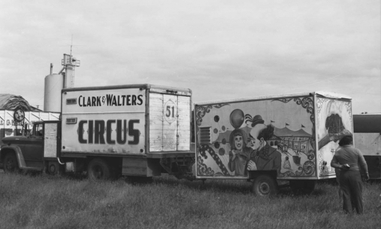
Historically, on the big canvas shows, groups of these workers came with a patriarch. They worked hard and kept to themselves. I recall on Clark and Walters Circus while showing through the deep south, we had a trio of them on the big top crew. They had an interesting pastime when their work was done and it was time to relax before bed. They would gather to unwind. One would play the harmonica and the others would sing their cultural genre of music. I was being introduced to an attractive facet of another ethnicity. 

Prejudice by the members of this show was perhaps an indication of the spiritual health of the circus or an ignorant defeatist condition that I hadn’t noticed before. Perhaps this was an omen. 

I recall hearing colorful stories from the old timers in the cookhouse about the jigs on the other shows in the old days. I am not on the quest of offending anyone here. I do seek to share this rich part of the history of the old-time circus for the sake of sharing their humor.  One tale had to do with how they exaggerated one another as tales were swapped.  

A classic came from the old railroad days when gangs of workers familiar with rival shows would seek to impress their peers with what they knew. Back and forth patter would start about a variety of topics. Among them; how the components they had to handle were heavy. Just set aside any question of ethics and visualize in your mind’s eye, a group of working men sitting in the canvas cookhouse after breakfast, finishing their coffee. 

“Wall, I nevah in all my born days seen so much heavy,” one would start off, “those poles is heavy, those planks is heavy, and those ring curbs is heavy” 

Oh you think these poles is heavy? Why I been on a show where evrah-thang is real heavy, a lot more heavy,” the orator is seeking to make an impression; “Evrah-thang on that Sells Floto show is heavy!” 

“That’s right,” another would agree, “Evrah-thang on that show is heavy” 

“I been on dat show too and evrah-thang is just plain heavy,” He says while holding his coffee cup aloft. Then he thinks of something else to fortify his claim, “even da coffee cups in the cookhouse weigh fo-teen pounds” 

Another good luck characteristic typical of the big top circus is gay clowns. The clown alley is notorious for flamboyant gay funsters. That year on King Bros Circus our clown alley was populated with hetero funsters – a married couple, an Indiana guy with a French persona and Rollo, a simple but straight energetic personality. We did have a gay organist, with an ironic name, Budd Manley. With a bass player and me at the drums, we were the trio that provided the music for the big three ring show. 

Circus families are another circus tradition. Generations duplicate teaching the children as toddlers to participate in the family act, not only adding the element of cute to the routine but imprinting the youngster with qualities that give them an edge with the closely guarded family secrets. Many outstanding trainers zealously guard their techniques. The families had strict rules that the young people had to stick to, especially when mixing with the other people on the show. Circus families wanted their children to marry into other circus families and discouraged any alternatives. 

The caste system was an old tradition with rules that kept the laborers, the dregs of society, away from the artistes. This system was relaxed on the smaller shows. On the King Bros Circus, we all had the privilege of getting to know one another.  

The Campa family provided a bevy of beautiful girls that added many acts to the show. Father Carlos did the traditional funny musical act. They were mom, dad, three girls and a boy. Elizabeth was a stunning beauty but reluctant socially. Sonya bubbled with personality and connected with others. The youngest sister was a fiery redhead. When strict met rebellious, the defiant sometimes left for the other side. These girls filled three rings as jugglers. Having this bounty of beauty added immensely to the show. 

  For our two-ring horse display, Frank Bumm had a white horse that did a few rodeo tricks in the other end of the tent while I provided a demonstration of what a Manege horse can do on Sir Bingo, the Painted Wonder. The demonstrations included marching, two tracks, the bow, pedestal mount, lay down, sit up, camel stretch and rear.   

Patti Antaleck had a huge group of performing dogs that jumped, danced, barked, cavorted and did an animated and pleasant act. Francesca had married a candy butcher (concession guy) and broke away from her performing family. She was one of the show girls doing aerial acts.  

Dirty Neck Klein was the elephant boss. He stayed busy with his two charges, helping set up the tent, performing in the show and pulling stakes at night. I kept a bottle of bourbon in my rig just for him, knowing that on cold, wet rainy nights, while he was busy with an elephant pulling everything off the muddy lot in inclement weather, he would appreciate an occasional swig. Whenever he did stop by to get a sip, was also the time he would demonstrate his appreciative Oklahoma stomp. 

The show moved at night.  As the second show each day concluded, all the components were dismantled and loaded. As soon as our contribution to the show was over, the horse and ponies were loaded, the awning came down, stakes were loosened and loaded, ramp and steps went inside and the doors were closed. By this time, Beth had loaded her wire rigging, rolled up her electric cable and was ready to go. We started up the rigs and followed the trial of tail lights that were also leaving the lot. 

The big top floated to the ground as the elephant emerged from underneath, pulling the last of the center poles. The workers quickly untied the ropes from the stakes and threw them on top of the canvas. The elephant began to go around the perimeter of the where the tent had previously stood and stopped to pull the stakes up one by one. The canvas crew folded the tent into a long bundle that the spool truck could then consume. As the last remnants were loaded, those trucks also began to head out to the next town. The mechanic was last. He followed the fleet to make sure everyone made it. 

  The last loads were also the first ones needed in the early morning. Depending on the length of the jump, the crew would get their sleep during increments throughout the day. 

King Bros Circus


Upon arrival in winter quarters, the circus personnel rallied around any remaining task prior to our opening that was only a few days away. With the main show gone there was plenty of room to put the ponies out on the picket line and simply turn Bingo loose. My old blue Fruehauf trailer still had the lettering “Bert’s Trophies” on both sides, so a crew showed up with rollers and gallons of white paint to handle the task of giving this giant trailer a fresh coat of paint. 

I was recruited to letter and decorate the concession trailer, ticket office and some other odds and ends amidst all the other last-minute tasks that were taking place. Two guys on the cookhouse crew volunteered to build a wooden pedestal for my horse act. To prevent the pony’s feet from slipping when they did the ring curb walk, traction on top of the ring curb was improved with a zig zag of light rope stapled to the top of each piece, another big task. Once I got this project started, willing volunteers took over to free me up for other responsibilities. 

Everyone was working together with a “show must go on” mentality, and a plethora of progress continued during those final days prior to the opening of our 1978 season.  

While working hard, we joked, “I can’t wait to get on the road, so I can get some rest.” 

This team work reminded me of what I had seen and admired with many circus couples. Of the qualities I admired on previous tours were the harmony of the people who worked, performed and lived together. Day in and day out these partners provided an example of not only healthy, loving regard but a professional work ethic that existed no matter what. Through the extremes brought on by inclement weather, unpredictable breakdowns, relational turbulence and surprise occurrences that stressed emotional stability, these couples stood together, placed aside any residual attitude that might interfere with harmony in the moment and stepped forward each and every day, into the limelight to use their talents together to please the assemblage in the seating.  

ElephantPullingUpBigTop 2

I had read a book in high school about a woman recruited to be a performing showgirl on the Ringling Bros, Barnum and Bailey Circus years ago, and how a single man from one of the large performing families pursued a love interest with her. I love you but the season’s over chronicled the typical selfish behavior that also occurs among the population of a big show. 

On the small Silverlake circuses, there weren’t any eligible single ladies. Because of that environment, the only girls I met were from the audience, making the pursuit of romance difficult. In the back of my mind, fortified by what I saw, I relished the idea of being part of a circus couple. I wanted to be part of two people who share their love for each other and traveled, performed, enjoyed leisure time and dreamt aspirations for building a future together. In the midst of all this industry in the King Bros winter quarters, I saw her. 

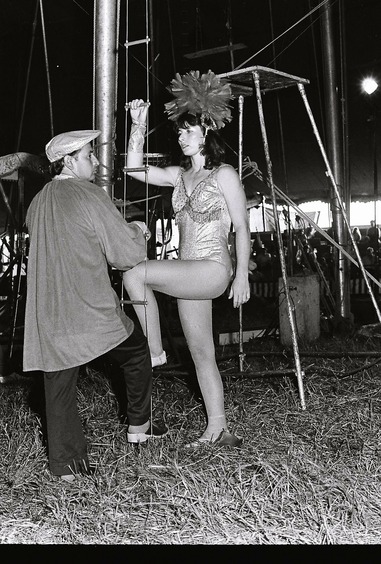
Beth was one of the performers. Her lovely frame was also involved in the many chores taking place. I would soon learn that she walked the tight wire in a three-ring display of wire walkers, went aloft on the aerial web, rode the elephant in the show and assisted the whip cracking guy with his act. 

My immediate thought as I saw her that first time from a distance was; “she needs a friend.” 

  I was able to say hello when our paths crossed and hoped my meek attempt made an impression.  

The caravan of trucks left winter quarters and threaded their way to the opening town. There, we were assigned our parking positions in the backyard. Beth chose to park next to me. Our glorious season began. The rhythm we adopted was not a mystery to us. Regular tasks were accomplished each day around the big top going up and down with the whistle blow to signal the start of another show. 

GreatAmericanCircus-78-DaveHorseAct-1-dark 3

The Fruehauf trailer came with a blue and yellow canvas awning for horse housing. This went up every day. I lashed portable fence pieces to three of the side poles for the pony’s cross-tie area. From there they could look outside. Larger fence sections set up at the other end for a stall for Bingo. Behind the ponies, under the shade of the awning was the area Beth and I shared during the quiet time between shows for some rest and to enjoy an amber beverage. We called this place the pony tail lounge. As the season commenced, our lives and routines in the performance and the backyard became woven together into a dance of love. 

Getting Ready


Although initially I started as a drummer for the circus, using my skills with a paint brush occurred even before the first time I played the drums, perhaps revealing the inevitability of this career path. This was further propelled when, after the wreck of my liberty act pony truck, I lost the means to stay with the circus and began to paint as my primary role. 

The next summer, I discovered a huge market for hand painted sign and artwork on the fairgrounds. This provided the funds needed to re-equipped myself to resume performing with my six-pony liberty and horse acts. While painting the fleet of Clyde Beatty-Cole Bros Circus in winter quarters, I secured a position performing on the King Brothers Circus, one of three Acme Circus Corporation shows, for the season of 1978.  The King Bros Circus had all the admirable features of a medium sized big top circus. I had seen this circus in the past, met most of the personnel, and compared to the hillbilly operations I was used to, from the positive impression received, this first-class circus became a logical goal. When the fleet of the Clyde Beatty Cole Bros Circus was finally complete late winter of 1977/78, I made the trip to Arkansas to begin re-equipping myself to perform.   

By this time my parents had purchased a five-acre plot of land in the Ozarks to build a house upon. Part of their motive with this property was to also have room for my animals. With my six-pony liberty act, I had created a wonderful career with a promising future. Now, the startup hurdle was over and the animals were seasoned performers. The package was perfect in many ways. The magnitude of work to get to this place had been rewarding and the multitude of experiences helped me in other ways especially in the relational arena. Now the business of having this batch of ponies as an act settled into finding opportunities, performing on a regular basis and the ongoing maintenance on the road.  

Another aspect that made this business perfect was that I had options other animal handlers did not have. For extended periods, I could place them on pasture during the off season, freeing me to pursue sign painting opportunities. I actually credit these ponies with making me a better sign painter. No matter what, they kept right on eating. That motivated me ongoingly to find and secure sign work. The ploy worked. I had the funds needed. Now the time was here to get re-equipped. 

My dad joined in my quest and helped me find and buy an old single-axle semi-tractor. When we found one we liked, being a shrewd negotiator, he provided them with a list of what the truck needed in order for us to be able to buy it for that price. When the truck received all the things that my dad insisted be fixed or added, we also discovered they put a new front bumper on it with yellow fog lights. This was a cab-over, the style the manufacturers came up with to allow for a longer load. By putting the driver over the engine, the overall length of the cab was shortened. This one had a bunk too. The cab was both white in color and the manufacturers name was White. 

It had what the truckers called the screaming’ meanie Detroit engine, a ten-speed transmission and two large fuel tanks. I had to learn how to operate and maintain this piece of equipment and the men at the shop were very helpful. I learned how to tilt the cab, so I could then walk up to the motor. But I was warned to make sure everything loose in the cab was secure or else something could go through the windshield. I became familiar with all I needed to know on this, my first diesel. When we were about to go, I received some final advice from the men at the truck repair place. 

  “If it ever sounds terrible, like it is just about to fling itself apart,” I was warned with a sideways smile, “just keep driving it.” 

  While interacting at that truck dealership, I saw a sign painter lettering a truck. I went over and took the time to watch as he put letters on the door with a curious little brush in a casual, effective way. Soon after he noticed I was watching, some friendly rapport began.  

“Watch this,” he began, and then added a sinister twist, “they said it couldn’t be done.” 

I watched for something amazing. He loaded his brush with paint, carefully paletting it before bringing it back into the proximity of the truck door.  

“I invented a new way to letter,” his brush touched the bottom guide line and went up, making one stroke of the next letter. 

“I call this the upstroke,” he revealed while I observed his special technique. 

This fortified that there was much more for me to learn in this fascinating field.  

The old Fruehauf moving van that a horseman with draft horses had for sale came with an awning, ramp and living quarters. Once the truck place made all the improvements my dad insisted upon, we were ready to go on an adventure in the old truck to retrieve the trailer in Wisconsin. 

  I know how to travel light. But my dad insisted on bringing far more stuff that was necessary for a whirl-wind trip. He had a bed roll, pillows, his dop-kit, luggage with clean clothes inside and extra jackets. In order to climb into the bunk, he had to move all of that stuff out and onto the passenger seat first. He and his stuff took up more than half the room. I would be confined to the driver’s seat the whole time. Superdog stayed with mom this trip. Once the trip started, we drove day and night to get there.  

While driving, I became familiar with the shift sequence of five speeds and then click a button and repeat the shift pattern for the next five. My dad wanted to drive too but had a few problems with the complicated shift pattern so I did most of the driving. 

When we arrived at the horse farm in Wisconsin, we spied the trailer right off. At one time it was a moving van. The front was round in the modern streamline style that was popular and state-of-the-art in nineteen fifty-five. The side had two double doors on the main floor, one with a loading ramp for the horses that cradled underneath, and an added RV entry door up over the hitch. The rear of the trailer opened up completely with double doors on the back.  

The interior had formed tie cleats in the vertical ribs to secure any load and light plywood mounted between to make flat walls. The only obstacle on the flat wooden floor was the square wheel boxes over the rear axle covering the dual tires.  

Bert was a pleasant man. Plump and hearty as a fine example of a healthy dairy man. His draft horse team was both an advertising expense for his trophy business and was also a hobby. While my dad engaged in satisfying his curiosity about the many aspects of his vast farm, I conducted an inspection. 

The unit did not have much exterior damage due to rust, as some of these old trailers sometimes have. My dad and I agreed that this piece of equipment would work nicely for my purpose.  

Soon after hooking on to it and discovering that everything worked, we headed out. The plan was to stop by St Louis to see my sister’s family and break up the jump. While pulling the Fruehauf, my mind began percolating on how I was going to rack the interior and what materials I would need. Arriving in St Louis, we spied a salvage building material place and purchased plywood, planks, conduit, 2×4’s, tanks, a shower stall, barrels, etc. to rack the interior and establish the infrastructure. While parking in a neighborhood close to where we could visit family late on a Friday, we saw something else compelling. 

We found a pleasant shop in an old store front with “Signs “on the façade, where signs were being hand lettered inside. Intrigued with the caliber of the gilded work on the large plate glass windows, we went inside.   

My dad is naturally both inquisitive and curious about most everything. The owner took time to answer all his questions. I made a visual assessment of the physical layout and characteristics of this business, with special interest in what was used for handling the projects going on. An employee was at the painting easel finishing up a gorgeous sign. This provided me with an opportunity to watch his technique. When finished, he took his kit, said good night to the boss and left. As the conversation between my dad and the shop owner continued, we learned about snapping. 

Although a paid employee, during weekends his painter would secure work in the neighborhood and put the money in his pocket. This is an ethical gray area because of the competition factor. This behavior is referred to as snapping because the itinerate sign painter snapped his straight guide lines with a length of string and a piece of chalk. 

My dad had obviously taken an interest in my vocation and was encouraging me. Each situation to observe others at work in this industry revealed tid-bits of information and remained an ongoing focus for my ambition. He then asked the owner about his recommendation for my aspiration to become a sign painter. His advice was clear and simple. The best way to learn was to get a job working under someone who could teach the skills. There were several kinds of sign men, ranging from the billboard and pictorial men to the creators of fine gilded work on glass. They were considered the epitome of the tradesmen. With his encouragement, I had a goal, but for now it would have to wait. 

Back at my parent’s new place, I got busy unloading the materials. I began building what I had envisioned, getting this trailer ready to haul all the aspects of the pony and horse acts, and to work out of and live in.  

A bulkhead already existed between where the horses stood and the step up to the living quarters over the fifth wheel hitch. I would not need all this floor space so I installed an elevated shower stall even with the floor of the living quarters. Underneath was ample room for the stakes and poles for the awning. I placed two fifty-five-gallon drums side by side for water storage and welded a hose fixture at the base of each for a gravity feed outlet. I lashed an old tank from a water heater in the upper corner of the wall against the roof as a reservoir for a gravity feed shower. To get the water up there, I used a hand operated drum pump in one of the water drums.  

With the high ceiling inside, I had the room to make a huge shelf for hay storage over where the ponies would stand. Between the wheel boxes in the rear, I built a box stall to back the horse into and a bulkhead to separate the rear section for additional storage and a bunk that went the entire width for my groom. I still had the steel steps from the previous truck and by making a small stand for the base of one, had access to the living quarters door over the hitch. The curved front of the trailer provided a challenge for making my bunk conform to that graceful shape. Careful cutting resulted in a piece of plywood that conformed to the interior wall. Underneath, I fashioned a desk and wardrobe closet.  

  Racking the interior and getting equipped was handled quickly well in advance of the time to open on King Bros Circus. When the improvements were complete, I was ready to load out and begin my trip to Florida. I thanked my friends at Shiloh for the use of their farm for the previous year and bid my parents adieu. With everything loaded I began the trip. 

This was the first time entering the sunshine state with livestock. I didn’t know about the requirement for health papers to enter Florida. I was turned around at the agricultural inspection site to go get the proper paperwork prior to entering. I went to a veterinarian’s office near a stock yard, the tests were performed and I was again, on my way. 

At that stop was the first time I fed them in the trailer. I put the feed bags on the ponies and suspended a feed tub in front of Bingo. In order for him to eat out of the tub, I dropped one of the cross-ties. During warm weather, I traveled with the side door open. As I prepared to get back on the highway, fortunately I looked in the rear-view mirror and saw Bingo trotting alongside the open door of the trailer. Without the cross-tie to prevent his movement, he had the ability to jump out of the trailer. Because the outside check was still fastened, even though he was on the ground outside, he was still tied to the rig. I am so grateful to have looked at the moment I did. I don’t even want to think about what could have happened if I had driven away not knowing. 
Re-equipping Myself


I now had enough money saved to resume my performing career. First, I had to replace the needed rolling stock. I had a lead on an old Fruehauf moving van that was for sale. With this trailer I could load the six-pony liberty act and my Manege horse inside and hit the road. I would have to hurry to make the preparations needed in order to return in time to assume my job as an entertainer on the soon to open King Bros. Circus. I had plenty to do. So, I bid adieu to Billy, Edna and the others. They would be long gone and on the road with this freshly painted major circus by the time I returned to open with King Bros Circus. 

As I maneuvered my beloved bus out through the entrance gates for the final time and headed north, reflection began in regard to making this career move. Soon the majestic oak trees with Spanish moss gently swaying from the boughs disappeared and tall pine trees hovering over bare red earth lined with needles flanked a highway that imitated a roller coaster as I traversed Alabama. I thought about my decision to leave home during high school and join the circus. Then the climb to the top in that industry was interrupted by mishap. An attempt to continue in a rudimentary position did not provide a place for my creativity to flourish. So, I turned my back on show business and made the decision to pursue an unknown. I began to paint signs 

I found freedom and circumstance in this new trade that provided experiences and challenges all along the way. The artistic venture facilitated unstoppable growth as an endless stream of painted visual delights were created for the steady stream of customers that requested my work. I had found my future and I was encouraged, yet my role as a performer with horses was not yet over. Now was the time to resume this vocation and thanks to this trade, I had found the means to do so.  

A long flat highway with regular heaves in the seams of the concrete roadbed made crossing southern Arkansas very rhythmic. I looked forward to going home. My dad would want to hear the stories about the adventures and would certainly display amazement at the level of skill I had developed. 

As the trek entered the northwest corner of the state, the roads took on a very different look from any I had been on all summer. Long grades alongside sheer drop offs afforded breathtaking scenery. Hairpin turns and curvy roads took me up and down through the same spectacular Ozark countryside that impressed me a few years prior.  

The excitement of last few miles of the trip imitated a building emotional crescendo. The ticker tape parade that New York threw for world class adventurer Charles Lindbergh seemed puny in comparison to the welcome I received from my Mom and Dad when I arrived where they were staying in Sulphur Springs. 

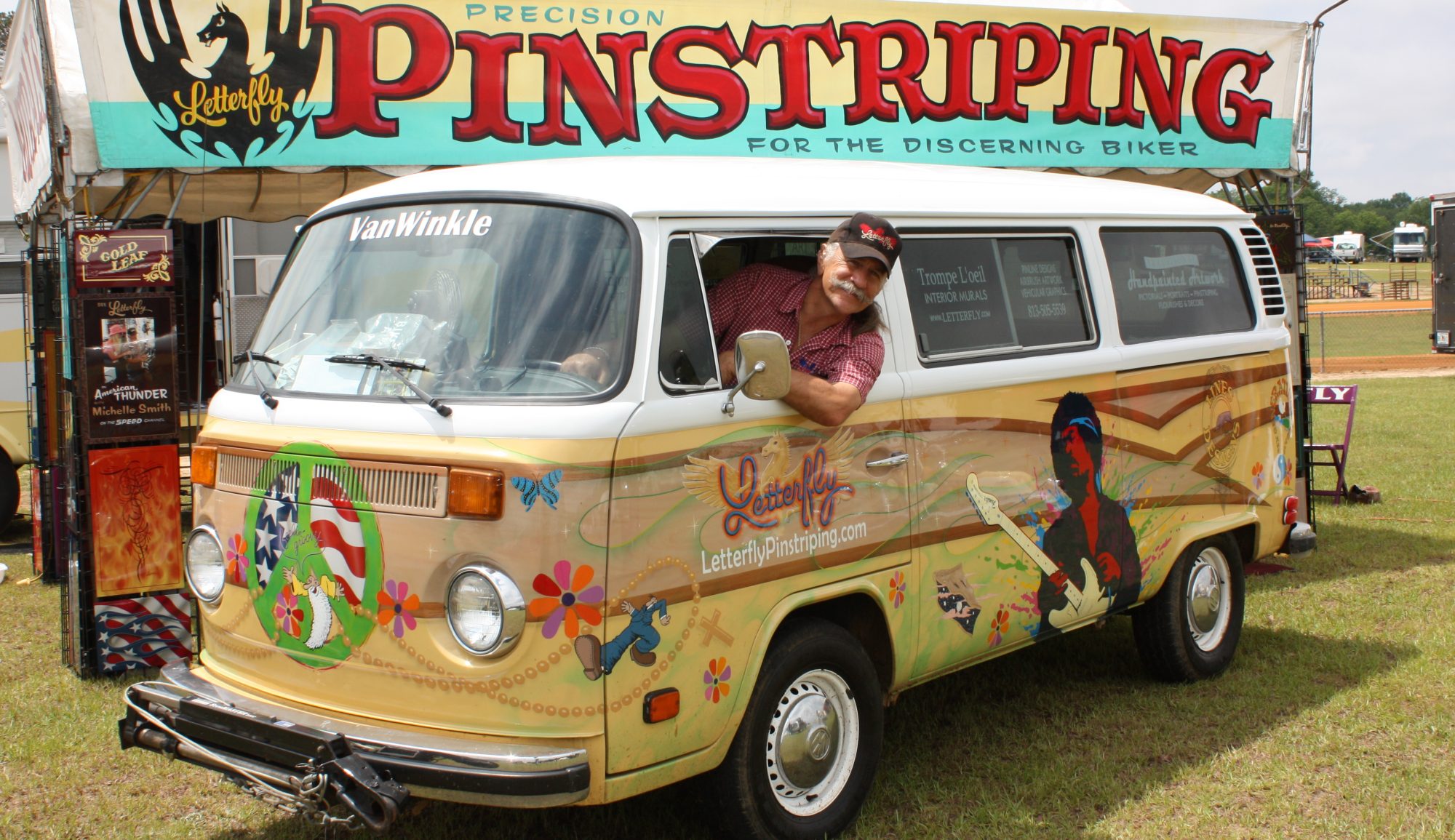
My bus would now get some rest. I had a plan to acquire and outfit a moving van to carry the horse acts and hit the road once again. The VW with its collection of hand painted artwork, although now on the quest of collecting dust, would remain an art gallery and a testimony of the years adventure, waiting for the time I would return and once again resume another challenge of adventure, seek the promise of an unknown future and propel the magic bus and myself unstoppably forward. 

The Circus Artist

   The affluent nature of my South Florida suburban surroundings evaporated as I entered central Florida. I motored through great oak hammocks, old cracker homes and gentle rolling hills. The circus winter quarters had a different energy when I returned, starting when we pulled through the gate. Billy was on the job, standing in front of the office truck with his trademark bottle of coke, all duded up in a suit and a tie. Edna Antes was inside at her desk attending to the many duties that surround running a show of this size.

       Superdog knew he was home and could hardly contain his excitement as I opened the door and he leapt outside. The main barn had one of the long flatbed trailers inside without its load and workers were giving it a fresh coat of red paint. Far from adept, the mismatched crew were more dabblers than painters. I then realized how the spillage on the floor, noticed during my previous visit, had been created.

       Once parked, I had an opportunity to see industry taking place in all the departments across the grounds. I met with the busy manager and he showed me the various projects underway. John Pugh filled me in on how I would get the monumental task of decorating the fleet accomplished. I could have as many of his men to help with the painting of each truck and trailer as I wanted. We could move each unit into the main barn to work on except the office, which had to remain out front with the phone line intact.

       The first line of business was to get acquainted with the crew, assess what was available and tune up the painters coating the trailers to use slightly thinned red paint, so that the lettering underneath would remain visible. By teaching a couple of good-natured, wiry and animated men the finer aspects of covering large areas with roller and paint, a steady stream of freshly painted, ready to letter trailers began to emerge.

Circus 3

       Next, I selected two clever guys to wield two-inch brushes to fill-in the large yellow letters that spanned the length of each trailer. Some artistic talent existed in another couple of guys, and with their help, we began to create the painted blue shadows that add visual impact to these large lettering jobs. I would follow behind all this double coating and hand paint a half inch black line around the large letters to hide the ragged edges and give them a finishing touch.

       Once enrolled, the men with all this hard work began. I was freed up to create unit numbers and large interesting images, flourishes and outlining the completed letters. A half inch black line around the other men’s work not only cleaned up the ragged edges but it gave it some punch.

       Although each semi had a masthead show name consistent with the rest of the fleet, the flourishes I designed were individual. I put a quartet of band instruments surrounding the unit number on the musician’s sleeper. Little elephant heads appeared in the top corners of the bull trailers. Art Noveau Fluor d’leis, jungle foliage, bamboo borders, funny hats, lightning bolts, confections of all kinds and images of tickets all served to add interest to the variety of loads in the large fleet.

       The weeks went by fast. In an effort to keep the crew moving and create my painted imagery, the trail I blazed through winter quarters each day with yardstick, rolled up paper patterns, my variety of colored paints and brushes made Superdog’s daily rounds wax pale in comparison.

63 34

       The weather cooperated nicely with working outdoors that winter. We worked on them where they were parked instead of having to pull them through the large main barn in order to stay inside and dry. Having many of the semi-trailers in various stages of completion all around the grounds facilitated rapid progress.  

       Towards the end of the project, the remaining major masterpiece to undertake was perhaps the most important. That was the office.

       Torrential weather began and required that this truck be moved into the main barn out of the rain, compromising the rigid original request to not move this unit under any circumstances. The marketing department was populated with the usual nimrods who had become design experts. They came up with an image for me to recreate on the office. Although the logo had, in my opinion, some design flaws, they insisted it be recreated as per their example.

        When this final project was complete, the monumental task of lettering and decorating a forty-unit fleet finally came to a close. Prior to leaving, I was asked to go once more to the complete office. Edna had a message for me.

Sign Man 3

       She told me that Mister McKlosky, the owner of the three circuses said; “go ahead and paint the other two shows” (King Bros. Circus and Sells and Gray Circus)

       I responded, “I had to go.”

The Birth of A Name

Superdog and I concluded our exploration of this wonderful yet mysterious place and set our sights toward other locations that offered adventure and the opportunity to earn a living painting signs. I had a small footlocker with some interesting items stored inside. Among them were some antique railroad lanterns with colored glass lenses that Hayes has given me. To lighten my load, I wanted to leave this stuff here at winter quarters until spring. Then, I had more room inside the bus for comfortable living.  

In the center of the winter quarters was a low structure with a corrugated metal awning on both sides with a few bunks inside for the working men. The Ponderosa had a mysterious energy, although only lightly used during the dormant winter. I placed my trunk in an out of the way place along one of the porch roofs for safekeeping. My plan was when I returned to paint the fleet, I would retrieve my belongings.

My love for horses influenced the selection of territory in which to make a living. I aimed the bus at an affluent area of South Florida, a mecca of horsemanship, for my quarry that winter. My concessionaire contacts from the Michigan carnival lived in Boca Raton and wanted some painting on their motorcycle. After saying goodbye to Billy and promising to return when the circus was ready to decorate, Superdog and I jumped into the bus and headed down the road. It was Christmas time.

The miles began among agricultural symmetry, morphing into urban sprawl and gradually became a vast rangeland dotted with puffs of palmetto thicket. South Florida provided a labyrinth of highways with a highly concentrated population. The destination proved to be a wealthy area with an abundance of Christmas lights that seemed out of place without snow.

I found Jack & Sid, decorated their motorcycle with a cowboy sitting by a campfire in the desert and was treated to an evening of fun at their favorite bar. With the help of my hosts, I then received an interesting lead that took me to the Polo Center of Boca.

On the outskirts of designer neighborhoods with terra cotta tiled roofs, geometric shaped windows and driveways with shiny status symbols parked in the midst of sculpted and landscaped terrain lay a large area with several specially manicured grassy playing fields. Thundering horses with aggressive riders competed for the thrill of the chase and elusive victory. Most of the time this place was dominated by mundane routine that accompanied taking care of horses, tack and lawn. I then met the boss. My skills were needed at the large scoreboard and the box seats in the grandstand.

As the tedious process of rendering names filled my day, there was ample time to mix with the riders to quiz them about their unusual vocation. As they described the dangers and the frustration of interacting with other men on horses and the penalties of not adhering to strict protocol, they saw the lengthening of my face and the quizzical expression followed by wondering why any of this could possibly be worth it. I then received an explanation.

“There is nothing in the world that compares to the brief moment, by chance, of actually being in front of all the horses on the field, going hell-bent for leather while on-line with the ball,” my polo playing friend explained.

“Closing in rapidly toward the target with fresh adrenaline coursing through my veins and at just the right moment I swing the mallet with everything I’ve got,” he continued, “I hit the ball and then watch it sail downfield and go through the goal as the crowd goes wild.”

“That,” my good-natured friend explained to me, “is what makes it all worthwhile.”

It was early one morning at the polo grounds that I came up with my new moniker. True, “Krazee Davee” was emblazoned across both sides of the bus, but during my travels, I had met several other crazy Dave’s. This prompted an awareness for the need of a new brush name. I had been born with a name that nobody could remember, spell or pronounce.  Frustration with the difficulties of my real name in school made the creation of something simple with animation a priority. A dividend would be a hidden meaning.

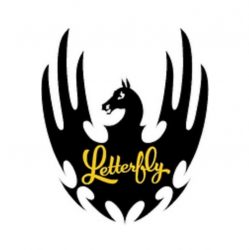
Out of the blue, one uneventful morning, came the inspiration; “Letterfly!” I immediately liked it. The hidden meaning would imply not only proficiency with lettering but also hint at ready to go and imitate the slang Let ‘ER fly used by the horsemen. My new name was everything my German name was not. It was easy to say, remember and spell.

I began to think of images to use with my new name for a logo. I recalled my childhood hobby of insect collecting with butterfly raising.  My first artistic attempt incorporated butterfly wings flanking a woman’s body with an artist hidden in the design. He was at work painting away. These early attempts with the butterfly never really worked, so I kept searching for the right image.

My stay at the polo grounds was certainly interesting and productive but beyond the box seating and the scoreboard there was very little sign work to do. One of the horsemen told me to go north to the West Palm Trotting Center. This was the wintertime headquarters for horses and horsemen of a different genre. They could surely use my skills on their variety of equipment.

The drive to this new destination through the concentrated suburbs was brief. Luxury and opulence was in evidence the whole way. The trotting center was an even more sophisticated horse facility with neat rows of barns, spaciousness and several large oval tracks where the daily training took place. Young horses were started here to prepare them for a career pulling a bike or two-wheel cart at any number of trotting tracks across the country and Canada. Other horses were recuperating and undergoing therapy so at some point their career could resume.

The bikes were painted with stable colors, the color scheme that was on all their equipment even the driver’s silk uniform. The nicer bikes had pinstripes that ran along the length of the shafts and the occasional track mishap or close call would scuff a little of this paint off. This is where Letterfly the sign painting guy fit right in. Not only would I letter the stable name on their tack trunks, truck doors and director’s chairs, but I could repair the damaged paintwork on these bikes.

Back at Hayes, I had fashioned a fold up drawing table that neatly tucked away in the bus. Now at the trotting center with plenty of lettering to do, I set up shop under an overhanging roof of one of the stable barns. The bus was parked under the comfort of a shady tree nearby, and in the midst of the ongoing pace of daily activity, Superdog and Letterfly thrived.

At night all was quiet. With no lights on any of the barns the only illumination came from the billions of stars that commanded the skies. The darkness provided a comfortable place to contemplate the vastness of God’s splendor, dream up creative solutions for the steady stream of artistic requests that came each day and unwind with Superdog, prior to bedtime.

It was on one such peaceful and quiet night that an exciting occurrence took place. I heard the thundering of horse’s hooves dominate the darkness. My heart quickened, my first thought was to get out of the way but in the darkness, I was unable to see where the loose horse was. So how could a collision be avoided?

Evidently a young horse with a daily regimen that made him strong, fast and restless had managed to get out of his stall. Now he enjoyed freedom and expressed his joy the best way a horse knew how and that was to RUN! “To fly without wings” best describes what this majestic beast is made for.

While I sat in the darkness not knowing where the wild horse was going to go next, I was inspired. I realized how appropriate honoring the horse was to me. I knew to redesign the logo for my new name Letterfly.

Horses are a big part of my life. The image of a horse would best exemplify all that, as an artist, I stand for. Including this image validated my love for the horse and when I added wings to support the fly. My design began to work.

Several versions later I had what I wanted. The new image successfully communicated the scope of my interests, suggested proficiency and was a concept of what I stood for. Also implied was that my service provides propulsion for my clients to rocket forward. This is how Pegasus was adopted and remains the icon that best describes Letterfly the artist/horseman/entertainer.

My time at the trotting center remained productive through the winter months until finally, the time came to return to the circus winter quarters and begin my role as decorator of the fleet. I bid farewell to my many horsy friends and headed north.

Circus Winter Quarters

While driving south through Georgia, I noticed palm trees dotting the landscape as we neared the sunshine state. The terrain had a unique look. In spite of the frequency of rain, the green of the foliage had a faded look the result of relentless sunshine. The highway billboards became frequent. Ads attempted to lure the viewer with promises of mermaids, sunshiny beaches and water wonderlands along with sophisticated destinations for golf, amusements and sunbathing. My favorite billboard ads were for the Coppertone products. A reclining bikini clad beauty provided the focal point and was very effective at capturing attention and prompting my imagination.

My destination was Deland to respond to the request to decorate the entire fleet of the Clyde Beatty-Cole Brothers Circus while they were in winter quarters. I studied a map and found a route that went through a great forest. Florida wilderness is unlike other places. A unique charm exists as palmetto thickets in the midst of tall pine and oak trees thrive to provide a home for wildlife. Graceful birds and fleet footed lizards in abundance gave animation to the serene tropical forest.

As the trip progressed, directional arrows for the fleet started to appear on the posts of the roadside signs. I then realized my destination would be very easy to find. I would simply follow the arrows.

As I neared Deland, the arrows led me to an interesting show business mecca. Outside of town, near the railroad station were the old fairgrounds that now served as the winter quarters for the three circuses owned and operated by the Acme Circus Corporation.

Arriving at this location brought my experience with this show full circle.  The annual visit of the Clyde Beatty Cole Bros. Circus during my childhood was like a holiday/festival/adventure all rolled into one. As I neared this special place, I spied the tall chain link fence that surrounded the place. I went through the gates in front. Palm trees lined the roads inside. Bright yet well-worn circus trucks were parked haphazardly, as if abandoned in a hurry. Only a few people stirred, and none were in any special hurry.

Superdog was anxious to get outside. The sight of the fleet meant he was at home. His life on a show was the only life he knew. As we rounded the driveway and maneuvered towards the travel trailer parking area, he became noticeably animated. Barely coming to a stop, the moment I opened the door, a white fluffy blur shot over my lap and went out the door.

His self-appointed job was to check out each new neighborhood.  If you could take the course he took on these jaunts and straighten it out, the length would easily reach from here to the moon. Superdog had wisdom learned from being on many different shows for every year of his life. Now he carefully assessed the layout of this place, frequently looking back for me while determining his options. This dog was the perfect match for someone with an appetite for adventure.

Superdog was the only pup in his litter not currently in a dog act. All of his sisters earned their living sitting on pedestals and jumping through hoops. And his sister Fluffy even jumped off the high ladder into the arms of her trainer. Superdog was born to blaze a trail, seek distant horizons and make friends all along the way. His smiling face caused most people to melt. Many times, as I searched, wondering where he was, I would find him smiling in the midst of a group of girls petting and adoring him.

I would exclaim “there you are,” but inside I was secretly saying, “I’m proud of you.”

Here in the circus winter quarters he was in his element. He checked out the row of travel trailers ignoring the harmless yapping dogs. He appealed to the animal lovers that attracted him. Relentlessly he inspected this new home and disappeared around the corner of a barn on his quest to become familiar with every aspect of his new surroundings.

This was a mysterious place that the circus-loving public didn’t see. Gone were the musicians, performers, the sparkling costumes and the hoopla. No flags were waving or lights flashing. Other than the exotic smells of the animals, nothing was much out of the ordinary here.

I found my friend Billy Griffin, who had his travel trailer parked in one section of the vast compound. After checking in with him, I set out on foot to explore the grounds. Billy was a retired clown who now sold tickets in the office. He had a perpetual seven-ounce bottle of Coca Cola in his hand and had been around the circus since he was old enough to join as a teen. We met on the Fisher Bros. circus just a few years prior.

Large silver barns stood empty except for the piles of seat boards that appeared hastily unloaded from the nearby trailers. Now they accumulated the inevitable layer of dust, illuminated by long narrow bands of sunlight coming from overhead. Bundles of canvas were piled atop the stacks as if the elevation would offer some protection. A group of red trailers wait outside, each with its specialized task aboard yet dormant for a time. The splash of color emblazoned on the sides of each one in this setting seemed to stir little excitement.

The lions and tigers are gone, away at a compound in another county but the elephants were here evidenced by the activity going on in a large area at the very back. What was once the fairgrounds grandstand is now a stair stepped roofed barn that housed the pachyderms, all chained in a row. The picket line was not unlike when on the road, except here the chains are secured in the concrete of the floor. This is the only place where a full crew remained. The task of feeding, exercising and picking up after the bulls took place year-round and the nearby steaming mountain of manure was testimony to the magnitude of by-product these animals produce.

With throngs of people absent from this collection of brightly painted apparatus, a different kind of energy dominated the scene. I entered the main barn where a lone workman stood at his bench in the dim light of a solitary bulb. A jig had been made on the workbench to receive three grandstand chairs at a time. This facilitated the ongoing, much-needed repair of hundreds of seats during the winter months. Chairs stacked high dwarfed him as, one-at-a-time, he replaced damaged and worn chair legs, seat boards, and in some cases discarded the trusty folding flat, wooden seat that had easily seen enough loading and unloading for one lifetime. Three of these chairs were attached together with a strap of flat steel top and bottom. All this activity requiring drilling and bolting in addition to simple wood crafting. This lone workman had a pace that would, like the tortoise, get him to the finish line by the time the circus opened in the spring.

Among the plethora of interesting items stored in that vast hall was a Cinderella float. A pumpkin shaped carriage that had obviously occupied this corner for a long time judging by the thick coat of dust that all but obliterated the faded orange paint. Occasionally a scruffy workman, one of many society outcasts, filed into this great barn filled with interesting artifacts to urinate in the corner.

The big top pole trailer with the all-important center poles, quarter poles, side poles and a spare bale-ring occupied the center of this barn. Sacks of rigging and bundles of canvas were aloft in an area designated as a safe from critters and moisture, the two deadly enemies of canvas during storage.

A forgotten trapeze hung from high in the rafters; a silent testimony to one genre of this entertainment’s many art forms. Ticket boxes and trunks of all sorts were stacked nearby. The worn concrete floor had large areas of dried paint with footprints that lead away, evidence of an industry that had taken place long ago in this now fallow environment.

As I emerged through a doorway on the other side, the relentless sunshine bombarded the willing palm trees that separated us from the quaint brick railroad station. As I turned to make my way towards a large grassy field, my route caught up to Superdog. As he zigzagged a path ahead, he looked up to acknowledge me. With a slight hop in his step, he continued to blaze ahead.

As I crossed the field, I recalled that this as where they put the big top up in the spring. My mind began to wander. I pondered generations of circus history that had taken place on these grounds. I perused the preparations that took place decades ago, prior to the time I saw the show as a child and paused to appreciate the multitude of tasks that all blended into the finished product to provide pleasure and entertainment to throngs of people. As I stood alone filled with the wonder of it all, the sun warmed my face. The love of my furry companion warmed my heart. There is no activity taking place here today. It will be a couple of months before these semi-trailers began the annual process of receiving a fresh coat of red paint to get ready for the new season when my services as a sign painter were needed.