The year was 1971. I was on the first season of the Fisher Bros Circus, a show I helped build. During the only free time between set up and two shows, I had been tipped off that a fan was on the lot and had some circus pictures to see. Most of the circus people had an attitude toward any fan wanting to see the show for free, but I usually joined them to share their enthusiasm. As I rounded the corner of the tent, I found a friendly, tall man standing behind a green station wagon
I was greeted with; “Do you want to see some circus pictures?”
Instantly captivated, I pored through the albums stacked on the open tailgate of the wagon. In awe, I peeked at the recent history of the big top shows that he had seen and photographed.
Alien names like Sells & Gray, Hoxie Bros. and Kelly-Miller came to life as I turned each page scrutinizing each carefully considered image. What was valuable was the content. The layout of the support vehicles in regards to their context to the big top and the unique manner in which each semi was racked for a specific task or load. Or the action of the stake driver and spool truck. There were pictures of livestock trailers in repose, the cook house shown as a social center and the action at the concession department. Also depicted was the light plant, and bunk house and performers handling the activities of their specialty. As I studied these images, my mind started working coming up with additional ideas and plans for my career.
“It rhymes with Spaniard,” interrupted my focus.
I looked up, completely absent from the conversation. I was totally engrossed with looking at an amazing collection of photos. I glimpsed a grinning face, partially shaded beneath a well-worn hat. Fidgeting with a long brown thin cigarette, Hayes produced a cackle of nervous laughter, the result of self-satisfaction with his joke.
Beaming, and wanting me to understand him, he repeated the well-worn rhetoric.
“Ganiard,” he double-clutched, “My name rhymes with Spaniard, Hayes Ganiard.”
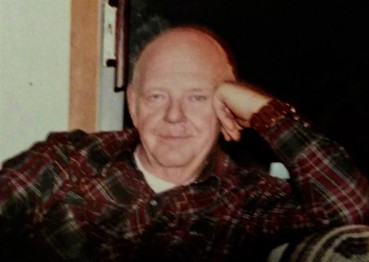
As I pored over the many photographs this man had witnessed, I had questions. These photos opened up a whole new world. With each question about a detail in a photograph, my host did his best to explain what he knew about the picture. I had seen old photos in books before, but this collection of traveling truck circus photos shot personally by this man made it seem more real – like seeing the rings of Saturn through a telescope for the first time. As Hayes explained the various aspects noticed and captured masterfully in his photographs, together we discovered a common ground upon which to build a connection.
The images accommodated a friendship with this round, friendly and beaming Michigander. Hayes Ganiard was a friend to the circus, providing help to the showmen who traversed southern Michigan in any way he could. I learned that he booked dates for Al G Kelly & Miller Bros Circus, became fast friends with circus greats Stu Miller, Ted Lavelda and others. I learned later that Hayes even convalesced an injured camel on his farm one summer. That act of chivalry made Hayes a local celebrity.
Hayes came to visit Fisher Bros Circus several times that first summer while we were in Michigan. With each visit, I found more to admire in the heart and soul in this middle-aged farmer with flat feet. He told stories about situations he saw, personalities he had gotten to know and as an admirer of everything circus, he found his love for the circus.
Hayes Ganiard was born into the wealthy family of the founder of the Hayes Wheel Company, that later became Hayes Industries, Kelsey-Hayes, and finally; Hayes-Albion. Hayes had a boyhood friend named Jack Paar. They both enjoyed tending to the homing pigeon hutch on the top of Hayes large home in Jackson, Michigan. Raising the birds filled the boys time that otherwise did not have a chance to become idle. Together they swapped birds and wrote little messages to tie to their legs. The boys often rode on their bicycles to release the birds and raced home to retrieve them. These pigeons often flew long distances. Jack Paar went on to become the host of the Tonight Show preceding Johnny Carson. Every New Year’s Eve he made a phone call to his boyhood friend Hayes.
During the depression, Hayes was one of the only kids at school who had nice shoes. He was teased mercilessly promoting a distain for family wealth. Hayes was inspired one summer by the circus. While enjoying the summer with family in the Hamptons, his father took him to New York to see a gigantic tented circus. It moved by train and included an army of people, elephants and horses. He saw the monumental task of setting up the tented city each day to give two performances before being taken down and loaded back on the train. Experiencing the Ringling Bros Barnum & Bailey Circus was love at first sight. From that point forward, deep down inside, Hayes had a secret longing to go and belong to the circus.
When Hayes grandfather was ready to nurture him for a life in business, Hayes announced that he wanted to be a farmer. His grandfather then bought a thousand acres of farmland on Jefferson Road near Clark Lake and a large Jersey dairy herd imported directly from the Isle of Jersey as a wedding gift. The pattern of up before dawn for the milking routine seven days a week became firmly established. He had the top dairy herd in the state for five years standing. Hayes and his wife Virginia raised three girls.
Their home always had an orphan baby being nurtured. Either an injured bird or squirrel convalescing in the kitchen, or snakes, frogs, guinea pigs, rabbits, goats, raccoon and a weasel. There was an endless stream of mice caught in a humane, live trap. The joke was that Ginny was simply catching the same mouse over and over. This was something Hayes finally proved with a little red nail polish applied to the mouse.
When his career as farmer and father changed, Hayes had the time, energy and resources to pursue his secret love. He began to make a photographic record of the circus for posterity. He took pictures of quaint big tops, nicely painted semis, flashy but seductive costumes and exotic animal attractions. He also had anecdotes associated with each one and was ready to enlighten me, an enthusiastic seventeen-year-old. Hayes was a natural born storyteller who had the keys that opened the door to this fascinating world.
The circus would leave the proximity of my new friend in south central Michigan, but we stayed in touch. Hayes extended hospitality with an invitation to visit him at his home. A half a year later during the winter, I drove to Michigan. With a light covering of snow blanketing the territory the circus had covered, I found my way to Clarklake to visit my friend at his home.
His elegant white Greek revival home on Jefferson Road sat on a rise in the shade of large Oaks, Austrian pines and evergreens. The first time I stopped by, I was somewhat reluctant to park my camper where Hayes insisted, on the front lawn of his house. I entered the five-pane beveled glass wooden front door and went through the formal foyer, where the old grandfather clock from the C B Hayes estate seemed to greet me.
The home was warm and felt lived in with many antiques. The wallpaper and paintings on the walls reflected themes of fox hunting. The living room had a shiny broad plank wooden floor. The comfortable sofa became a warm refuge for me for a couple of nights. Over the large stone fireplace hung a Revolutionary War era rifle with a wooden ramrod and flint clamped into the hammer.
Also, prominent in the living room was Hayes father’s baby grand piano. The girls still had fond memories of when their grandfather came to visit and played for them. They remember their grandfathers carefully trimmed fingernails making a delicate sound whenever they came into contact with the ivory keys. While in close proximity, this nuanced sound added a special touch not available to most audiences. During my visits, Hayes daughter Julie often filled the home with lovely music as the result of her prowess at the Steinway.
My two-day stay revealed the world of a big-hearted storytelling, family man with broad interests. In addition to talking more about the circus, Hayes elaborated on the wheel making business that his family was involved in. The Hayes Wheel Company made breakthroughs from the time of the spoked handmade wheel that followed the wagon and carriage trade into the automobile era with a stamped one-piece steel wheel. Farming and many related specialties were a source of fascination and fodder for more tales. His one-eyed dog “Nipper” was cautiously alert and always by his side. He was the subject of several of his stories.
Hayes had three daughters, two of which were married and out of the house. He had a lovely wife, Ginny. Although she was less than enthusiastic about my stay at their home, Hayes made up for it to her with his enthusiasm that suggested a hidden longing for a son. A son interested in many of the same things he was passionate about. He approved of my ambitions.
Encouragement for my ideas was something I hadn’t received from my own father, who instead insisted and hoped upon an entirely different direction for my life. Hayes became a mentor. Listening to my ideas and becoming a conduit for many other connections, Hayes would broaden my world in Jackson County. I received encouragement from Hayes to become a better artist, animal lover and showman. He listened to my ideas and encouraged me to pursue these ambitions. Our friendship continues to this day.…

 Letterfly Writes