Circus Winter Quarters

While driving south through Georgia, I noticed palm trees dotting the landscape as we neared the sunshine state. The terrain had a unique look. In spite of the frequency of rain, the green of the foliage had a faded look the result of relentless sunshine. The highway billboards became frequent. Ads attempted to lure the viewer with promises of mermaids, sunshiny beaches and water wonderlands along with sophisticated destinations for golf, amusements and sunbathing. My favorite billboard ads were for the Coppertone products. A reclining bikini clad beauty provided the focal point and was very effective at capturing attention and prompting my imagination.

My destination was Deland to respond to the request to decorate the entire fleet of the Clyde Beatty-Cole Brothers Circus while they were in winter quarters. I studied a map and found a route that went through a great forest. Florida wilderness is unlike other places. A unique charm exists as palmetto thickets in the midst of tall pine and oak trees thrive to provide a home for wildlife. Graceful birds and fleet footed lizards in abundance gave animation to the serene tropical forest.

As the trip progressed, directional arrows for the fleet started to appear on the posts of the roadside signs. I then realized my destination would be very easy to find. I would simply follow the arrows.

As I neared Deland, the arrows led me to an interesting show business mecca. Outside of town, near the railroad station were the old fairgrounds that now served as the winter quarters for the three circuses owned and operated by the Acme Circus Corporation.

Arriving at this location brought my experience with this show full circle.  The annual visit of the Clyde Beatty Cole Bros. Circus during my childhood was like a holiday/festival/adventure all rolled into one. As I neared this special place, I spied the tall chain link fence that surrounded the place. I went through the gates in front. Palm trees lined the roads inside. Bright yet well-worn circus trucks were parked haphazardly, as if abandoned in a hurry. Only a few people stirred, and none were in any special hurry.

Superdog was anxious to get outside. The sight of the fleet meant he was at home. His life on a show was the only life he knew. As we rounded the driveway and maneuvered towards the travel trailer parking area, he became noticeably animated. Barely coming to a stop, the moment I opened the door, a white fluffy blur shot over my lap and went out the door.

His self-appointed job was to check out each new neighborhood.  If you could take the course he took on these jaunts and straighten it out, the length would easily reach from here to the moon. Superdog had wisdom learned from being on many different shows for every year of his life. Now he carefully assessed the layout of this place, frequently looking back for me while determining his options. This dog was the perfect match for someone with an appetite for adventure.

Superdog was the only pup in his litter not currently in a dog act. All of his sisters earned their living sitting on pedestals and jumping through hoops. And his sister Fluffy even jumped off the high ladder into the arms of her trainer. Superdog was born to blaze a trail, seek distant horizons and make friends all along the way. His smiling face caused most people to melt. Many times, as I searched, wondering where he was, I would find him smiling in the midst of a group of girls petting and adoring him.

I would exclaim “there you are,” but inside I was secretly saying, “I’m proud of you.”

Here in the circus winter quarters he was in his element. He checked out the row of travel trailers ignoring the harmless yapping dogs. He appealed to the animal lovers that attracted him. Relentlessly he inspected this new home and disappeared around the corner of a barn on his quest to become familiar with every aspect of his new surroundings.

This was a mysterious place that the circus-loving public didn’t see. Gone were the musicians, performers, the sparkling costumes and the hoopla. No flags were waving or lights flashing. Other than the exotic smells of the animals, nothing was much out of the ordinary here.

I found my friend Billy Griffin, who had his travel trailer parked in one section of the vast compound. After checking in with him, I set out on foot to explore the grounds. Billy was a retired clown who now sold tickets in the office. He had a perpetual seven-ounce bottle of Coca Cola in his hand and had been around the circus since he was old enough to join as a teen. We met on the Fisher Bros. circus just a few years prior.

Large silver barns stood empty except for the piles of seat boards that appeared hastily unloaded from the nearby trailers. Now they accumulated the inevitable layer of dust, illuminated by long narrow bands of sunlight coming from overhead. Bundles of canvas were piled atop the stacks as if the elevation would offer some protection. A group of red trailers wait outside, each with its specialized task aboard yet dormant for a time. The splash of color emblazoned on the sides of each one in this setting seemed to stir little excitement.

The lions and tigers are gone, away at a compound in another county but the elephants were here evidenced by the activity going on in a large area at the very back. What was once the fairgrounds grandstand is now a stair stepped roofed barn that housed the pachyderms, all chained in a row. The picket line was not unlike when on the road, except here the chains are secured in the concrete of the floor. This is the only place where a full crew remained. The task of feeding, exercising and picking up after the bulls took place year-round and the nearby steaming mountain of manure was testimony to the magnitude of by-product these animals produce.

With throngs of people absent from this collection of brightly painted apparatus, a different kind of energy dominated the scene. I entered the main barn where a lone workman stood at his bench in the dim light of a solitary bulb. A jig had been made on the workbench to receive three grandstand chairs at a time. This facilitated the ongoing, much-needed repair of hundreds of seats during the winter months. Chairs stacked high dwarfed him as, one-at-a-time, he replaced damaged and worn chair legs, seat boards, and in some cases discarded the trusty folding flat, wooden seat that had easily seen enough loading and unloading for one lifetime. Three of these chairs were attached together with a strap of flat steel top and bottom. All this activity requiring drilling and bolting in addition to simple wood crafting. This lone workman had a pace that would, like the tortoise, get him to the finish line by the time the circus opened in the spring.

Among the plethora of interesting items stored in that vast hall was a Cinderella float. A pumpkin shaped carriage that had obviously occupied this corner for a long time judging by the thick coat of dust that all but obliterated the faded orange paint. Occasionally a scruffy workman, one of many society outcasts, filed into this great barn filled with interesting artifacts to urinate in the corner.

The big top pole trailer with the all-important center poles, quarter poles, side poles and a spare bale-ring occupied the center of this barn. Sacks of rigging and bundles of canvas were aloft in an area designated as a safe from critters and moisture, the two deadly enemies of canvas during storage.

A forgotten trapeze hung from high in the rafters; a silent testimony to one genre of this entertainment’s many art forms. Ticket boxes and trunks of all sorts were stacked nearby. The worn concrete floor had large areas of dried paint with footprints that lead away, evidence of an industry that had taken place long ago in this now fallow environment.

As I emerged through a doorway on the other side, the relentless sunshine bombarded the willing palm trees that separated us from the quaint brick railroad station. As I turned to make my way towards a large grassy field, my route caught up to Superdog. As he zigzagged a path ahead, he looked up to acknowledge me. With a slight hop in his step, he continued to blaze ahead.

As I crossed the field, I recalled that this as where they put the big top up in the spring. My mind began to wander. I pondered generations of circus history that had taken place on these grounds. I perused the preparations that took place decades ago, prior to the time I saw the show as a child and paused to appreciate the multitude of tasks that all blended into the finished product to provide pleasure and entertainment to throngs of people. As I stood alone filled with the wonder of it all, the sun warmed my face. The love of my furry companion warmed my heart. There is no activity taking place here today. It will be a couple of months before these semi-trailers began the annual process of receiving a fresh coat of red paint to get ready for the new season when my services as a sign painter were needed.
Meeting Hayes

The year was 1971. I was on the first season of the Fisher Bros Circus, a show I helped build. During the only free time between set up and two shows, I had been tipped off that a fan was on the lot and had some circus pictures to see. Most of the circus people had an attitude toward any fan wanting to see the show for free, but I usually joined them to share their enthusiasm. As I rounded the corner of the tent, I found a friendly, tall man standing behind a green station wagon 

I was greeted with; “Do you want to see some circus pictures?”

Instantly captivated, I pored through the albums stacked on the open tailgate of the wagon. In awe, I peeked at the recent history of the big top shows that he had seen and photographed.

Alien names like Sells & Gray, Hoxie Bros. and Kelly-Miller came to life as I turned each page scrutinizing each carefully considered image. What was valuable was the content. The layout of the support vehicles in regards to their context to the big top and the unique manner in which each semi was racked for a specific task or load. Or the action of the stake driver and spool truck. There were pictures of livestock trailers in repose, the cook house shown as a social center and the action at the concession department. Also depicted was the light plant, and bunk house and performers handling the activities of their specialty. As I studied these images, my mind started working coming up with additional ideas and plans for my career.

 “It rhymes with Spaniard,” interrupted my focus.

I looked up, completely absent from the conversation. I was totally engrossed with looking at an amazing collection of photos. I glimpsed a grinning face, partially shaded beneath a well-worn hat. Fidgeting with a long brown thin cigarette, Hayes produced a cackle of nervous laughter, the result of self-satisfaction with his joke.

Beaming, and wanting me to understand him, he repeated the well-worn rhetoric.

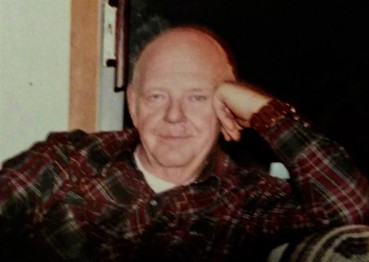
“Ganiard,” he double-clutched, “My name rhymes with Spaniard, Hayes Ganiard.”

66.1 Hayes 2

As I pored over the many photographs this man had witnessed, I had questions. These photos opened up a whole new world. With each question about a detail in a photograph, my host did his best to explain what he knew about the picture. I had seen old photos in books before, but this collection of traveling truck circus photos shot personally by this man made it seem more real – like seeing the rings of Saturn through a telescope for the first time. As Hayes explained the various aspects noticed and captured masterfully in his photographs, together we discovered a common ground upon which to build a connection.

The images accommodated a friendship with this round, friendly and beaming Michigander. Hayes Ganiard was a friend to the circus, providing help to the showmen who traversed southern Michigan in any way he could. I learned that he booked dates for Al G Kelly & Miller Bros Circus, became fast friends with circus greats Stu Miller, Ted Lavelda and others. I learned later that Hayes even convalesced an injured camel on his farm one summer. That act of chivalry made Hayes a local celebrity.

Hayes came to visit Fisher Bros Circus several times that first summer while we were in Michigan. With each visit, I found more to admire in the heart and soul in this middle-aged farmer with flat feet. He told stories about situations he saw, personalities he had gotten to know and as an admirer of everything circus, he found his love for the circus.

Hayes Ganiard was born into the wealthy family of the founder of the Hayes Wheel Company, that later became Hayes Industries, Kelsey-Hayes, and finally; Hayes-Albion. Hayes had a boyhood friend named Jack Paar. They both enjoyed tending to the homing pigeon hutch on the top of Hayes large home in Jackson, Michigan. Raising the birds filled the boys time that otherwise did not have a chance to become idle. Together they swapped birds and wrote little messages to tie to their legs. The boys often rode on their bicycles to release the birds and raced home to retrieve them. These pigeons often flew long distances. Jack Paar went on to become the host of the Tonight Show preceding Johnny Carson. Every New Year’s Eve he made a phone call to his boyhood friend Hayes.

During the depression, Hayes was one of the only kids at school who had nice shoes. He was teased mercilessly promoting a distain for family wealth. Hayes was inspired one summer by the circus. While enjoying the summer with family in the Hamptons, his father took him to New York to see a gigantic tented circus. It moved by train and included an army of people, elephants and horses. He saw the monumental task of setting up the tented city each day to give two performances before being taken down and loaded back on the train. Experiencing the Ringling Bros Barnum & Bailey Circus was love at first sight. From that point forward, deep down inside, Hayes had a secret longing to go and belong to the circus.

                When Hayes grandfather was ready to nurture him for a life in business, Hayes announced that he wanted to be a farmer. His grandfather then bought a thousand acres of farmland on Jefferson Road near Clark Lake and a large Jersey dairy herd imported directly from the Isle of Jersey as a wedding gift. The pattern of up before dawn for the milking routine seven days a week became firmly established. He had the top dairy herd in the state for five years standing. Hayes and his wife Virginia raised three girls.

Their home always had an orphan baby being nurtured. Either an injured bird or squirrel convalescing in the kitchen, or snakes, frogs, guinea pigs, rabbits, goats, raccoon and a weasel. There was an endless stream of mice caught in a humane, live trap. The joke was that Ginny was simply catching the same mouse over and over. This was something Hayes finally proved with a little red nail polish applied to the mouse.

                When his career as farmer and father changed, Hayes had the time, energy and resources to pursue his secret love. He began to make a photographic record of the circus for posterity. He took pictures of quaint big tops, nicely painted semis, flashy but seductive costumes and exotic animal attractions. He also had anecdotes associated with each one and was ready to enlighten me, an enthusiastic seventeen-year-old. Hayes was a natural born storyteller who had the keys that opened the door to this fascinating world.

The circus would leave the proximity of my new friend in south central Michigan, but we stayed in touch. Hayes extended hospitality with an invitation to visit him at his home. A half a year later during the winter, I drove to Michigan. With a light covering of snow blanketing the territory the circus had covered, I found my way to Clarklake to visit my friend at his home.

His elegant white Greek revival home on Jefferson Road sat on a rise in the shade of large Oaks, Austrian pines and evergreens. The first time I stopped by, I was somewhat reluctant to park my camper where Hayes insisted, on the front lawn of his house. I entered the five-pane beveled glass wooden front door and went through the formal foyer, where the old grandfather clock from the C B Hayes estate seemed to greet me.  

The home was warm and felt lived in with many antiques. The wallpaper and paintings on the walls reflected themes of fox hunting.  The living room had a shiny broad plank wooden floor. The comfortable sofa became a warm refuge for me for a couple of nights. Over the large stone fireplace hung a Revolutionary War era rifle with a wooden ramrod and flint clamped into the hammer.

Also, prominent in the living room was Hayes father’s baby grand piano. The girls still had fond memories of when their grandfather came to visit and played for them. They remember their grandfathers carefully trimmed fingernails making a delicate sound whenever they came into contact with the ivory keys. While in close proximity, this nuanced sound added a special touch not available to most audiences. During my visits, Hayes daughter Julie often filled the home with lovely music as the result of her prowess at the Steinway.

My two-day stay revealed the world of a big-hearted storytelling, family man with broad interests. In addition to talking more about the circus, Hayes elaborated on the wheel making business that his family was involved in. The Hayes Wheel Company made breakthroughs from the time of the spoked handmade wheel that followed the wagon and carriage trade into the automobile era with a stamped one-piece steel wheel. Farming and many related specialties were a source of fascination and fodder for more tales.  His one-eyed dog “Nipper” was cautiously alert and always by his side. He was the subject of several of his stories.

Hayes had three daughters, two of which were married and out of the house. He had a lovely wife, Ginny. Although she was less than enthusiastic about my stay at their home, Hayes made up for it to her with his enthusiasm that suggested a hidden longing for a son. A son interested in many of the same things he was passionate about. He approved of my ambitions.

Encouragement for my ideas was something I hadn’t received from my own father, who instead insisted and hoped upon an entirely different direction for my life. Hayes became a mentor. Listening to my ideas and becoming a conduit for many other connections, Hayes would broaden my world in Jackson County. I received encouragement from Hayes to become a better artist, animal lover and showman. He listened to my ideas and encouraged me to pursue these ambitions. Our friendship continues to this day.…

The Move

During the years of evolving in his profession in Springfield, Ohio, my dad became aware of how rapid graphic technology was developing. Changes were taking place with photography, film making, sound technology and education. His beloved boss was retiring and that would change his position in the hierarchy. He recognized a possible opportunity. He desired additional education to augment his skills with new audio-visual knowledge. That meant change.

The family moved to Bloomington, Indiana as I entered junior high school. Dad attended classes at Indiana University. The move into a compact home in a neighborhood with a dense population of kids also required us to ride a bus to school.

Moving away from the environs of childhood in Ohio at a tender age, we had to make new friends in another town. This disruption frustrated our meager attempts to fit in. The home situation remained frustrating and my sister and I realized being associated with John was a detriment. As we advanced through the grades, we formulated a way to stay far away from him and be safe. When Paula and I passed one another in the hall at junior high school, rather than acknowledge each other, we remained anonymous in an effort to avoid the risk of association. We would resume being fast friends at home in safety.

At that time, I was on fire to become a good drummer. The music department at IU provided me with an opportunity to take lessons from a great drumming college student. After my junior high school classes each Thursday, I went over to the IU campus to take my lesson. Afterwards I met dad, who was working in the graphics lab. He would show me what he was doing with photography and sometimes set me up in an empty darkroom with an enlarger and show me how to make my own prints.

By this time my circus producing abilities matured. By summer I would put on an even larger production, adopting the name my dad and his friend Fred used many years ago; Spark Circus.

I began building cages for chickens, rabbits and the turtles I accumulated. While I painted promotional signs, Paula began making hats and necklaces out of packing peanuts and paper bowls. The neighborhood kids were curious about what we were doing and were recruited one by one to help. Soon we had two crews; the boys helping me with manly activities and the girls making prize and craft items under Paula’s watchful eye.

The masculine duties were pounding stakes into the ground and setting up and climbing the center pole we erected in the backyard. Stretching a rope tight enough to walk across became a challenge that required accumulating ever larger stretching-devices. We practiced Indian dancing routines, acrobat tumbling and hanging upside-down from the trapeze bar on the swing-set. We rehearsed these acts until we achieved an admirable level of perfection.

thumbnail 2

During the girl’s production of a mountain of prizes, Paula would pause to rehearse one of the skits she created. We had learned about skits on family vacation. The Lutheran church had a family summer camp near Lakeside, Ohio. While there, mom and dad would compose a clever skit and the entire family would act it out in front of the others. Paula had begun writing stories in her Pinfoot the Pony comics. Now inspired by our family vacation skits, she created routines for her peers to perform.

One routine Paula created for our circus utilized a chorus line of her girls pointing in rhythm, one at a time, and then changing their pose and repeating a cute-over-there dialog that ended with all of them falling in a heap.

Thanks to an abundance of Beatle wigs and a neighbor kid with a buzz haircut, the circus had a barber shop skit that began with a very furry head and ended up with a faux surprised kid with a bald noggin.

All this rehearsing united us on circus day when, like a real show, all of our equipment and our big top (a converted army surplus parachute) was marched, carried or pulled to the vacant lot next to the local swimming pool to be set up. We arranged the set-up to occur in the morning by our team of kids, followed by presenting five shows. The activity brought the entire neighborhood together. My circus benefited the community pool and produced a considerable profit for my investment. It also gave me the idea for a career path to pursue.