Sir Bingo


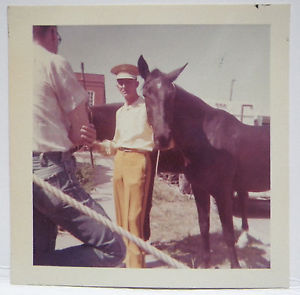
       The auction barn in the middle of the fairgrounds in Hugo, Oklahoma during the off- season of 1975-76 had become a familiar place. Now during my third winter, energy was invested as I learned to work the horse that Bob Grubb had not only trained to perform a circus act but had raised from a baby. Now as a five-year-old, “Bingo” could march, bow, side step, lay down, sit up, rear, volte, and do the camel stretch. Each rigorous session with this horse concluded when Bob saw an improvement in how we were getting along and instructed me to “walk him cool.”

       Part of what I enjoyed with this horse was to just get away and go for a ride. The streets of Hugo were used to seeing unusual sights around town because of the circus people who lived here. Occasional mornings we deviated from the rigors of practice and Bingo and I went sightseeing. This was a reward for doing well.

       His father was buckskin with a black mane and tail and his mother was a white and sorrel paint horse. The combination they conceived was a white and buckskin paint body with white legs and a black mane. Spectacular was his tail; white with a black tip.

Bingo Bow

       My time in the saddle became a time to think through the many other tasks that were waiting and to organize a plan for accomplishing them in the afternoon. This equine enterprise came with additional fascinating elements. Julie, one of the ponies, was pregnant. With Bob’s encouragement, we situated a foaling stall for her in the barn.

       One rainy morning we discovered a wet baby in the stall. As we watched, the little wonder struggled at first to find a way up to her feet. After a few wobbly attempts, she finally stood. Seeing this wonder cemented awe. This addition to the group, as the season progressed, would prove as yet another target for my affection and an ongoing source of fun.

       I had a challenge not predicted. The truck allowed great comfort for just the pony act. In order to haul the horse in the truck, I had to rearrange the floor plan. Instead of ample room for just them with the manger alongside an entire side, the interior of the truck received changes. Part of the manger was removed; the ponies were squeezed tight to the front and a standing stall was built along the outside wall for “Bingo.” The remaining area in the other corner was reserved for Julie and the baby. A small wall prevented Bingo’s front feet from stepping on anyone in front of him. I had to cross-tie his head up high to keep him from biting Finley, who now stood underneath and in front of him.

       Adding the horse pushed the limit of this truck over the top. As the winter practice session came to its conclusion, the time arrived to go. I headed toward another brief tour, this time across Louisiana. I would perform the horse act for the first time. Then my plan was for another tour of Canada. Starting in Louisiana in the spring with what was left of the old Fisher Bros Circus, I worked my new act in front of sparse crowds.

       The season of 1976 began with tire trouble. The pony truck was now overloaded. The leaf springs seemed to be getting tired.  To prevent the tires from rubbing the underside of the truck box, I placed blocks of wood as spacers between the overloaded leaf springs. At one time I thought the best way to see the country would be on a traveling circus. That is just not true. The best way to see the details that abound and get to know the locals in this country is to be broke down between towns on a circus. I would see plenty this season.

       At one location in Louisiana it was impossible to continue my trip without replacing tires. I was in picturesque bayou country. Spanish moss hung from Grandfather Oak trees. My rig stopped along a quiet road. I had room to unload.  The ponies were out on the picket line, with the baby and Bingo nearby. I awaited assistance from a tire service truck. While there I studied the details of the weathered surroundings bleached by the relentless sun.

       A long, low wooden building with large porch had no exterior indications to hint at what was inside aside from the neon beer signs in the windows. Completely open sided most of the year, a corrugated metal roof provided shade. Old wooden chairs invited comfort on the creaky wooden floor. A spring-loaded screen door with a porcelain “Tetley Tea” push bar across the middle would slam after each customer pried it open and went in or out.

       This was not a highly traveled road. My compromised parking site on the side of the road was not a big concern for the slow-moving people in this sparsely populated and pleasant area. When the tire truck arrived my ability to roll down the highway was restored. I returned to the pace of two shows a day for the remaining weeks of the short season.

        An oasis occurred when that short tour was over partway to the opening town. Those of us heading to Canada stopped at a family farm in Missouri to lay over for a few days. At that place I had an opportunity to paint the red stripe around the truck box. I also saw the remains of the hippopotamus semi that I took care of a few years prior. Ava had died. It was rusting, unused in the woods. We left in plenty of time to make the long trip to Alberta for the opening of season 1976 with Royal Bros Circus.

       Prior to Memorial Day, the long jump to western Canada was complete and we were ready to open early summer. In addition to the six-pony liberty act and my new horse act, I played the pre-show calliope concert on the midway and became “David McDavid” the bagpipe player in the side show. I also worked the magic act as taught to me by Dennis Michael where I had the bird whistle pitch.

       The baby pony, only months old, had begun to prefer hanging around Bingo, who was loose while other ponies were secure on the picket line. With increasing bravado, the baby’s territory increased. The baby began to follow us while I rode Bingo. The performance each day started with Spec, the parade of all the performers around the three rings in the big top. While I rode my horse, the little baby trotted along behind to the amusement of everybody.

BINGO Liberty Ponies

       The Royal Bros Circus opened the 1976 season in southern Alberta. The route took us up into the foot hills of the Rockies to several spectacular resort towns. In the midst of this rugged splendor, a flat place large enough to put up a circus was rare but, there we were. The raggedy old big top with our curious collection of rolling stock was pitched between the imposing mountains that dwarfed us and our specific intention. One day was especially memorable.

       One sunshiny day prior to the matinee with the mountains looming all around us, I remember standing on the bally platform with the others during the side show opening. A sudden gust of wind blew way up in the mountains. A few moments later we were lightly dusted with the snow dislodged from the high altitudes. A chill of delight passed through the crowd accompanied this surprise. In a few moments the sun warmed us back up.           We were immersed in some of the most picturesque country I had ever seen accumulating vivid memories.

One magical, dark morning, I drove into the tempering horizon with the foothills at my back. The roadbed leveled onto a long flat stretch. Ahead I saw a layer of fog that looked like a lakebed settled on the lower altitude. As the jump continued, I descended into this foggy area and became immersed in dense, misty surroundings. Visual access to the surrounding terrain disappeared. This was the fog of the cliché about your hand in front of your face.

       Mile after mile I drove with utmost caution. Unknown to me, the sun began to rise. Accumulating light slowly illuminated the surface of this layer of fog, just above me. A visual sensation began and became a magical dance of light. An ocular rhythm occurred due to moving forward underneath the surface of this sea of fog. The light interacted with the irregular surface of the cloud and combined with a slow turbulence as it responded to the warming rays of sunshine. The visual experience that morning was not unlike the mystique of the Aurora Borealis.

       On the other side of that long low stretch, an incline allowed me to emerge from the fog, where I witnessed the most splendiferous sunrise I have ever seen, in a sky so huge it must obviously have some of Montana’s mixed in with it.

       This spectacular wonder was just one of the many visual sensations that mixed with the joy of being a performing horseman, creative in many ways that also served to validate the original decision to join the circus. To this day I remain on the lookout to continue seeing new wonders in this world that God has created. This life I have been gifted with continues to fill me with awe and zeal for each and every new day.

A Land of Extremes

The show entertained Canadian crowds all across Ontario and the next three provinces with route that went as far north as one could drive. We went west into farm country. Long, straight flat roads sliced through vast fields punctuated with occasional grain elevators. These farms counted size in increments of sections or square miles.  

While the Royal Bros Circus enjoyed the vast breadbasket of western Canada curious regional characteristics required adaptation. There were no feed stores. As the show consumed hay and feed, those of us who required these commodities learned to interact with the locals who had vast farms. I learned to keep my empty burlap feed sacks and make my own deal between towns at one of the farms along the way. This is where I could shovel oats from their heap to fill my bags. The procedure as I spied a farm complex was to find the main buildings, pull into the compound, meet the personnel and make my own deal. I learned to keep my feed barrel full. In each province the show went as far north as the roads would take us. We went to remote places where these commodities did not exist.  

After hop-scotching around and through this vast flat area, we headed for the northernmost town in Manitoba. Flin Flon is a mining town that grew where the geologic features that are normally deep in the earth are convenient at the surface making the mining of nickel, copper and other valuable minerals relatively easy. Prior to the trip we were warned to have our fuel tanks full because a hundred miles of the trip had no gas stations.  

Billy Loter was the grandson of the organist Marie, who I played for as sideman during my Fisher Bros days. He was on the show here in various capacities and we became friends. During leisure time between shows, we adopted a style of making rhythmic sounds using almost nothing except our bodies. We experimented with slapping, clicking, snapping, popping, clapping, stomping and the like, often while walking somewhere. Some of the distant, exotic communities we played with the circus warranted investigation. Flin Flon was no different. After the show was over, we headed for town.  

In this curious land of the far north, the surface of the earth had no soil, only rolling boils of solid rock. Because of this no utilities were underground. A curious infrastructure of boxes that contained the electric, water (and steam to keep it warm) utilities linked all the houses and buildings together. Every so often a stair-style led up and over the system of boxes. On our hike we went downtown and among the sights we found was the historic railroad station. While regarding this ancient structure we learned that this manner of transportation was at one time the only way in or out until the highway was built. While there we spied two pedestal steps used to assist passengers on and off the railroad cars. They resembled the pedestals used by many acts on the show. 

On our return trip, heading back to the circus lot (the only flat place around where they gathered to play baseball) we took a route that placed us on a high overlook. From this perch we stopped to continue our rhythmic hamboning fun. As we looked down at the web of lights that delineated the streets and dwellings of the town and continued our fun, we became completely captivated in the magical moment.   Suddenly in the midst of this merry making, we noticed something different. But as we looked around we couldn’t quite put our finger on what it was. Then the lights of the town came back on. We then realized that we had witnessed a blackout. Confident that the interruption had been caused by our riffs, chops and the ripple effect of our enthusiastic rhythms radiating outward, we vowed to keep the volume down in the interest of being good community stewards. 

  Bonnie Bonta also clowned on the show. She was an older widow with a circus background. She had a slight misshapen mouth that did not interfere with her enthusiasm. In the cookhouse, I heard her tales about being on shows in the past with her husband and how her son has carried on the tradition with various acts of his own. She had a slight handicap, a hitch in her giddy-up, I guess you’d say, that affected her gait. She drove a tall pickup truck with a camper on the back. The climb getting into the back of the camper was a struggle for her each day. I was able to be a friend and appreciated forever when I gave her one of my pedestals. 

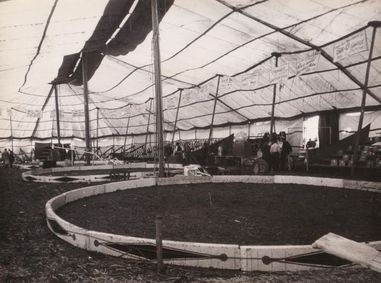
The rest of Manitoba, Saskatchewan, and finally Alberta slowly crept underneath our tires. The show continued west with the relentless rhythm of up and down through the ever-changing terrain of this vast country with occasional pockets of humanity that became our quarry. Because of our regular routine, there is a zone that all the people on the show get completely immersed in. At the beginning of the season, the metal stakes are rusty, the side poles and seat planks are dusty, and the canvas is musty. Little nuance, like anti-lubrication, seemed to interfere with initial efforts. But with each set up, not only are brain synapses getting connected in virtually every mind with the completion of every task but motor skills merge with instinct to make each successive set up more efficient, approaching what qualifies as a marvel while momentum is established.  

Much like being wired during a long drive, the entire psyche of the collective humanity maintains this momentum that only takes the slightest stimuli to alert the body to go forward again. Up early every day to drive to the next town compromises sleep, so a pattern of rest after set up meant a regular quiet time on the show was part of the pulse. We all got quiet in the afternoon prior to the matinee, that is if everything went well. 

A long jump or the breakdown of a crucial element of the circus meant redirecting energy to overcome the obstacle first. Then resume the regular rhythm often at the expense of that valuable segment of sleep. Then, between these challenging episodes, during long stretches of the season, all went well. That was what we remember and cherish.   

Beautiful weather occurred as we traversed picturesque terrain, arrived at a perfect grass lot, enjoyed a seamless set up. Each nourishing meal in the cookhouse made the showman happy. A good turnout for the afternoon and evening shows with enthusiastic audiences promoted the premise of the quest we were on. With their envy of what we do. They see us traveling, doing amazing things and poring forth enthusiasm in spite of what happens. This is the zone that feeds us. We experience something as a collective living entity that became real one day at a time. With each successive day going forward relentlessly turned into yet another season. 

Teamwork is what it takes, yet a flaw existed in the hierarchy here. Typically, when the combined effort of all is perfect and something occurred to reveal the true nature of an individual personality that, up until now, had been wearing a mask. With this close-knit society, there are few secrets. The business partner of the Canadian owner of the show was difficult to read. Using a slick demeanor, he was able to manipulate, handle and fix most beefs that occurred on the lot and was clever enough to repair mechanical malfunctions on demand. Yet there was a reserved reluctance with anyone attempting to be his friend. He maintained a narcissistic obsession with something unseen by holding his cards close and away from everyone.  

At the top of the stairs that led to my living quarters, I had created a small area filled with shelves for cigar boxes filled with fastening devices and a small work bench. Here I had my assortment for ongoing building projects. One day rounding the corner of my truck, I found him standing at the top of my stairs with my door open. His head inside and he was helping himself to some screws and bolts. This violation of what was mine was never followed with anything that qualified as cordial. In a silent disbelief I resigned to use caution around his questionable ethics from that point on. He would fortify my concern about his decency as I observed his treatment of others on the show.     

My friends, the Michael family had a hiccup in their tour late in august. During the school year, Dennis and Lynnie are assembly program marionette puppeteers in the Chicago area, plus the girls had to be back in school. Near the end of the season, Dennis went to John Frazier to announce that in order to be back in Indiana in time for school they would be leaving prior to the end of the season. John fired them on the spot.  

Prior to leaving, Dennis lent me his side show magic tricks and his supply of bird whistles so I could become the magician and sell whistles for the rest of the tour. Being that far west in Alberta with two weeks off turned into the vacation of a lifetime for the Michael family, who then enjoyed a vacation in Yellowstone National Park and a leisurely trip back to Indiana.  I enjoyed being the magician in the side show and when the season was over, planned a visit in Indiana to return his magic stuff. 

Late in our season, off in the distance the silhouette of rugged Mountains loomed ever closer. We performed in front of Alberta audiences near the foothills of the Rockies until we closed late summer. The plan was to winter the show equipment at a carnival winter quarters in Alberta and have everyone return in the spring to reverse course and troupe back to Ontario. 

The Loadstar, originally intended to carry an eighteen-foot box, now supported twenty-four. I kept customizing the rig, adding features that gradually overloaded the truck. I still had a plan to add a horse that weighed 1250 lbs. to my repertoire. As the season came to a close, my plans for the rest of the year were full. Before heading back to Hugo, to become acquainted with my new horse, I had the plan to take riding lessons in Michigan.  

At seasons end, the long trip east included driving through a blizzard that slowed my drive across Montana. By the time I made it to Wisconsin. the truck was running on five cylinders. I limped in to the International dealer in Janesville on a Sunday and put the ponies out on their lawn with the picket line.  

Monday morning, I had the valve covers off the engine and saw several broken valve rockers. I went to the parts man inside and explained my predicament. I could only afford to buy the parts I needed and put them on myself. They had none of what I needed in stock but they did let me take some rockers off another engine in the shop to get me going.  

What motivated their decision was the ponies eating their lawn. Once I was able to load up and head east, the first stop was to see the Michael family in Indiana. Then I headed to Michigan to visit Hayes and start my riding career. 

That winter, while preparing to perform with my new horse act, I built my own magic props and planned to add a magical talking rubber chicken act to my side show repertoire for the upcoming season. There is always something else. 

The Liberty Act

  Normally, with a six-pony liberty act on a circus, handling getting in and out of the tent with its many backyard obstacles is facilitated with two assistants.  Usually, two people leading two ponies each, help the trainer with his two, and safely handle this task. True to my self-sufficient nature, I figured out how to never need any assistance from anyone helping handle my pony act.  I utilized the system of “come alongs” learned from Bob, which linked each pony to the preceding one. Using calm repetition, they learned to stay in a single file line and get through the many obstacles as I oversaw their effort.  During the introductory announcement by Corky the ringmaster of Royal Bros Circus, we made our way inside the big top, and then into the ring. I would then have them stand at the back of the ring, unhook the “come alongs,” and start the act with all of them truly “at liberty.” Our act began at once.Ponny Act 3 2     
 Gesturing “Lead off,” they would start to run around the ring. After several revolutions, the time came for a change of course or a complete reverse of direction for this single file line of yellow ponies within the ring. This involves my signal and a quick change of position in the ring, that blocked forward movement and encouraged them to come toward and then away from me. As the group threads their way around me, they run in this new direction for a while. After a few laps, I would have them reverse again and encourage them into being six abreast, or what is called the spoke of a wheel.  This involves the lead pony at the outside perimeter cantering very fast and the tail pony near the center, next to me, walking very slowly. After the six abreast, it was time to single them out once again, and at the back of the ring, bring them to a halt.       
Consistent behavior is what they understand best.  The structural language of gesture, maintaining a calm emotional condition and consistent body language is key to maintaining healthy communication with a horse.  With the repetition of two shows a day, they became comfortable responding correctly to my cues as I guided them. Among what I oversaw to insure harmony were influences of individual speed; slow one down or catch another one up. By far the most important movement to maintain is to have the ability for them to stop at the back of the ring and face me. All these responses are reinforced with consistent body language.       
I had been reading some new age main stream spiritual literature by Carlos Castaneda and as the result was inspired to utilize positive mental imagery to influence the outcome of each performance with the ponies. Each day while standing in the backyard waiting for my time to go in, I would close my eyes and visualize the entire routine occurring flawlessly in my mind.       
The first season touring with six ponies was not without challenges. Among the distractions around the Royal Bros Circus in Canada was when the sidewall was hoisted up on a hot day and the view of the spacious outdoors proved tempting to the filly, who became noted for jumping out of the ring. Since he had been trained to follow her, little Finley often joined her as she ran around the interior of the tent while the show as going on.  My being a perfectionist with esteem issues, taking the behavior of a pony personally – as evidence of failure – wanting to provide only a flawless performance, had set me up for an endless source of frustration.     
 When a pony made a mistake, due to the dynamic of behavior, typically the same mistake would occur at the same place in the routine the next time the act was on. Rehearsing between shows was only partly good. The stock soon became wise to the fact that without an audience, they would have to comply or do an extended rehearsal. They became what is known as “crowd wise,” that meant I had to become an effective trainer during our act in front of the audience. As a hot headed teenager with an inferiority complex, I took any aspect of what the ponies did personally. Fortunately, as the season progressed, so did the ponies.Ponny Act 2                 
The original three ponies, with a season under their girth, were a steadfast influence to the three green ponies. Jumper was a new pony third in line. Due to the unwavering nature of the two in front of him, he became steadfast and consistent. Tex was the cut back pony moved from position three in the line up to number four. Tex was ideal in this role. The cut back is where the last three ponies reverse direction while the first three maintain their counterclockwise momentum. His long back, stout physique and somewhat simple mind had learned concisely what he was to do when asked that also coalesced into a do or die attitude. Whenever I asked for the cut back he was quick to comply. Once he had the concept he was unstoppable. After the cut back I would single them out once again. After another revolution, at the back of the ring, I would bring them to a halt.       
While styling for applause in front of my standing group, the prop man would set the hurdle at the front of the ring.  I had fashioned this hurdle using two pair of hames. Hames are a two-piece structure used with pulling harness that goes over each side of the horse collar that has the trace straps attached. I had found two fancy metal pairs with brass knobs on the top. They were welded crisscrossed for the hurdle jacks, with an opening on the ends for a 2X4 suspended between, that provided the bar for them to jump. When the hurdle was in the ring I would tell the standing ponies to “lead off” and as before in single file, they would all begin to run around the ring and go up to the hurdle and jump over, all except the tail pony. Finley appeared to be mischievously avoiding the hurdle although he had been trained that way.  Another round and all the ponies would jump again… all except Finley, who by this time had captured the attention of the audience. My exaggerated gestures and feigned frustration at his defiance got a laugh.  Finally, the third time around, I am shaking my finger at him and he finally makes the jump and gets a big hand.  The fourth and final time the whole group goes over the hurdle and he gets away with avoiding it one last time to get a laugh. I line up and halt the group at the back of the ring, and then style, and take a bow.Ponny Liberty Act 2      
Next, one by one, I ask them to begin to walk and turn away from me and go toward the ring curb. One at a time they mount the curb with their front feet. By carefully placing one foot over the other, they proceed to travel the entire perimeter walking around the entire ring, two fore feet on the curb, both back feet on the ground.  Once they have traversed the entire circumference of the ring and are all poised at the back, still mounted on the curb, I take a style and get a big hand.
        I next gesture for them to come off the curb and they single out at a brisk pace in contrast to the recently completed slow portion of the routine. Once again they are running around the ring.  When conditions are right, I gesture for them to waltz, which is to turn 360° within their own length.  Each pony has a different vantage point to observe my cue from.  The lead pony is off my port side, the tail pony my starboard side and the rest are at various points in-between.  As I gesture, which is a step forward and backward with a sweeping signal of the whips, each pony has a different reference angle to observe this body language that means something to him. Simultaneously they all do a turn in their own length. After several successful waltzes, I allow the first five to continue circling around the ring as I call the tail pony, Finley to join me in the center of the ring.  He comes to me, and once at my side, I ask him to lay down, sit up and after the get up, ask him to bow.  Once these specialties of his are complete, he resumes his position at the end of the rest, still running around the ring.
       The conclusion of the act takes place as I halt the group at the back of the ring. Once they are all facing me, I ask for the rear.  This cue has me first, making sure that I have their attention, and then sharply moving toward them with the command “hup.” Simultaneously they stood up, straight as a candle, and then came back down to the ground.  I then turned toward the audience and ran to the front of the ring. The ponies were following right behind me, encouraged by a helper behind them. I leapt over the ring curb directly in front of the patrons in the front row and as I did, the ponies mounted the ring curb with their front feet.  This was the final salute, an opportunity for the final bow in the midst of thunderous applause. I took my bow. Then the time came for me to re-attach my “come alongs” between each of them. Once intact, I would hold the lead pony, encourage the rest to back off of the curb, and the lead them single file through the center of the ring towards the exit of the tent.
       A liberty act takes a couple of seasons of repetition before they work consistently. The summer of 1975 in Canada on the circus was the perfect place for this exposure and training to prepare me for my ambition of bigger and better circus opportunities in the future. That is, if nothing went wrong.

All Six

Returning to the fairgrounds in Hugo, Oklahoma with a herd that now included three seasoned, crowd broke ponies, the time arrived to finish my aspiration for a liberty act with eight matched palominos. During the winter of 1974-75, I resumed assisting Bob Grubb with the training of the rest of my Liberty Act, of which, from the batch of eleven ponies to pick from, six ended up matching nicely.  The training procedure and method was the same as the previous winter. Bob and I entered into the regular rhythm of our familiar routine.

all six 1

The original three ponies were now coming three, the right age to geld, or remove their ability to reproduce. This would eliminate their increasing tendency to bite, be aggressive and kick at each other, a common studly behavior.

One afternoon, the veterinarian came out to perform this procedure. As they readied themselves for this familiar (to them) procedure, I was recruited to sit on the neck once the pony had received a shot of something that would make him collapse. Bob had a rope tied to each hind foot and the rope went underneath and around the pony’s neck. As the pony laid on his side, Bob held these ropes fast, so that Doc could perform his procedure without getting kicked. First the loose ball sac skin was pulled out and cut away revealing the nuts inside. In order for the geld procedure to be ideal, the balls plus some cord that lead to a little button all had to be removed. If the little button was to remain, the animal would retain some studly characteristics and be referred to as “proud cut.”

Superdog was there to eagerly observe, and the vet threw him the nuts which he eagerly gobbled up. After the procedure, the pony was allowed to get back up. One at a time we turned each of them loose in a paddock to heal. Throughout the day, we encouraged them to move around so they wouldn’t stiffen up.

Over the long run, this procedure proved to have a great settling effect but with the addition of the younger males, some studly activity would plague the initial season for the six.

The seasoned three veteran ponies provided a solid foundation for the introduction of the new yearlings. Of the new animals, three had the color and size to fit nicely with the others. “Jumper” was placed in the lineup at position number three. He had earned his name early on as we observed his style of getting out of the stock trailer. Tex was the seasoned cut-back pony, so he went to position four.

“Julie” was the filly thrown in during the second purchase. She was named after Hayes daughter. Although our ambition was an act with all males, since she had the prettiest color and the right size, she was selected from all the rest to fill position five.

“Finley” was slightly shorter than the rest, perfectly suited to assume the role of clown renegade that Bob had in mind for the tail pony. Impressed with a school teacher I met during the previous season named Diane, I used her last name as his moniker.  

The remaining colts were traded and sold to both circus and cowboy contacts Bob had in the area. This group of six became our sole focus.

 Once established, the sequence for these animals never changed. They were tied in the barn next to each other in the same order they appeared in the ring. This way they became accustomed to always being in the right sequence. The same arrangement existed when they were out on the picket line or loaded in the truck.

Bob started the new individuals, one at a time, like before, getting them used to being handled and responding to his cues in the circus ring. In just a few weeks he had the new guys in the ring with the three veterans. Doubling the size of the group increased the opportunity for mistake making exponentially.  Our daily training routine now required immense diligence and being functionally proactive.

After the morning training sessions, my afternoons were dedicated to building the many features for the pony truck visualized in my mind.  In nearby Paris, Texas I found a 24-foot truck box to replace the 18-foot box.  This size would provide more room inside but the chassis would have to be modified.  The truck went to a machine shop to get the frame stretched. This is a procedure where the frame is cut and a new section of frame rail and a drive shaft is added, then the longer box is attached. Once intact, a truck body modification place added two side entry doors. One would receive my new improved ramp system and the other, a set of steps to access what would become my living quarters. With these modifications complete, the rig was again parked at the fairgrounds and my work on the interior began. The experience on the tent show, and later on the school house show made me aware of challenges in these differing situations and various features to include on this truck. I had many ideas for these improvements.

all six 2

Outfitting the larger box to comfortably house the ponies utilized the earlier design expanded for six. The walls were insulated and lined with plywood. Slide open windows were added for ventilation. A sizeable overhead loft for hay was created in the area over their heads. Many efficient features were designed and built to best accommodate these ponies including water storage and an improved ramp system hinged inside the side door for loading. The living quarters created in the front featured a shower with hot and cold running water, a first for me. The following summer I would find and install a ceiling made of salvaged decorative, sculpted tin panels found at a building being torn down. My bunk was high across the front, over wardrobe storage space and I even had a desk. At the entrance to my living quarters was a mini foyer with a tool, gadget and work center with a hand cranked bench grinder, among the many tools and fastening devices stored in this handy place.

Each evening after my morning training session with Bob and the afternoon of building inside the new rig, I walked a mile downtown to Vet’s Café for dinner. Arriving to greet the staff near the end of their day, I would usually request that they use me to finish off any of the specials of the day items that remained.

“Just use me to scrape out a pot” I’d say.

 The ladies took a liking to me and made sure I had a generous meal each night. Often times I would find hidden in the basket of rolls, a few pieces of chicken wrapped in foil to put in my pocket for later. Once I quizzed the black cook about this gesture. She explained that her daughter was off at college and she hoped that someone else was watching out for her.

The long walk back to the rig in the waning light became a time to de-brief, plan for the new day and pause, as I had become accustomed to, to find something to be grateful for in the midst of all this industry and for the many positive influences that were shaping my life. 

With all the preparations made, and the ponies working as well as to be expected at the barn, the time had come to head out. Although I still had dreams for additional features for this truck that included possum bellies and a decorative red stripe around the outside. The time had come at the same time as my usual indicator – my boots being completely worn out – to hit the road. As these preparations were finalized and the pony act was rehearsing better and better, I found out about a tour with what was left of the Fisher Bros Circus through Louisiana in the early spring. As before, the daily rehearsal of the pony act could only go so far. The time had come to work the act in front of an audience.

After that short tour, I could lay over at a winter quarters in Missouri prior to the trip to Canada.  Many of the personnel on the show also had the main goal of another tour of Canada for the summer. Before leaving Hugo, Bob encouraged me with the idea of having a Manage Horse that did many tricks as a second act. When I returned the following winter, his colt “Bingo” would be another year older and a prime candidate. We made another deal. Bob would begin his training that summer while I saved my money. Then it was time to hit the road.

My Kingdom for an Elephant

Jimmy Silverlake had created not only an efficient moving under canvas circus for season 1974, but the arrangement of canvas and other rolling components on the lot was quite pretty to look at. The image of this tented city on a grassy field conjured up awe, curiosity and intrigue, yet one element was missing. How can this be a circus without an elephant?

JIMMY SILVERLAKE

      In the spring, Jimmy heard about an opportunity to buy an elephant from Tony Diano, a rogue that couldn’t be let off her chain. The deal came with an old rusty trailer and an antique tractor to pull it but Jimmy had room for the elephant in his animal semi. Soon the new attraction was transported to Michigan, tethered and on display, and the rig that came with her became empty. Bert Pettus became our elephant man.
       Having this large empty trailer on the show gave me the ability to pick up the remainder of my ponies from Hayes farm and get them used to traveling on the show. This meant I was tending to eleven ponies.
       Sunshiny afternoons with my ponies on their picket line proved to be a magnet for the little girls that lived in the neighborhood. I had a bucket full of brushes that I would place out near the picket line and the girls would figure it out. Get a brush and go groom a pony. The palominos loved the gentle attention and I had the livestock curried by show time.
       Later in the summer, Bert and Marie’s daughter and her family visited between shrine dates with their two appaloosa high school horses and a six pony liberty act. For the brief times they visited, we had a tremendous population of ponies on that little circus. Jack and Sandy Fulbright showed me how they tended to and performed with their ponies, accelerating my understanding of this specialty.
        As the season progressed, so did the proficiency of my pony act, but the show didn’t fare well. It is never good when the circus catches up to the agent. The rhythm of one day stands became erratic, with gaps during the week when the show would lay dead for a day at first, and then more came with alarming frequency. The tour ran out of route late-summer in the Upper Peninsula, due to the lack of advance personnel. On the school grounds, where the circus played its final engagement, all the investors that had helped Jimmy launch this show arrived to divide up the assets. I had lent him some money too, but due to the hierarchy, was last in line for anything.
       Sitting dead on that final lot, the group bounced ideas back and forth for dissolution, figuring out what each one was going to get, then they had an idea.
       I heard, “give Dave the elephant.”

elephant 1 2

      That prompted a flood of concerns. The surprise prompted my imagination to dream up several survival scenarios. My mind became quite busy attempting to figure out, like the rest, how I was going to begin my travels from this place. Sitting on the lot with no way of my own to haul eleven ponies and an elephant, wondering how I was going to proceed occupied my mind the entire night. I was relieved the next day, when they announced other plans had been made for the pachyderm. But this brief episode does qualify me as having the ability to claim being an elephant owner for a day.
        Billy Griffin invited several of us to regroup at his family home in Princeton, Indiana. Jimmy let me use the old dilapidated bull semi to get the livestock to southern Indiana while Audrey from the cookhouse drove my pickup and camper. I had to do something to get equipped to tour with my ponies. I needed a truck. Billy helped me find a truck through the dealers he knew in the area. We found an International Loadstar in Poseyville with an eighteen-foot box that would serve quite well to carry the ponies.
       Once this rig was secure, I began the process of getting it equipped as my pony truck. I rigged up a ramp that hinged down from the side door, and fashioned mangers inside for the comfort of the ponies. The truck also needed a trailer hitch welded on the back for the calliope. I could sleep on the bunk in the trailer for now and have plenty of housing for the three ponies, hay and equipment in the truck body.
       While we camped in Princeton at Billy’s mother’s home, everyone was making changes. A clown from the show who made the trip with us lived in an old dodge van and wanted to buy my pickup with the camper. He drove his old van like a clown would, often screeching to a stop from a tight turn that gave him a thrill. The living quarters inside would be a big improvement for him, but he would have to learn how to carefully drive this top heavy vehicle.
       One at a time, the kinkers left for other digs. The clown found another show to perform on and headed that direction. Audrey planned going with Billy to south Texas. I learned about an upcoming job, a several week tour of one night stands through Michigan on a circus that performed indoors in school gymnasiums.
       I could leave seven ponies on a pasture nearby for six weeks and pick them up when my tour was over and head for Hugo. We all said our goodbyes and the headed different directions.
       At the end of this whirlwind preparation session, enroute to the school house circus tour, I took frail Teddy to Hayes house in Clarklake where he lived the remaining few weeks of his life in his backyard. I often think that celestial beings come to us disguised with hoofs. Knowing and believing this is proof enough that I was visited by an angel. Teddy blessed many children while on the circus during his brief life.
       Everything that I knew to do to be ready was done. I thanked my friend Hayes and started the trek towards Detroit, but nothing would adequately prepare me for what I would discover when I made it to the next circus. 

A New Role

   The observation of the liberty horse training process and my role as assistant each morning in the dusty ring barn at the Hugo fairgrounds as Bob Grubb trained my liberty pony act during the winter of 1973-74 proved to be a valuable prerequisite to not only understanding this performing art form but would also benefit relationship skills in other arenas. After only six weeks, the pony act was complete to the point that I was ready to assume my training to learn working them in the ring.

liberty horses 6

      Out of the original ponies brought to Hugo, four began the training process and three worked out nicely. One pony appeared similar to the others in the first batch purchased for my circus act but by the time he was a yearling he hadn’t grown into a picture of health. Bob recognized some aptitude when the training of each individual began but when they were combined into a group of four, little Teddy didn’t have the energy to keep up with the rest of the group that lapped and ran into him from behind. Teddy proved to be too frail and without the energy to keep up with the rest. His training was discontinued even though he was willing. Something in his eyes communicated the desire that existed in his heart. He wanted to participate but because he seemed frail we discontinued using him in the training for the act.        In the midst of this daily routine, a man came to see me. Manual King invited me to go with him and eat a meal at Vets Café downtown. While we ate, I learned that he had a snake show that toured with Carson and Barnes circus and that he wanted an elaborate front painted on it. I was already busy with my pony act so he had to so some real talking to get me interested in going with him to his winter quarters near Houston in Pearland, Texas to tackle this project. The only time I could fit an undertaking like this into my schedule was immediately, over the upcoming Christmas holidays. Manuel, who had a golden, persuasive voice and a beaming personality made the proposition attractive to me. Soon thereafter, with a minimum of painting supplies and my bag packed, I rode with him and his family on the long trip to his home. On the trip I learned that Manuel’s claim to fame was being the youngest lion trainer of all time, starting as an eight year old performer on his father’s circus. His father also imported animals and performers to America and Manuel still recruited acts for Carson & Barnes Circus from Mexico.

      When we got to his home, I found the snake show set up in his backyard. As we looked it over, Manuel shared an embryonic idea for me to develop. There was no hesitation. Although I had never tackled such a massive undertaking in my life before, confidence carried me forward making up for the void of lack of experience. I dreamt up my concept, drew a sketch that was met with his approval, and over the successive days, the themed front began to materialize as my brush did its magic. “Princess Xochile” the Aztec Goddess was soon pictured alongside the title of the show. The central image was the scene of an Aztec pyramid being squeezed by an enormous python.        While working on this project, I was made part of the family. Due to my being with them over the holidays, I was introduced to a new tradition; the Mexican style of Christmas. Special foods, customs, lots of tamales and other ethnic specialties filled these days with a new experience. This was my first Christmas away from my family and the tradition I had grown up with. This exposure was rich. The love, excitement and delicious abundance that abounded in their home remain a cherished memory. After the holidays, with the show front complete, Manuel gave me a ride back to Hugo. Then it was time to resume learning my act.      Back in Hugo, the daily morning repetition became a consistent routine with the ponies, something that would remain constant from this point on as I morphed into my role for the road. My afternoons were free and the nearby winter quarters of Carson & Barnes Circus received a positive report from Manuel and also became interested in my ability as an artist. They brought me their office trailer for extensive decoration. I laid out and painted the shows masthead and extensive scrollwork on the exterior, and near the office windows, painted diagrams of the interior of the big top on either side along with the ticket prices.        As the spring of the year loomed on the horizon, my days became full of preparations for the season ahead but with my new liberty act there was still much to do. In true show business fashion, the season opening occurs before being completely ready.

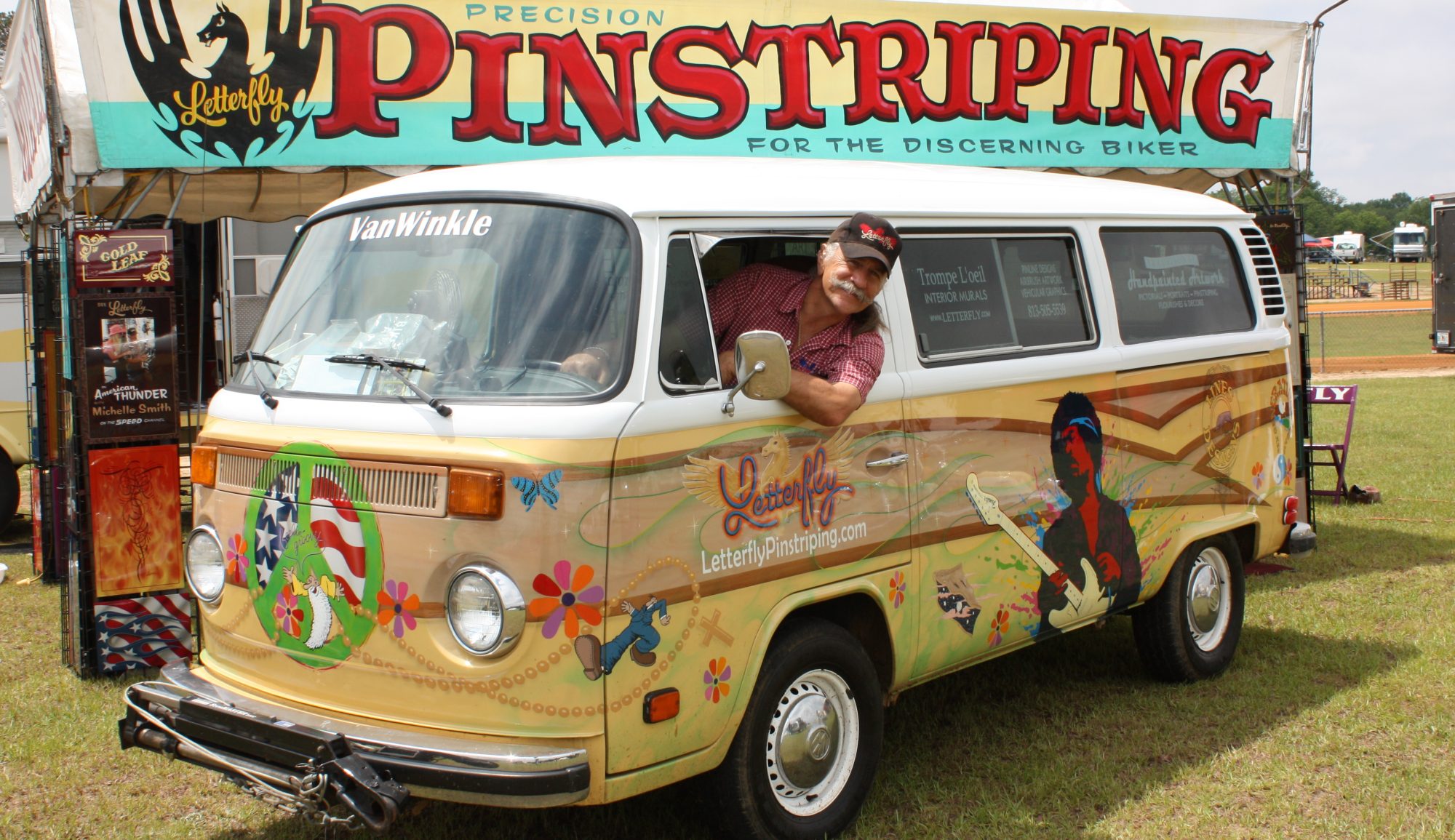
The Bannerman

Advertising in any proximity that the locals gather is a strategy many businesses utilize. A sense of community dedication associated with civic groups is created with these gestures. Hand painted paper signs with the names and ads of these local merchants hanging in the big top is one way of making extra money around the traveling circus. Becoming the banner salesman on the Royal Bros Circus season of one day stands in 1973 was an enterprise that required my sister’s participation to fit into our routine. Our custom was already up early in the morning – Paula would wake me and crawl into the cab of the pickup to resume her sleep while I drove to the next town. When we arrived at the next town, I would jump out of the truck downtown with my steno pad and begin to visit the merchants in all the stores. Paula would then drive the pickup truck with camper pulling the trailer with the calliope and drums, to the edge of the show grounds where the big top was being set up. There she would recruit the canvas boss to drive the rig into position on the lot near the “back door” of the tent.

DAVE 3 2

      At the beginning of the season, John Frazier had given me a spiel to use and sent me downtown to do my best. I simply found the decision maker in each store and rattled off my memorized pitch, wrote down the particulars of each sign and announcement and collected eighteen dollars for each one. Downtown, my role took me in and out of each store and business, to give the spiel for buying a “banner ad” that would hang in the big top, and the accompanying announcement that would give merchants presence during the afternoon and evening presentation of the circus. I was learning presentation skills plus how to get around the employees in charge of intercepting disruptions and deflecting them. I learned to not disclose my purpose until I got around to talk to the boss.        

As the circus banner salesman in a new town every morning, I had the opportunity to meet an endless stream of interesting people. In Perth, at a candy store, I entered an old time glass store front, going through a heavy wooden door that triggered a bell that rang each time it was opened.        

After listening to my memorized spiel, the elderly woman who otherwise beamed in response to my presence responded with “I’m not going to buy one of your banners.”        

After asking me about my role with the circus, I was then invited to listen as she told me about herself and sat down at the piano. Prior to World War I she had been a piano player for the silent films shown in the local theater. Emotion, drama, excitement, danger and elation were communicated through the flavor of the music created by a live piano player in these theatres. As she played, these examples of how music enhanced this genre of entertainment, my mind was transported to a time when this was state of the art. During the war, she became a bus driver for the war effort and when the war was over, “talkies” had arrived on the scene, so she had to pursue another vocation. This was just one of the many encounters with interesting people that imprinted my heart.       

While I was in town selling banners, Paula had one duty during set up, and that was to take two pullies with long loops of rope and snap them into the lace lines of the big top while it was going up. This facilitated hanging the paper signs later, and was a duty that forced her out of her shell to interact with the crew during set up.        

When I got back to the lot with all the orders, I had to scramble to get the rig backed into the tent and the drums set up, while Paula got busy painting signs on large pieces of white paper with a shoe polish applicator and getting them hung in the big top before the show.        

Paula never did become an enthusiastic showman, partly due to her reclusive nature and partly because I had become a hot headed teenager that had never learned to be gracious as we attempted to get all these tasks done together on a daily basis. Perhaps I was following the example of our father’s strict perfectionist manner of wanting everything done just right, and that added to the already frustrating situation of her being in the turbulent outdoor entertainment business. All I could see was the “perfect” way it could have been done.        

Our comfort was at the mercy of the weather and plagued with egoic whims, moods influenced by situation and selfish ambitions of others, which was more of what we had found on the playground of our youth, yet on a grander, rawer scale. The rigors of one day stands, relentless demands from me and the multitude of twists that occurred in this turbulent lifestyle began to wear on her. Something in my sister had been hurt. She could not show enthusiasm. She remained frustrated and became referred to as poor Paula amongst my trooper friends.        

One morning after having a successful series of banner sales, I returned to the lot to begin with the process of setting up and getting ready for the show, but I could not find the rig on the lot anywhere. I asked the canvas boss if he knew anything, and he sent me to see the elephant man.      

When I asked Dick, he said, “The rig is over there” and pointed north of the lot.        

So I began to walk.    

About a mile from the lot, I found my sister completely frustrated, sitting on the ground, with the truck stuck up to the axels in someone’s front yard. Apparently while driving the rig from where she dropped me off downtown and heading for the lot, she missed the entrance. Thinking she could just go around the block, Paula continued down the road and instead found that it went straight for miles with no place to turn around. Exasperated, she pulled up someone’s driveway and attempted to make a big loop in their front yard. But the lawn was soft, and the truck sank up to the axels.       

When I got there, I was not the loving, supportive brother that she needed at that low point in her life. I became a hot head and screamed and yelled at her. I had to hike back to the lot and recruit the help of the elephant to pull the rig out of that situation. As I look back at my behavior of that day, I realize that my response did more to damage my sister, who already had the tendency to shut down and withdraw. This event caused her to retreat even further into the security of isolation. If I had it all to do over again, I would have become comforting, compassionate and lovingly explained to her that we all make mistakes. The damage of that event set the tone for the rest of our lives. My sister never saw an admirable trait in me from that point on. When I did see her years later, warmth and regard was gone.        

Holding a grudge seems to be a sin of our father, who had his front teeth knocked out on a family water ski excursion by his brother (interestingly, who became a dentist). Making amends or entering the procedure of forgiveness, as taught by Jesus, was not exampled in our family in spite of our father being a minister. Resentment persisted becoming depression as part of our father’s experience.    

After an otherwise busy and fun summer season across picturesque Ontario, we had much to relish and savor from this adventure but a contemptuous “not knowing” for both of us, forced self reliance to the front and we grew apart. My sister and I had survived a turbulent childhood exposed to the vast spectrum of behavior coming from others, to prefer a smaller circle of influence. At the end of that season on the circus in Canada, we trucked back to the Quad cities where, after dropping her off, she began her next semester of college. That was her only experience on a circus.        

I headed east to pursue a fall tour on another show, a small circus with a five week tour through Michigan that performed in school gymnasiums. At the end of that turbulent year, I ventured to Indiana, gathered up the new crop of babies at the Palomino farm, picked up the harness commissioned at Shipshewana and headed for Michigan.        

At Hayes farm, I unloaded the “wiener” babies and prepared to gather up the now grown “yearlings.” One colt had died.        

Hayes told me the story of Lewis Bros Circus, a show owned locally that thrived during the thirties and forties that wintered east of Jackson on Fox Road. He had gone out there in the past to snoop around but the owner of the farm wasn’t keen about visitors. Fortunately the farm had changed hands again and Hayes made friends with the new owner. He saw the left over equipment that had sat for several decades but not before many of the rotting wagons had been burned.        

Since he was friendly with the current owner of the farm, during one of my visits to Clarklake, he suggested that we drive up there and look around. In his green station wagon we went to Fox Road. Behind the large white home in a rural part of the county, a sunken driveway lead past a row of tall trees up to the back where two large barns stood. Inside the first one was a low ceiling and a labyrinth of aisles and stalls, obviously where the animals for the show lived during the winter.        

The other barn was a massive, high ceiling structure with sheet metal on the floor where the elephant was housed. Up on the second floor, a large room was where the wardrobe, canvas repair and other preparations took place.      

As Hayes and I explored the place we saw and inverted elephant tub being used as a coal hopper and recognized other pieces of equipment strewn around. The owner told us to take what we wanted. I found a complete set of liberty horse harness and an elephant bracelet.        

Part of the challenge of living on the road involved an inability to collect things. My choice to keep something usually meant that another belonging would have to get discarded, but this find was too good to pass up.        

After some additional artistic projects Hayes had accumulated for me to complete, I headed for Oklahoma with four yearlings to begin the creation of my new palomino liberty act. I was about to begin the experience that would positively imprint my life in many amazing ways.

       This business I had selected in an effort to make an improvement came filled with extremes; from encouraging friends that would become a positive influence for my lifetime, to crooks with agendas that inflict selfish devastation. Instead of receiving wisdom from the lessons learned on the road, our response was more of what we had established as children. To seek on our own, to cherish self reliance and independence for surviving in this turbulent society. The ponies would teach me something vastly different.

Bigger Better Brighter

The first season of the 1971 Fisher Bros Circus was a huge success. Mel and BK even took off mid-summer for a few days and returned with a new Suburban truck and a Holiday Rambler trailer. The old Chevy panel truck that had been used to pull their travel trailer was replaced with this fancy Suburban and the panel truck began to pull the generator trailer. 

51 FBC1 2

During the tour, the raggedy old big top was replaced with a new large tent. Same with the side show. The 20×30 tent was replaced with a 30×50 tent that allowed for other additions. Inside the bigger tent I had room for the elephant to be on display. This provided a boost in attendance and an opportunity to sell peanuts. Other attractions were steadily added during our lucrative season in Michigan. 

We acquired some caged monkeys. Among them was a green, dog-faced baboon who we named “King Kong.” King Kong helped with the opening procedure of the side show.  

Before the big show, Melvin would stand on the platform in front of the side show tent and announce, “Ladies and Gentlemen, you are going to want to bring the children up close to see this very special attraction… right here, right now that is absolutely free!” 

Boisterous best describes the fourth of the Silverlake children. With a passion for old westerns, Melvin dressed the part. Perpetual boots and a cowboy hat were augmented at showtime with a gun belt, string tie, bandana and an exotic fur vest. 

He could recite classic lines from film stars of the genre he loved and often did when he entertained. With the help of a sixteen-millimeter film projector, he loved showing us western movies up against the side of the ticket trailer during the occasional Sunday evening after a matinee only.     

Melvin took a wide stance that included his face flanked by dark shiny hair that imitated Elvis and infectious enthusiasm. This demeanor was perfect in his role as host of the circus. His interactions with crew and staff resulted in enthusiasm that permeated throughout. At show time on the side show platform this exuberance served well as the audience got caught up and responded to his calculated charm. 

“Since there is still plenty of time before the doors open for the big show,” he continued, “And in an effort to bring a little entertainment out here for you, while you are waiting, we are going to bring King Kong right out here for everyone to see.”

54 King Kong 1971

I waited inside the tent at his cage for the right moment in Melvin’s presentation, I snapped a leash to his collar and led him out at just the right moment. Kong jumped on the ticket box responding to the facial expressions of the crowd with some expressive behavior of his own. Kong jumped up and down and showed them his teeth. King Kong proved to be a real crowd pleaser and effective to drive patrons inside to see the attractions. 

The result of receiving a percentage of the side show revenue was an incentive for me. I fashioned flags to dress up the front and lettered Believe It or Not on an old bally cloth.

After that summer in Michigan, we headed south. An interesting cross section of the circus industry had come and gone. Performers, friends and fans had visited and wished us well.  The sister show – Clark & Walters – closed early. They returned the equipment to Indiana and some of the personnel showed up on Fisher Bros including Ralph the mechanic. The show meandered south and west before returning to Medora. When the season ended in the fall, we contributed ideas and plans for improvements.  

Once back at winter quarters in Medora, Indiana, the combined equipment for both circuses packed that hilly place and a brief reunion of personnel began to swap stories of the season’s highlights before leaving for the winter. 

At the seasons end, with my portion of the proceeds from the side show, I purchased a GMC pickup from Ralph the mechanic, made plans to travel to Elkhart, Indiana to see how RVs were made and buy supplies needed to build my own camper. Then I returned to my parent’s home to begin building my special camper that would open up into a bandstand for my drums.

I also set out to learn another skill that would make me a more valuable showman. Torchy, a retired aerialist asked me what it was that I was going to add to my repertoire that winter.  

Out of the blue I blurted, “I’m going to become a bagpipe player.” 

She knew a couple in the Chicago suburbs of Wheaton that used to troupe and now had a music store. She made a phone call. Yes, they could get me a set of bagpipes. With Torchies help I began to plan my attraction for the side show. 

During a phone call to my parents to announce that I would be coming home for the winter, I asked my mother to find me a bagpipe teacher. That winter, among my many projects, I met Scotty regularly over the next two months. Scotty taught me how to play Gaelic melodies on the Chanter. I learned special fingering techniques and how to blow and squeeze the air bag with my arm to maintain constant pressure. He also instructed me in how the reeds in each pipe were tuned and maintained. Scotty also suggested a great way to build a storage box to protect my pipes.  

I still remember his last comment; “Ya got de guts kit, larnin’ de pipin’ for da bally hooin’.” 

At my parent’s house out in the garage, I set up my workspace. I cut two by twos to length and created a series of interlocking notches and glued and screwed the entire skeleton together for my bandstand/camper. The finished skeleton was then lined with paneling, insulated and covered with corrugated aluminum. Windows, a propane system and a bunk over the cab was installed. The entire back of the camper was designed to lift open to create a large area for my drums. This was to ensure that I would be out of the weather and have greater visibility while playing during the show. 

67 First Camper

By February, I had completed my camper/bandstand and drove over to Michigan to visit Bev. I met her the previous summer and stayed in contact. I showed her family what I had accomplished. While enjoying snowmobiling and holding tightly to my girl, I saw huge snowflakes drift down to transform this beautiful country I knew from warmer days.   

After our togetherness, I drove to visit friend Hayes in Clarklake, and then on to Medora. 

Winter quarters consisted of a block building dug into the side of a hill with a large area inside for the two elephants named Norma Jean and Dixie who were in the back. These two stood for long hours chained in the barn. In order to cope, they developed an animated swinging behavior using their entire bodies, swaying side to side. Trigger, the five-footed horse, was also tied next to them. He developed the same habit of swinging in order to avoid getting bumped. The front half of the barn housed bundles of canvas from both shows, piled high along one side, and there was a central work area for construction projects. 

This is where I began painting signs, banners, and ticket boxes during the cold weather. On warmer days I worked outside on the new popcorn trailer and then lettered all the doors of the trucks. The second season of the Fisher Bros Circus appeared in sharp contrast to the ragged upstart of just a year ago. As the opening date loomed closer, the new canvas, seats and improved trucks promised to produce a better all-around show.

The Move

During the years of evolving in his profession in Springfield, Ohio, my dad became aware of how rapid graphic technology was developing. Changes were taking place with photography, film making, sound technology and education. His beloved boss was retiring and that would change his position in the hierarchy. He recognized a possible opportunity. He desired additional education to augment his skills with new audio-visual knowledge. That meant change.

The family moved to Bloomington, Indiana as I entered junior high school. Dad attended classes at Indiana University. The move into a compact home in a neighborhood with a dense population of kids also required us to ride a bus to school.

Moving away from the environs of childhood in Ohio at a tender age, we had to make new friends in another town. This disruption frustrated our meager attempts to fit in. The home situation remained frustrating and my sister and I realized being associated with John was a detriment. As we advanced through the grades, we formulated a way to stay far away from him and be safe. When Paula and I passed one another in the hall at junior high school, rather than acknowledge each other, we remained anonymous in an effort to avoid the risk of association. We would resume being fast friends at home in safety.

At that time, I was on fire to become a good drummer. The music department at IU provided me with an opportunity to take lessons from a great drumming college student. After my junior high school classes each Thursday, I went over to the IU campus to take my lesson. Afterwards I met dad, who was working in the graphics lab. He would show me what he was doing with photography and sometimes set me up in an empty darkroom with an enlarger and show me how to make my own prints.

By this time my circus producing abilities matured. By summer I would put on an even larger production, adopting the name my dad and his friend Fred used many years ago; Spark Circus.

I began building cages for chickens, rabbits and the turtles I accumulated. While I painted promotional signs, Paula began making hats and necklaces out of packing peanuts and paper bowls. The neighborhood kids were curious about what we were doing and were recruited one by one to help. Soon we had two crews; the boys helping me with manly activities and the girls making prize and craft items under Paula’s watchful eye.

The masculine duties were pounding stakes into the ground and setting up and climbing the center pole we erected in the backyard. Stretching a rope tight enough to walk across became a challenge that required accumulating ever larger stretching-devices. We practiced Indian dancing routines, acrobat tumbling and hanging upside-down from the trapeze bar on the swing-set. We rehearsed these acts until we achieved an admirable level of perfection.

thumbnail 2

During the girl’s production of a mountain of prizes, Paula would pause to rehearse one of the skits she created. We had learned about skits on family vacation. The Lutheran church had a family summer camp near Lakeside, Ohio. While there, mom and dad would compose a clever skit and the entire family would act it out in front of the others. Paula had begun writing stories in her Pinfoot the Pony comics. Now inspired by our family vacation skits, she created routines for her peers to perform.

One routine Paula created for our circus utilized a chorus line of her girls pointing in rhythm, one at a time, and then changing their pose and repeating a cute-over-there dialog that ended with all of them falling in a heap.

Thanks to an abundance of Beatle wigs and a neighbor kid with a buzz haircut, the circus had a barber shop skit that began with a very furry head and ended up with a faux surprised kid with a bald noggin.

All this rehearsing united us on circus day when, like a real show, all of our equipment and our big top (a converted army surplus parachute) was marched, carried or pulled to the vacant lot next to the local swimming pool to be set up. We arranged the set-up to occur in the morning by our team of kids, followed by presenting five shows. The activity brought the entire neighborhood together. My circus benefited the community pool and produced a considerable profit for my investment. It also gave me the idea for a career path to pursue.

Family Vacations

Every summer, our family took two vacations, one to the sand dunes area near Lake Michigan – either Ludington or Muskegon, just to relax and the other was a road trip to a different destination. We started these camp outings with a borrowed tent packed into the family station wagon. Once together at the national park, after setting up on our site, we then marveled at the other camping configurations. Sleeping on the ground only happened once. This ordeal was not something my mother savored or wanted to do again and that introduced the idea of finding a travel trailer.

Once home, they researched the best camping trailer to purchase and began a search for a good used one. There were many to look at. Frequent short trips around the area included a foray to look at an old trailer. We had to go along, I’m not sure why. They finally did find one to buy. An Airstream trailer that could house us all.

Mother often asked a question at the end of the day, “What did you enjoy most about today?”

On that particular day, all three of us answered in unison, “Not having to go look at another trailer.”

Equipped with this Airstream, many faraway destinations became achievable in comfort. Dad made several improvements to the trailer over the years. Our trips took us to places we could not have seen without it. We camped near the New York World’s Fair, Colonial Williamsburg, and attended the Centennial of the battle at Gettysburg. One trip took us to see cousins in faraway Connecticut and one year we even made it to the Smokey Mountains.