My Kingdom for an Elephant

Jimmy Silverlake had created not only an efficient moving under canvas circus for season 1974, but the arrangement of canvas and other rolling components on the lot was quite pretty to look at. The image of this tented city on a grassy field conjured up awe, curiosity and intrigue, yet one element was missing. How can this be a circus without an elephant?

JIMMY SILVERLAKE

      In the spring, Jimmy heard about an opportunity to buy an elephant from Tony Diano, a rogue that couldn’t be let off her chain. The deal came with an old rusty trailer and an antique tractor to pull it but Jimmy had room for the elephant in his animal semi. Soon the new attraction was transported to Michigan, tethered and on display, and the rig that came with her became empty. Bert Pettus became our elephant man.
       Having this large empty trailer on the show gave me the ability to pick up the remainder of my ponies from Hayes farm and get them used to traveling on the show. This meant I was tending to eleven ponies.
       Sunshiny afternoons with my ponies on their picket line proved to be a magnet for the little girls that lived in the neighborhood. I had a bucket full of brushes that I would place out near the picket line and the girls would figure it out. Get a brush and go groom a pony. The palominos loved the gentle attention and I had the livestock curried by show time.
       Later in the summer, Bert and Marie’s daughter and her family visited between shrine dates with their two appaloosa high school horses and a six pony liberty act. For the brief times they visited, we had a tremendous population of ponies on that little circus. Jack and Sandy Fulbright showed me how they tended to and performed with their ponies, accelerating my understanding of this specialty.
        As the season progressed, so did the proficiency of my pony act, but the show didn’t fare well. It is never good when the circus catches up to the agent. The rhythm of one day stands became erratic, with gaps during the week when the show would lay dead for a day at first, and then more came with alarming frequency. The tour ran out of route late-summer in the Upper Peninsula, due to the lack of advance personnel. On the school grounds, where the circus played its final engagement, all the investors that had helped Jimmy launch this show arrived to divide up the assets. I had lent him some money too, but due to the hierarchy, was last in line for anything.
       Sitting dead on that final lot, the group bounced ideas back and forth for dissolution, figuring out what each one was going to get, then they had an idea.
       I heard, “give Dave the elephant.”

elephant 1 2

      That prompted a flood of concerns. The surprise prompted my imagination to dream up several survival scenarios. My mind became quite busy attempting to figure out, like the rest, how I was going to begin my travels from this place. Sitting on the lot with no way of my own to haul eleven ponies and an elephant, wondering how I was going to proceed occupied my mind the entire night. I was relieved the next day, when they announced other plans had been made for the pachyderm. But this brief episode does qualify me as having the ability to claim being an elephant owner for a day.
        Billy Griffin invited several of us to regroup at his family home in Princeton, Indiana. Jimmy let me use the old dilapidated bull semi to get the livestock to southern Indiana while Audrey from the cookhouse drove my pickup and camper. I had to do something to get equipped to tour with my ponies. I needed a truck. Billy helped me find a truck through the dealers he knew in the area. We found an International Loadstar in Poseyville with an eighteen-foot box that would serve quite well to carry the ponies.
       Once this rig was secure, I began the process of getting it equipped as my pony truck. I rigged up a ramp that hinged down from the side door, and fashioned mangers inside for the comfort of the ponies. The truck also needed a trailer hitch welded on the back for the calliope. I could sleep on the bunk in the trailer for now and have plenty of housing for the three ponies, hay and equipment in the truck body.
       While we camped in Princeton at Billy’s mother’s home, everyone was making changes. A clown from the show who made the trip with us lived in an old dodge van and wanted to buy my pickup with the camper. He drove his old van like a clown would, often screeching to a stop from a tight turn that gave him a thrill. The living quarters inside would be a big improvement for him, but he would have to learn how to carefully drive this top heavy vehicle.
       One at a time, the kinkers left for other digs. The clown found another show to perform on and headed that direction. Audrey planned going with Billy to south Texas. I learned about an upcoming job, a several week tour of one night stands through Michigan on a circus that performed indoors in school gymnasiums.
       I could leave seven ponies on a pasture nearby for six weeks and pick them up when my tour was over and head for Hugo. We all said our goodbyes and the headed different directions.
       At the end of this whirlwind preparation session, enroute to the school house circus tour, I took frail Teddy to Hayes house in Clarklake where he lived the remaining few weeks of his life in his backyard. I often think that celestial beings come to us disguised with hoofs. Knowing and believing this is proof enough that I was visited by an angel. Teddy blessed many children while on the circus during his brief life.
       Everything that I knew to do to be ready was done. I thanked my friend Hayes and started the trek towards Detroit, but nothing would adequately prepare me for what I would discover when I made it to the next circus. 

Opening Time

      The daily routine of liberty pony training in winter quarters at the fairgrounds in Hugo, Oklahoma by this time included my being in the ring, working the three ponies proficiently with just a few weeks until the time arrived to go open with a circus. The final step, prior to this opening was to get the ponies “crowd broke,” or used to the noise, music and the applause they would experience at the show. During our training sessions, Bob clanged trashcan lids, played a record player and created other distractions in the barn while I worked them. This was in an effort to introduce them to working amidst chaos and disruption, but nothing would get them used to the real thing.      

As the time came to think about the new season, Bob did his best to prepare me mentally for what to expect when I began performing in an actual ring on a real show. As I continued accumulating my understanding, Bob explained to me that the horse trainer actually wants the animal to make every conceivable mistake. It is during guiding the pony through these mistakes into the behavior that is desired, that the pony learns thoroughly. He told me that the first time a colored circus balloon would land in the ring; the ponies would probably be so terrified that they may bolt out of the ring. He went on to tell me that I would have to remain calm and guide them through all these circumstances because every conceivable thing that can go wrong will go wrong and with each episode I had an opportunity to teach my steeds again. Little did I know that all of these stories, the coaching and the encouragement would not completely prepare me for what was actually going to happen and that as a perfectionist dealing with the immense variety of combinations of mistakes possible, I had created a future with a cacophony of confusion, blunder opportunities and a performing career with industrial strength frustration.        

I made a deal with Jimmy Silverlake to present my 3 pony act on his circus. He had left the family and launched a show called Lewis Bros circus with a partner the previous year. Now as the sole proprietor of his own circus, he was willing to give me a position where I could present my unproven act. Typically special consideration is given to a rookie animal act due to the training that will continue as the animals settle into their routine. With a green act and no truck to haul the ponies, I also needed a situation where I could expose these rookie ponies to the pandemonium of working in front of an audience and also have a place for them to ride. Jimmy had room in one of the show trucks for the livestock. Additional preparations were taking place at winter quarters for the upcoming season and he appreciated my other talents being available prior to opening.        

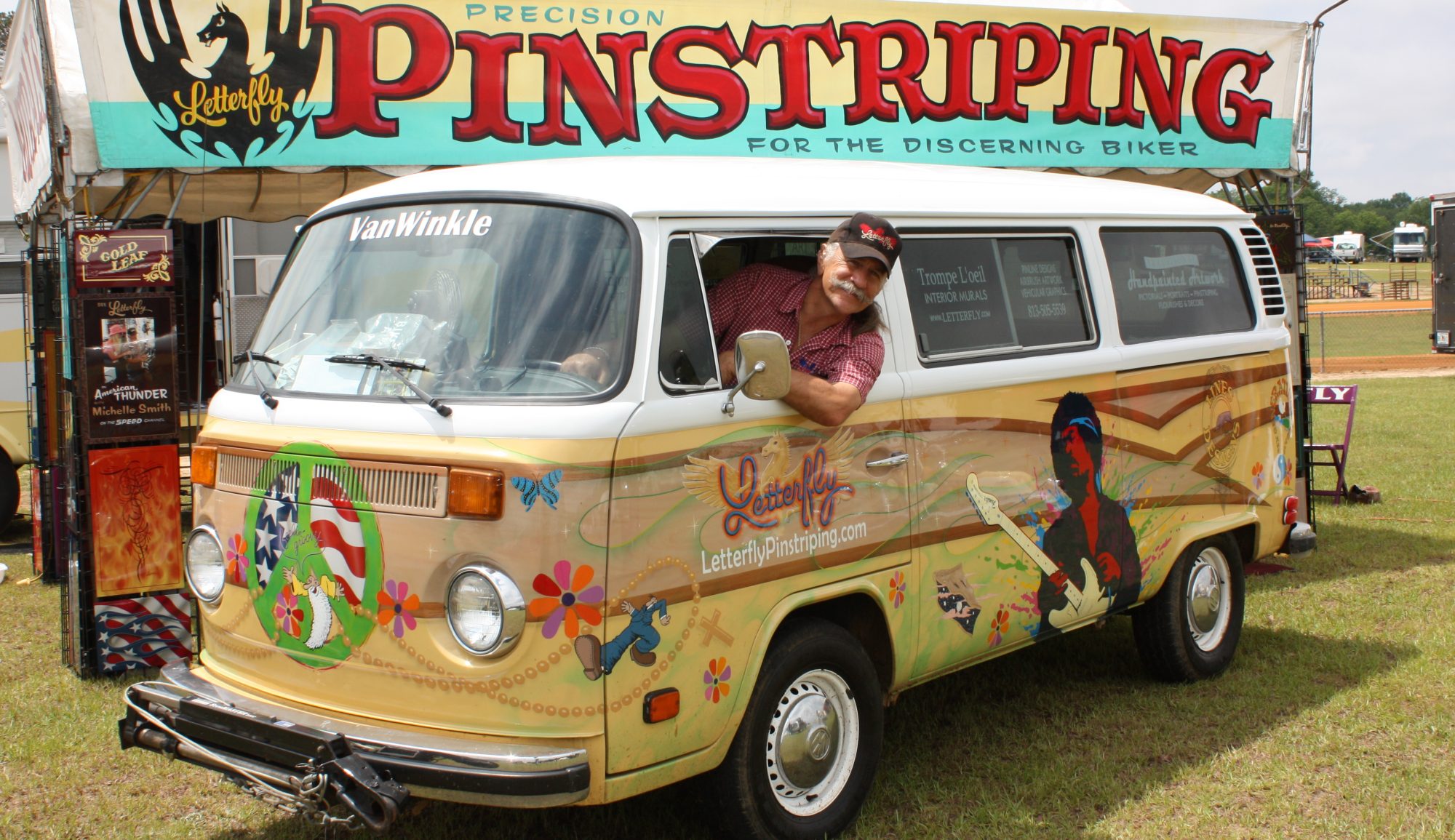
In the spring I moved my camper, ponies and calliope trailer from Hugo to Medora. I was welcomed again to the Silverlake family winter quarters I was already familiar with from my Clark & Walters and Fisher Bros Circus days. My abilities as a fabricator and sign painter kicked into high gear, as we made many final preparations and I decorated his fleet.

First Truck

       The Barnes & Daily Circus opened in the spring of the year in a nearby small town in southern Indiana. I put up the small tent purchased from Buzz Barton as a stable and provided many other skills for the two inaugural performances. Perhaps, as a hint of the unpredictability to come, I had a rude awakening the next morning. Although the show was torn down and loaded, the location where I had the ponies stabled was in a low lying area on the lot. After a late night rain and resulting flash flood, my ponies were standing in knee deep water. After sloshing through the water to rescue and load the ponies in the elephant trailer and tear down the little tent, our 1974 season began in earnest.        

The series of one day stands began their relentless rhythm and each day ran a little more smoothly. Our tour opened in southern Indiana and the route took us north through farm country to Michigan. The show was a testimony of efficiency, designed by a man who knew how to move a circus. Traveling on three trucks and trailers, the big top was a bale ring top, as opposed to the push pole tents of previous shows. That meant the poles went up first and the canvas was hoisted up the poles. This method of handling the canvas makes it last much longer. This circus was conceived, built and created by the brother of my original mentor, and was clearly a clean, efficient, attractive, and in my opinion, the neatest little circus anywhere.        

Each day on a new grass lot, I put the ponies out on the picket line and would turn frail Teddy loose, as he would just hang around the others anyway. Little children gravitated to his peaceful presence and enjoyed petting him on the circus lot. Although too weak for any other role, Teddy remained as our loved mascot. Anyway, three green liberty ponies was a manageable size group for a novice to handle.        

Soon the pattern of having the ponies on display in their little stable/tent on the midway, along with my Calliope, added to the visual appearance on the lot. I played the calliope before each show as a preamble to the performance, and for the “blow off” (when the patrons leave when the show is over.) I played old time tunes like “Daisy Daisy” and “Bicycle Built for Two” in the afternoon prior and between shows. While the ponies were in this situation, I observed the animal’s magnetism and the kind air that the patrons enjoyed. Through this exposure to the public, the ponies developed acceptance, tolerance and love for our audiences.        

Inside the big top, my pickup truck with the drums bandstand was backed into the tent alongside another calliope. Bobby Green provided the music having migrated from the defunct Clark & Walters. Also here, Dot and Sonny Burdett added a touch of class to the show with their presence. Sonny always dressed to the tee assisting his tall lovely wife with her rolling globe act in the show. Billy Griffin worked in the office and dressed as a clown for the performances. Marilyn, Jim’s wife, performed aerial web and ladder.       

I learned as a child that even an ideal social environment is complicated. Around a circus, egos get fed by the ongoing approval of the crowd. The narcissistic element that is inside all of us sometimes gets inflated beyond its intended purpose. Blind to the origins, sometimes tension develops between personalities. Egos clash. Without interruption or intervention, the caustic condition infects others, sides are taken and chaos reigns.        

On a circus there are seasons when the personnel combine seamlessly to form a team that works well together and the experience along the entire route is heavenly. Then there are seasons where individual agendas take precedence over what is best for the show. Bickering and back stabbing take on a life of their own, resulting in an unhealthy experience. With the sincere attitude of regard present in the personality of Jim Silverlake, his pleasant, altruistic mindset radiated outwards to influence others and prevail on our show. That season came quite close to what may qualify as heaven on earth.        

Needless to say, at the beginning of this tour, I went through a major learning curve. The pony act, although pretty, with animals the color of a shiny new penny, with contrasting red leather harness and feather plumes, suffered visually when a mistake occurred and I became clearly frustrated and it showed. I was to learn that among the skills appropriate to develop in my new role as an animal trainer was to mix acting along with training, as I guided the ponies through each mistake. Visible frustration was clearly not received well by the audience. The procedure of correcting an animal in the public eye needed some shiny gloss and a fixed smile. With some encouragement from the circus owner, I began to learn finesse. I became quick to maintain my smile, loving radiance, and kept my discipline discreet. As the weeks went by, the ponies caught on, becoming consistent each time we performed, and I could concentrate more on the acting, presentation and connecting with the audience during the act.        

A few weeks into the season the dreaded balloon I had been forewarned about finally did drift into the ring during the act. I watched in horror as the lead pony “Buttons” went up to it and sniffed it. His response was to jump over it and resume the routine. I was surprised and so proud of him. The other two ponies “Buster” and Tex” concentrated their attention on following and doing whatever “Buttons” did, so although they shied away, they didn’t think much of the balloon either. What a relief.      

The circus wandered north, criss-crossing the state I was already familiar with due to my first two seasons on the road. At one stop in a very picturesque town on Lake Michigan called Harbor Springs, I took a walk into town to enjoy the splendor of the quaint old vacation homes, tree and streetlight lined avenues and the beautiful natural setting overlooking the water. On the return hike through this utopia, I found a path that went through the woods. The natural beauty of these surroundings elevated my emotions to an unprecedented height of gratitude. Around each turn on the path, my feelings took flight.      

 The quiet nature walk among fernish greenery and chirping wildlife allowed me to find a secret place within that promoted a peace, oneness and joy. As if in a dream, around the final turn that lead out of the woods, I found a lush grassy field with a pretty little circus set up in the middle. This lovely picture remains unforgettable in my mind. The one ring, two pole big top with flags flying, an appropriate sized marquee to welcome the patrons in front of it, and the highly decorated trucks and travel trailers efficiently arranged around the lot made a pretty picture. I walked into this scene and four little yellow ponies looked up at me from their picket line in the grass.        

This was a jewel of a show, the masterpiece of a man who, not only knew the logistics of how to properly put a show up and down each day, but how to load equipment efficiently on a minimum of trucks. As a finishing touch on the lot and to add an interesting feature, my calliope trailer and ponies were situated at the outside edge of the midway to greet the patrons as they arrived each day. As the rhythm of up and down each day combined seamlessly with the pleasant attitudes of the personnel, a feeling of oneness grew inside me. I was truly proud to be part of this show while simultaneously entering a new chapter in my life, and some of the best artwork created to date was on this fleet. I felt that this must be what is referred to as the piece de resistance or quite possibly the “magnum opus” of circusdom. As the season progressed, I thought; what could go wrong?

A New Role

   The observation of the liberty horse training process and my role as assistant each morning in the dusty ring barn at the Hugo fairgrounds as Bob Grubb trained my liberty pony act during the winter of 1973-74 proved to be a valuable prerequisite to not only understanding this performing art form but would also benefit relationship skills in other arenas. After only six weeks, the pony act was complete to the point that I was ready to assume my training to learn working them in the ring.

liberty horses 6

      Out of the original ponies brought to Hugo, four began the training process and three worked out nicely. One pony appeared similar to the others in the first batch purchased for my circus act but by the time he was a yearling he hadn’t grown into a picture of health. Bob recognized some aptitude when the training of each individual began but when they were combined into a group of four, little Teddy didn’t have the energy to keep up with the rest of the group that lapped and ran into him from behind. Teddy proved to be too frail and without the energy to keep up with the rest. His training was discontinued even though he was willing. Something in his eyes communicated the desire that existed in his heart. He wanted to participate but because he seemed frail we discontinued using him in the training for the act.        In the midst of this daily routine, a man came to see me. Manual King invited me to go with him and eat a meal at Vets Café downtown. While we ate, I learned that he had a snake show that toured with Carson and Barnes circus and that he wanted an elaborate front painted on it. I was already busy with my pony act so he had to so some real talking to get me interested in going with him to his winter quarters near Houston in Pearland, Texas to tackle this project. The only time I could fit an undertaking like this into my schedule was immediately, over the upcoming Christmas holidays. Manuel, who had a golden, persuasive voice and a beaming personality made the proposition attractive to me. Soon thereafter, with a minimum of painting supplies and my bag packed, I rode with him and his family on the long trip to his home. On the trip I learned that Manuel’s claim to fame was being the youngest lion trainer of all time, starting as an eight year old performer on his father’s circus. His father also imported animals and performers to America and Manuel still recruited acts for Carson & Barnes Circus from Mexico.

      When we got to his home, I found the snake show set up in his backyard. As we looked it over, Manuel shared an embryonic idea for me to develop. There was no hesitation. Although I had never tackled such a massive undertaking in my life before, confidence carried me forward making up for the void of lack of experience. I dreamt up my concept, drew a sketch that was met with his approval, and over the successive days, the themed front began to materialize as my brush did its magic. “Princess Xochile” the Aztec Goddess was soon pictured alongside the title of the show. The central image was the scene of an Aztec pyramid being squeezed by an enormous python.        While working on this project, I was made part of the family. Due to my being with them over the holidays, I was introduced to a new tradition; the Mexican style of Christmas. Special foods, customs, lots of tamales and other ethnic specialties filled these days with a new experience. This was my first Christmas away from my family and the tradition I had grown up with. This exposure was rich. The love, excitement and delicious abundance that abounded in their home remain a cherished memory. After the holidays, with the show front complete, Manuel gave me a ride back to Hugo. Then it was time to resume learning my act.      Back in Hugo, the daily morning repetition became a consistent routine with the ponies, something that would remain constant from this point on as I morphed into my role for the road. My afternoons were free and the nearby winter quarters of Carson & Barnes Circus received a positive report from Manuel and also became interested in my ability as an artist. They brought me their office trailer for extensive decoration. I laid out and painted the shows masthead and extensive scrollwork on the exterior, and near the office windows, painted diagrams of the interior of the big top on either side along with the ticket prices.        As the spring of the year loomed on the horizon, my days became full of preparations for the season ahead but with my new liberty act there was still much to do. In true show business fashion, the season opening occurs before being completely ready.

Hugo, Oklahoma

 The winter of 1973/74 found me in Hugo, Oklahoma as the understudy of Bob Grubb, who had a background of performing with circus liberty horses for many years. Now he was going to begin with my ambition of a liberty act of my own. Out of the original ponies purchased the year before, four matched up nicely. Once introduced to this group, Bob began to observe the minute distinctions that existed between them and comment about what he saw. He began to name them, handle them to find out about their temperament, and begin to visualize a logical sequence for them to assume.

bob grubb

      He named “Buster” first, who had the most handsome conformation and attitude of the whole group. I named “Buttons,” who had the color of a new penny, after a favorite first grade teacher. “Tex” had a long back and Bob had a concern about his being juggy, whatever that meant. “Teddy” was a willing animal but seemed frail compared to the others.        

Tie stalls were rigged for the comfort of the ponies in the ring barn at the fairgrounds, and my camper and trailer were parked nearby. Anticipating this project, Bob had his ring curb already installed in the central area of the barn and was eager to begin the training process. We quickly adopted a regular routine. After chores and breakfast every morning, training took place.        

The result of Bob’s teachings and the universal attitude among the community of animal trainers around the circus is that the animals always come first. As I woke each morning, the first thing I did was go into the barn, grab a foot tub, fill it with water and offer each pony a drink. When they had their fill, it was time to feed. Nose bags received a scoop of feed each, a blend of oats and sweet feed. The ponies anxiously nickered and cavorted in anticipation, as I slipped the strap of each nose bag over their ears. The animated scene transformed as each pony became content to chew the sustenance that now hung conveniently under their lips.      

 Now I could retreat and fix myself something to eat. In the interest of efficiency, I developed a way to fix a Hearty Breakfast and only have to wash four items when complete. First, I would boil a potato in the coffeepot. When cooked, I would mash it in a frying pan and move it out to the edges. In the middle I put a few strips of bacon. A pot of coffee would then get prepared in the coffeepot and I would break two eggs on top of the mess in the frying pan. When the food was ready I would eat it right out of the pan. After my meal I only had to wash the coffeepot, one coffee cup, a fork and the frying pan. Then it was time to get the chores done before Bob arrived to begin training.      

Bob arrived each morning with an agenda that was clear to him. As I watched, one at a time, Bob would gently coax each young pony into a sequence of actions at the end of a tether rope or lunge line. The pony was first encouraged to walk around the ring, out against the curb. Bob was constantly talking to them with a gentle demeanor that proved to be very effective. “Walk,” “git up,” “there now,” “whoa,” “come in line,” “good boy,” were all soon part of each ponies understanding and my verbal repertoire. 

Stevens52BobGrubbTrickHorse1

       The whip was used to communicate with each animal as an extension of his arm and was only used gently as an aide to help push or suppress forward motion when needed. Introducing each animal to the whip involved letting them get acquainted by seeing, sniffing and getting touched all over with it. A variety of specific body gestures like pseudo semaphore signals accented with these extensions became a big part of communicating and asking for a variety of responses from each pony. Bob was careful to not scare the animal needlessly and was quick with a verbal reward or a lump of sugar when the youngster responded willingly to his cue. As the days went by, each pony began to grasp what Bob was teaching and the lunge line was discarded. Soon, two ponies were working together in the ring. Only three weeks into the process, the whole group of four was in the ring.      

 Repetition teaches. The sessions were at the same time each day, every day of the week except Sunday. The result of this consistency was a tremendous amount of progress in a short time. Also fortified with another form of reward was when they provided the correct response, we would often simply end the session. The behavior and understanding each equine accumulated soon proved his technique as being very effective. Those hours of observing the tedious training process were to prove valuable when it became my turn to do the training.

        The most important concept for any liberty horse to grasp is something that is not seen when the audience watches them perform, and that is to stay in the ring. This is taught by; never allowing them to have the experience of being outside of the ring or, when they do jump over the curb and go out of the ring, make sure they have a negative experience while on the outside to cause them to desperately want to get back into the ring. Bob had a rope barrier elevated around the outside of the curb, at shoulder level to a pony, for them to run into if they did jump out of the ring. My job was to be the bad guy. During one point in the training, one of the ponies got the notion planted in his head that he was going to go somewhere else and would jump out over the ring curb at the same place in the routine every time we rehearsed. I was on the outside of the ring and with a whip in my hand. I would yell, chase and swish the whip in an effort to strike terror into the heart of this cute but misbehaving equine. The moment the pony jumped back in the ring, I stopped with the terrible animation and Bob was quick with an assuring word. He appreciated the fact that I was there and he didn’t have to be the bad guy. I was learning how these little guys would become predictable and how important it was to interrupt negative behavior before it became established.

      Another important response to have firmly established with each animal is to halt whenever asked. This is especially important if the horse should become rattled, because from a halt, the trainer has a chance to personally connect, calm down and reassure the horse. I couldn’t believe it; here I was, in a dusty ring barn with aspirations of glamour and excitement, taking “Functional Relations 101” from an old cowboy, learning functional strategies that would prove to be helpful in many arenas later in life.

        The circus ring is a special, highly regarded, almost holy place. In my role as drummer for the circus, I served in a capacity that complimented the other performer’s efforts. Now, as I assisted the training of my ponies from outside of the ring, I looked forward to the time that a rite of passage of sorts would occur placing me in the limelight for the first time. Not only would the duties as the trainer of the ponies be passed to me but also the transition of contributing to the show from the bandstand to graduating as a performer and working in this revered circus ring. I still recall the moment when the time came for Bob to have me join him in the center of the ring. At first I stayed behind him, as he demonstrated how to encourage them through their paces, allowing the ponies to get used to me. Then the time came for me to hold the whips while Bob instructed me, first from standing behind me in the center of the ring, and soon thereafter, from outside the ring. This was the beginning of a long, rigorous and rewarding experience.

        As I look back, I realize the ponies were God sent, and an opportunity for this teenager to become functionally relational in the midst of being intensely emotional, perfectionistic and self-sufficient. Ponies don’t understand anger and erratic behavior. Very little representational communication means anything to them. Progress was only made with kindness. The ponies forced me to become functional, aware and consistent with my behavior. This must be the source of the term “having horse sense.” The animals learn through intentional repetition and functional consistency. For the sake of becoming a good horseman, I became proficient with my behavior around them, even though relationally with people, I still remained reluctant, isolated and often frustrated and angry. Over time, this role as a pony trainer became a segue that facilitated my connectedness to others.

The Bannerman

Advertising in any proximity that the locals gather is a strategy many businesses utilize. A sense of community dedication associated with civic groups is created with these gestures. Hand painted paper signs with the names and ads of these local merchants hanging in the big top is one way of making extra money around the traveling circus. Becoming the banner salesman on the Royal Bros Circus season of one day stands in 1973 was an enterprise that required my sister’s participation to fit into our routine. Our custom was already up early in the morning – Paula would wake me and crawl into the cab of the pickup to resume her sleep while I drove to the next town. When we arrived at the next town, I would jump out of the truck downtown with my steno pad and begin to visit the merchants in all the stores. Paula would then drive the pickup truck with camper pulling the trailer with the calliope and drums, to the edge of the show grounds where the big top was being set up. There she would recruit the canvas boss to drive the rig into position on the lot near the “back door” of the tent.

DAVE 3 2

      At the beginning of the season, John Frazier had given me a spiel to use and sent me downtown to do my best. I simply found the decision maker in each store and rattled off my memorized pitch, wrote down the particulars of each sign and announcement and collected eighteen dollars for each one. Downtown, my role took me in and out of each store and business, to give the spiel for buying a “banner ad” that would hang in the big top, and the accompanying announcement that would give merchants presence during the afternoon and evening presentation of the circus. I was learning presentation skills plus how to get around the employees in charge of intercepting disruptions and deflecting them. I learned to not disclose my purpose until I got around to talk to the boss.        

As the circus banner salesman in a new town every morning, I had the opportunity to meet an endless stream of interesting people. In Perth, at a candy store, I entered an old time glass store front, going through a heavy wooden door that triggered a bell that rang each time it was opened.        

After listening to my memorized spiel, the elderly woman who otherwise beamed in response to my presence responded with “I’m not going to buy one of your banners.”        

After asking me about my role with the circus, I was then invited to listen as she told me about herself and sat down at the piano. Prior to World War I she had been a piano player for the silent films shown in the local theater. Emotion, drama, excitement, danger and elation were communicated through the flavor of the music created by a live piano player in these theatres. As she played, these examples of how music enhanced this genre of entertainment, my mind was transported to a time when this was state of the art. During the war, she became a bus driver for the war effort and when the war was over, “talkies” had arrived on the scene, so she had to pursue another vocation. This was just one of the many encounters with interesting people that imprinted my heart.       

While I was in town selling banners, Paula had one duty during set up, and that was to take two pullies with long loops of rope and snap them into the lace lines of the big top while it was going up. This facilitated hanging the paper signs later, and was a duty that forced her out of her shell to interact with the crew during set up.        

When I got back to the lot with all the orders, I had to scramble to get the rig backed into the tent and the drums set up, while Paula got busy painting signs on large pieces of white paper with a shoe polish applicator and getting them hung in the big top before the show.        

Paula never did become an enthusiastic showman, partly due to her reclusive nature and partly because I had become a hot headed teenager that had never learned to be gracious as we attempted to get all these tasks done together on a daily basis. Perhaps I was following the example of our father’s strict perfectionist manner of wanting everything done just right, and that added to the already frustrating situation of her being in the turbulent outdoor entertainment business. All I could see was the “perfect” way it could have been done.        

Our comfort was at the mercy of the weather and plagued with egoic whims, moods influenced by situation and selfish ambitions of others, which was more of what we had found on the playground of our youth, yet on a grander, rawer scale. The rigors of one day stands, relentless demands from me and the multitude of twists that occurred in this turbulent lifestyle began to wear on her. Something in my sister had been hurt. She could not show enthusiasm. She remained frustrated and became referred to as poor Paula amongst my trooper friends.        

One morning after having a successful series of banner sales, I returned to the lot to begin with the process of setting up and getting ready for the show, but I could not find the rig on the lot anywhere. I asked the canvas boss if he knew anything, and he sent me to see the elephant man.      

When I asked Dick, he said, “The rig is over there” and pointed north of the lot.        

So I began to walk.    

About a mile from the lot, I found my sister completely frustrated, sitting on the ground, with the truck stuck up to the axels in someone’s front yard. Apparently while driving the rig from where she dropped me off downtown and heading for the lot, she missed the entrance. Thinking she could just go around the block, Paula continued down the road and instead found that it went straight for miles with no place to turn around. Exasperated, she pulled up someone’s driveway and attempted to make a big loop in their front yard. But the lawn was soft, and the truck sank up to the axels.       

When I got there, I was not the loving, supportive brother that she needed at that low point in her life. I became a hot head and screamed and yelled at her. I had to hike back to the lot and recruit the help of the elephant to pull the rig out of that situation. As I look back at my behavior of that day, I realize that my response did more to damage my sister, who already had the tendency to shut down and withdraw. This event caused her to retreat even further into the security of isolation. If I had it all to do over again, I would have become comforting, compassionate and lovingly explained to her that we all make mistakes. The damage of that event set the tone for the rest of our lives. My sister never saw an admirable trait in me from that point on. When I did see her years later, warmth and regard was gone.        

Holding a grudge seems to be a sin of our father, who had his front teeth knocked out on a family water ski excursion by his brother (interestingly, who became a dentist). Making amends or entering the procedure of forgiveness, as taught by Jesus, was not exampled in our family in spite of our father being a minister. Resentment persisted becoming depression as part of our father’s experience.    

After an otherwise busy and fun summer season across picturesque Ontario, we had much to relish and savor from this adventure but a contemptuous “not knowing” for both of us, forced self reliance to the front and we grew apart. My sister and I had survived a turbulent childhood exposed to the vast spectrum of behavior coming from others, to prefer a smaller circle of influence. At the end of that season on the circus in Canada, we trucked back to the Quad cities where, after dropping her off, she began her next semester of college. That was her only experience on a circus.        

I headed east to pursue a fall tour on another show, a small circus with a five week tour through Michigan that performed in school gymnasiums. At the end of that turbulent year, I ventured to Indiana, gathered up the new crop of babies at the Palomino farm, picked up the harness commissioned at Shipshewana and headed for Michigan.        

At Hayes farm, I unloaded the “wiener” babies and prepared to gather up the now grown “yearlings.” One colt had died.        

Hayes told me the story of Lewis Bros Circus, a show owned locally that thrived during the thirties and forties that wintered east of Jackson on Fox Road. He had gone out there in the past to snoop around but the owner of the farm wasn’t keen about visitors. Fortunately the farm had changed hands again and Hayes made friends with the new owner. He saw the left over equipment that had sat for several decades but not before many of the rotting wagons had been burned.        

Since he was friendly with the current owner of the farm, during one of my visits to Clarklake, he suggested that we drive up there and look around. In his green station wagon we went to Fox Road. Behind the large white home in a rural part of the county, a sunken driveway lead past a row of tall trees up to the back where two large barns stood. Inside the first one was a low ceiling and a labyrinth of aisles and stalls, obviously where the animals for the show lived during the winter.        

The other barn was a massive, high ceiling structure with sheet metal on the floor where the elephant was housed. Up on the second floor, a large room was where the wardrobe, canvas repair and other preparations took place.      

As Hayes and I explored the place we saw and inverted elephant tub being used as a coal hopper and recognized other pieces of equipment strewn around. The owner told us to take what we wanted. I found a complete set of liberty horse harness and an elephant bracelet.        

Part of the challenge of living on the road involved an inability to collect things. My choice to keep something usually meant that another belonging would have to get discarded, but this find was too good to pass up.        

After some additional artistic projects Hayes had accumulated for me to complete, I headed for Oklahoma with four yearlings to begin the creation of my new palomino liberty act. I was about to begin the experience that would positively imprint my life in many amazing ways.

       This business I had selected in an effort to make an improvement came filled with extremes; from encouraging friends that would become a positive influence for my lifetime, to crooks with agendas that inflict selfish devastation. Instead of receiving wisdom from the lessons learned on the road, our response was more of what we had established as children. To seek on our own, to cherish self reliance and independence for surviving in this turbulent society. The ponies would teach me something vastly different.

Circus Paula

 After three seasons of working hard, making money and accumulating additional skills, my parents became used to my being on a circus. They thought that a summer outdoors would be good for my sister Paula, who, as the only child left at home, had become a recluse. Between her freshman and sophomore years in college, rather than spend another summer at home in her room, our parents encouraged her to join me for a tour on the circus. Once again, we were to be a team, but this was a much more turbulent situation. With three years’ experience accomplishing tasks in a variety of extreme situations with catastrophe being a regular part of the scene, I had developed through it all the necessary drive to continue with a show must go on mentality. Hopefully I could be a good example to my sister.

I rendezvoused late spring after the disaster in Texas at our parent’s home (now in Kansas City) to implement this plan. After making many last-minute preparations, including outfitting the recently purchased cargo trailer with comforts for my sister, we scrambled from Kansas City across the Midwest to get to the opening town in Ontario.

                Equipped with a calliope, we were to be the band on a big top upstart in Canada, a tour the perfect length to fill the summer until my sister went back to college. After driving all night, we arrived at the Port of Entry. The circus owner met us at the Canadian border to satisfy Customs, Immigration and arrange for us to enter the country. We then followed him to the venue. We arrived on a grassy lot at the edge of town to find a raggedy show, hastily assembled from various usable components and local resources. Although I had three seasons experience, upon sizing up this disheveled enterprise, I saw how it could work, but my sister was perhaps horrified.

The first few days we hastened to assume tasks on the tour already underway, and our cherry pie in the familiar custom of one day stands. Paula was thrown into this rigorous routine that I was already familiar with. We got up early every morning to drive to the next town, where everything with this tented city was set up again. Then give two shows, tear it down and load it each night. The big top was best described as a patchy sky in the air, held up by poles that were young trees only weeks ago. Seating was an antique variety of jacks and planks. Rigging, banners, ticket boxes, ring curb, platforms, props, trucks, lighting and curtains were all of the same pedigree. She observed my relentless zeal and joined in to contribute what she could. Soon as a team we were making contributions on several fronts of what the entertainment hungry patrons of rural Canada got to see. The summer of one day stands on this raggedy circus required lots of creativity. 

My sister did step forward out of her shell. Prior to show time at the side show, I became David McDavid the Scottish highlander who plays the bagpipes and she became the Punch and Judy puppeteer. An old suitcase with some beat up puppets were meticulously brought back to enjoy a new life with her sewing repairs, wardrobe upgrades and some fresh paint to bring smiles and laughter to the children and the entire crowd in the side show. As the circus puppeteer, she created her own version of the traditional story line that accompanied the presentation. Then, after our acts were over, we raced back to the big top to get ready for the show.

The crowds were already filing into the tent by the time Paula and I returned from the side show to climb on the bandstand to prepare to play the music for the big show. The drums were set up on a platform in front of the calliope that enjoyed a prominent position at the side of the big top, next to the performer’s entrance. During the two shows we gave daily, she played the calliope, pounding out the peppy tunes learned during her adolescent piano lessons and experimented with personal favorites such as show tunes from “Fiddler on the roof” and “Cabaret.” I played the drums, enhancing her music with percussion effects and punctuating each performer’s efforts. In addition, I also announced the show. As each act shared their developed specialty and enthusiasm with the crowd, the tunes and effects created improved the appearance of their labors. 

The circus was populated with four families that had lots of children and all of them performed in the show. The Michael family had toured with me on Fisher Bros Circus and became our haven among these families. Dennis and Lynnie radiated the same level of love and concern for their daughters towards us, and even included us on special family excursions. The Lang troupe proved to be the most fun both with their teeter board act that featured kids flying through the air to arms, shoulders and elevated chairs, and in the backyard during the regular cookouts. The Frazier family was made up of red-headed meanness, our token source of chaos and this carried through with the antics in their trampoline act. Bob Rayborn was our canvas boss and with his wife Virginia had two boys that also added to the relentless fun going on. My sister wasn’t inclined to want to make friends. Instead she maintained her pattern of reluctance around others as a reminder of what we had experienced as children. 

I had found alcohol in the early years of being on the road away from home. Discovering relief from the awful taste of shame, humiliation and the feelings of being less than, after a few beers, I felt like I was able to fly, to rise up, and interact with others in a happy, confident manner and join in and be part of the group. Between and after the shows, there were campfires and bar-b-ques with lots of pot-luck to go around. The parents visited, many also enjoying the stout Canadian brew while the children played and we all got along famously. It was truly a fun season.

During the jump between towns, many times we drove through virgin wilderness. Seeing pristine lakes of crystal clear water proved to be too tempting for me to pass by. After stopping the rig, I dove into the clean water with my bar of soap to scrub up only to discover that the water had probably been completely frozen only months ago. Refreshed and invigorated, the trip would resume towards our next destination in this magical land. 

The tour through Canada introduced us to a new flavor of society, vastly different from the United States. The British form of monarchy was evident in the characteristics of the language of the highways, merchants, businesses, and community infrastructure of government, police and firemen along with subtle architectural differences. By far the most spectacular feature of this land was the natural beauty. The way each community interacted with the terrain years ago to become the thriving pockets of humanity evidenced by distinct manners of co-existing with their surroundings.

The Circus

“It takes courage to grow up 

and become who you really are.”

e. e. cummings

Cherry Pie

Bill imprinted his son with a love for the circus due to the experience he had as a boy. The primary reason for this fascination was the enormity of the tented city and the swiftness of moving every day by rail. Several trains brought attractions from all over the world, the infrastructure to support hundreds of people, and the venue for the audience along with an amazing number of animals.

The amount of work accomplished rapidly on the giant tented circus during the golden age of the big top, utilized many clever devices unique to the culture to facilitate these accomplishments. For those brave enough to join, in the midst of this staggering amount of work getting done every day, every new rookie was asked a question, “Do you want some cherry pie?”

Have you have ever been the greenhorn? Perhaps you remember the anguish of learning a new job, wondering “will I ever fit in?” and the struggle to learn an unfamiliar skill from a new boss. The offer of a delectable confection interrupted those distractions for a moment, and promoted a predictable response.

“Yeah!”

He next received instructions to announce this eagerness to the nearby canvas boss, menagerie superintendent, side show captain, or prop hostler overseeing part of the many set-up processes all going on at the same time. Once this eager worker announced he wanted some cherry pie, that was the inside cue to give him an additional task.

Assessing the workload, available labor and balancing progress, the boss looked around and evaluated tasks that needed additional help; driving stakes, unloading and carrying ring curb, arranging prop trunks, moving seat planks into position, or any part of the many routines going on. The expectant rookie was assigned an additional task, followed with instructions to get it done every day and at night make sure he got it loaded onto the right wagon.

This creative way of assigning specific tasks was just one of the reasons the circus was able to accomplish so much each day. The rest of the troop then had a laugh at the expense of the bewildered recruit. They welcomed him to the crew, and the tented city went up a little faster from that day forward. 

The year was 1970. I spent fourteen glorious weeks, from June until September, on the Clark and Walters Circus. The Silverlake family operation had been purchased a few years prior from a showman in Oklahoma. Brownie was the Patriarch of all things circus. As was typical with circus families, all members of the Silverlake family had an act and a specialty task. They all pitched in with the operation of the show and worked together as a team.

I was eager to learn all I could in order to become a valuable showman. Franklin taught me how to splice three strand manila rope. I learned the proper way to install a twist lock plug on the end of an electric cord from Jimmie. And Melvin showed me how to solder a damaged microphone connection. I also learned how to sew a baseball stitch to repair a hole in the big top from Jack, the canvas boss, and even how to twist a whip-popper, the special part on the end of the whip that makes the noise, among other specialties.

 Brownie had time to share stories as he took care of the animals, so I typically followed him around as his helper. I learned about his wagon show days on the M L Clark Circus when he was a boy. I remember his story about when the Mighty Haag Circus was confronted with a steep and dangerous highway grade. This is when the elephants were literally walked over the mountains through to the other side, even though the teams and wagons kept to the roads.

Brownie tutored me with the same kindness he showed the animals in his care. As a newcomer to the show, my job was to play the drums during the show to accompany the calliope music of Bobby Green.  The rest of the time I was all over the circus lot involved in a litany of creative tasks. These included the set-up, maintenance, caretaking of animals, but my creative drive found expression with paint as I lettered Tickets, Jungle Beasts, Alive and decorative accents on the rolling stock. While we toured Appalachia, they tried the cherry pie trick on me, but because I was motivated and eager, the trick was irrelevant.

That summer whet my appetite to live a more interesting life. It filled me with an enthusiasm and a decision to continue my career in show business. Returning home at the end of the summer, I took welding at night. In January, after graduating from high school early, my fascinating career began. My creative drive, ambition and gift as a painter took precedence over all else and, I began to combine being an artist with travel.

Homecoming Displays

As a child, I observed endless activities taking place at the nearby fraternity and sorority houses. Once a year they built elaborate displays to celebrate the annual Homecoming festivities that culminated with a football game. These displays depicted the university mascot, the tiger, doing a variety of things to their rival, and any number of other motifs thought to improve the morale of the school. Current events and popular songs also became themes. The “Purple People Eater” referred to the popular song of that time. Another clever idea was a huge cow straddling a simulated barb wire fence entitled “udder disaster.”

Not to be outdone, I imitated these efforts by building a homecoming display in our front yard. The first one occurred when I was six years old. I made a simple crayon depiction of a tiger, the Wittenberg mascot, on a large cardboard box. DaveHomecoming6

I learned to assist the college kids when their displays were being dismantled so I could drag building materials home for my use the following year. Gradually, I learned to sculpt chicken wire into the shapes of characters and stuff the holes with colored crepe paper. Each year my display became more sophisticated. Gradually my striving became mechanized, illuminated and by the time I was eleven, had an accompanying soundtrack that repeated a little ditty that Mom suggested and recorded the three of us singing: “Oh, hang ‘em up to dry, oh, hang ‘em up to dry, Ohio Wesleyan, Hang ‘em up to dry.”  This recording played all weekend alongside my display of a mechanized tiger with a washtub.Eat-The-Pie-On-Ear(s)-4-dupe

Being bitten with the drive to create, paint and a dose of insatiable curiosity, my energy focused on a variety of personal ambitions. I explored the neighborhood in search of insects for my science fair project, salvaged components for my annual homecoming display, tree house or fort and developed components for my summertime circus production.Aim-In-Fer-Victory-5

Like most little girls, Paula liked to play with dolls, toy ponies and aspired to compose stories. She once drew a comic strip with a pony as the main character. But she did not understand how to draw the hoof and ankle of a pony’s leg.  That did not stop her. She simply made the lines of each leg go down to a point, and “Pinfoot the Pony” was born. She made several adventure comics books during her young career as a cartoonist with this clever equine personality.

We discovered a litter of kittens born in the window-well of a nearby fraternity house. This started our relationship with “lucky” the cat, who became part of the family. Later, our childhood was blessed with her four offspring we named “Salt, Pepper, Sugar and Cinnamon.” After having the litter of kittens, Lucky’s personality turned anti-social and sour. So, she was sent to a local farmer who needed a mouser on his farm and we kept one of her kittens. Pepper became a source of joy for the whole family for many years. 

Mother loved singing and rose early to practice. After school, Mother was either teaching piano, voice lessons, or rehearsing for another upcoming opera. We had to be quiet while inside the house, so we learned to invent our own creative activities.

Dad planted a garden in the back yard every summer. One year I was delighted to find a herd of caterpillars devouring his parsley. I disclosed my discovery at dinner. My dad waited until I had gone to bed before thinning out my crop of caterpillars. The few that remained became plump. Then they found secluded places to attach themselves and transformed into a chrysalis. He knew about my interest in insects and found three one-gallon glass jars and placed a stick with a chrysalis in each one. Three jars, one for each of us to take to school.

In the spring of that year both John and Paula’s butterflies were born in their classrooms. Mine never did. I found out later that during the dead of winter my teacher had stupidly placed my jar on the steam radiator to keep it warm. You would think that a teacher would know that this organism was created to withstand the rigors of winter outside without any need for her help.

A year later, while in third-grade, the principal of the school came into our room, had a brief talk with our teacher and pointed directly at me and signaled for me to come with her out into the hall. Out in the hall, I saw two other students waiting with puzzled looks on their faces. We were taken to the gymnasium and given paints and brushes. We were then instructed to decorate the background scenery for an upcoming school play.

I became filled with creative delight as I immersed myself in this large project. At the end of the school day, I returned to my class room to find all my school mates crying. The television in the corner of the room revealed the reason. That day in Dallas, while I was painting, a sniper had shot and assassinated president Kennedy.

Play Time

Paula received the usual gifts for a girl, a Barbie doll, fabric to make doll clothes, games and toy kitchen cooking stuff. John received a belt tooling kit, games of which he was especially fond and books about math and music, along with socks. To encourage my creative tendencies, I received a heavy package that contained an Erector set. Inside were pieces of structural metal, bolts, axels, gears and a motor that could be configured in countless ways. This aggregation of building components would facilitate many projects. I also received a seed planting kit, socks and many how to draw and paint books.

Crayons, paints and sketch books were abundant in our home as creativity was encouraged by our parents. Even though she had dolls and girl stuff, Paula liked boy stuff too. All in all, the foundation for happiness was alive and well in our home and the relentless creativity coming from our loving parents couldn’t help but be contagious.

During our frequent one-on-one, Mother taught me to pause and review something special from the recently viewed movie, event or story I had read. She then invited me to select and share with her my favorite part. Little did I know at the time that I was being groomed to become a seeker of goodness, pursuer of positivity, and appreciator of what the original artist or author intended.

As children, we had an ambition to play outside with toy trucks. Our father cleared out an ivy bed next to the garage so my sister and I had some dirt to play in. A short retaining wall separated the terraced back yards and made a perfect highway for our vehicles to travel upon. As our village in the dirt took form, made from accumulated findings, Paula assumed being in charge of paving the roads that threaded through our town. By heaping up dirt and smoothing out the top with a slurry coat of mud, Paula perfected the process of paving the roads that threaded through our miniature town. Paula earned the nick-name “mudder” at the same time! As we grew, the pattern of conjoined creativity expanded to include a variety of productions, the first of which was a backyard circus.