The Same but Different

The cycle of erecting, tear down and consequent load-out of the tented city drove equipment design that had, over the decades, become a testament to efficiency, durability and simplicity. Portable cookhouse tables, easily assembled components of bleacher seating, platforms that placed an entertainer in front of and above the crowd combine with simple tent poles, stakes and rope, lots of rope. The specific way rope is used and threaded through rigging blocks were unique to the circus and the knots used to secure the guys, lash jump ropes to the poles, were a manner of hooking specific rigging up inside the tent had evolved from the era of sailing.

Using vehicles and attractions to funnel the crowd past enticements was a developed art. The showmen were masters of the science of opportunity as crowds made their way toward the big top.

I became aware of efficiency. I sought to achieve economy of motion during the daily set-up.  Each day the 20×30 tent was spread, poles unloaded and put in place and the stakes were driven. Then the tent went up and the rest of the attraction put into place.

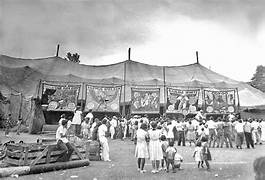
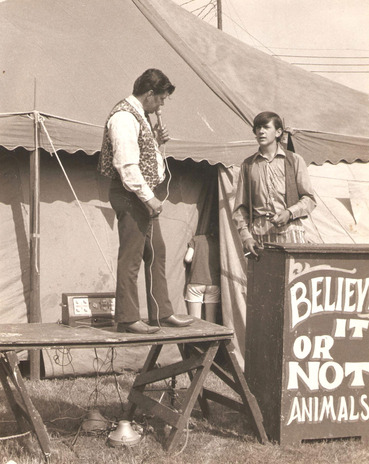
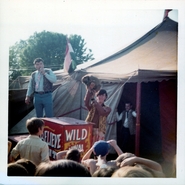
I couldn’t keep a wrist watch working. No problem on a circus. Every day was a routine. Responsibilities drove the day. Near showtime, the activities of the concession department served as the only time piece needed. It coincided with the crowd arriving. The midway was the receiving area. With patrons present we opened the side show and the snake show up for business. For a quarter they could see the unusual attractions inside of what we called the Believe It or Not Show. The tent housed “Trigger,” a five-footed horse. We also had a five-legged cow, a midget bull, and a llama with curious ears that were another wonder of nature.

The Snake Show was in a big box truck that had a two-bunk sleeper in the front that I shared with the big top canvas boss. The large snake was kept in the back. The patrons would climb the stairs that led into the back of the truck where they would look down into a pit to see the enormous python on display. Because of the configuration this was called a pit show.

We were awakened daily just before sunrise to start the trucks and begin the trip to the next town. The big top and crew went first. I loaded the animals into the back of the elephant truck and then coiled the picket line and loaded the stakes while Melvin loaded “Dixie” the elephant. We were ready to begin our trip out of town. I rode shotgun.

We started the trip in the dark. The terrain was revealed as the morning light exposed the surrounding area. This was a special way to start each day.

The rolling countryside of southern Indiana softened gradually as we went north between flat fields. Sprouts of young crops were punctuated with barns, silos and tree shaded dwellings. The communities that had sprung up at the crossroads were our target. Each little town had similar characteristics but arranged with details in different ways. Noticing nuance became a source of fascination for my observant eye.

The days of small town mom and pop businesses of all types had impact because they exerted a personal relationship with their community. Integrity thrived. Although each day was routine, the ever-changing scenery during the jumps to the next small town revealed interesting sights, quaint communities and spectacular natural beauty. We traversed most of Michigan next.

Upon arrival at the next showgrounds, the process of laying out the big top and the arrangement of ancillary equipment had begun. Each morning, the steady rhythmic, metallic sound of sledge hammers hitting steel stakes was heard. The performer’s rigs arrived and they parked adjacent to the performer’s entrance. They had to wait for the big top to go up. While they waited, they visited with one another and the children on the show would play.

The side poles that held up the outside edge of the tent were going up and it created a bowl out of the tent. This was an opportunity for the crew to go underneath to put in the quarter poles. Dixie, the work elephant, wore a tug over her shoulders with chains attached to each side that joined behind her with a hook on the end. When needed, she was guided into position under the canvas and this hook was secured to a loop at the base of the first quarter pole. As she pulled the bottom of the pole, the canvas slowly rose into the air.

This style of setting up a tent was called push-pole. This process was repeated until all the quarter poles were in place. Thus, the elephant was part of the team. 

The cookhouse was usually set up first and by about ten o’clock, the big breakfast meal was ready to be served. The signal was then sent to come and get it. For decades, most circuses had a flag that was run to the top of the cookhouse tent to signal that the morning meal was ready. We had no flag but the shout flags up, went out all over the lot to inform those working to come and eat.

Each day became a steady rhythm of activities. Inevitable situations arose that required immediate attention and became the punctuation of the day. Mechanical breakdowns, drivers getting lost, local municipal hurdles and other uncontrollable situations threatened the rhythm of the show. 

The weather played an interesting role. Rain would render the need for a creative solution to provide comfort for the audience. It also forced other considerations during load out and could create difficulty with moving of vehicles off the lot. Wind was our least favorite.  No matter what was happening, the circus trudged forward with determination.

The circus personnel were intriguing. Traveling throughout the country with this diverse group of people provided a constant mix among ever changing situations. A feeling of family was felt in each new place. The epic tale of our traveling populous was often more interesting than the performance.

A New Beginning

Many minute details are unique to the touring big top circus that relied on canvas and rope. Specialties include the specific knots used to fasten the guy ropes to the stakes and techniques of the crew working together to accomplish the guy out or tightening of the ropes in order to stretch the circus tent, fascinating to watch. The crew boss would crouch by a stake, loosen the top retaining loop of this knot and use a rhythmic chant to coax the crew gripping the rope, to lean and jerk together repeatedly, as he secured every inch they gained.  

“Hit it, break it, shake it, make it,” went the refrain, “Hit it, break it, shake it, down stake it, one more time, again. Now move along.”    

Once the tent was assembled, the kinkers, or performers, moved inside the tent to hang rigging, arrange props and make their preparations for the show. This took place while the seats were being assembled. Once the calliope wagon was moved into position, I could set up my drums. This was a favorite time for most of us, as we could socialize while we worked. Each performance specialty had consideration for the other performers, since we all shared the same round performance venue. The rigging for the aerial numbers was suspended only during the portion of the show when their act took place.  

During the winter, many things occur to affect the routines of the showmen. The plan for this winter was no different.  Mel and his wife Bessie-Katherine planned to take a brand-new circus on the road in the spring. I was asked to replace BK as the marionette puppeteer who performed school assembly programs in the Chicago suburbs that winter. This would free her up so she could get started booking the new route. My training in the field of puppetry began immediately. When BK’s father Raymond Duke lost his job as billposter on the King Bros Circus, he became available as the booking agent for the new circus. BK was freed up to continue as puppeteer. I was then sent to the winter quarters in southern Indiana to begin building, painting and applying myself creatively in many ways. 

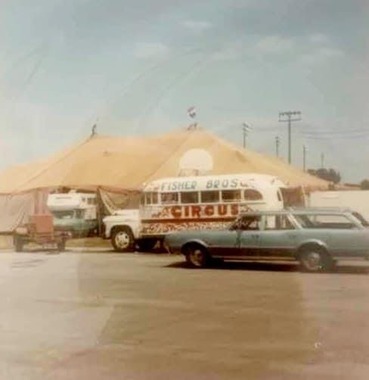
I found winter quarters busy getting Clark & Walters Circus ready to go on the road. Maintenance crews were repairing old equipment and freshening everything up with new paint. Fresh paint made the show look brand new. Once this show left in the spring for their opening town, work began to build Fisher Bros Circus. 

I began to drill, bolt, weld and decorate with paint. I couldn’t believe it – Melvin Silverlake and his wife were creating and taking a new circus out and I was at the center of it, doing everything I could to be valuable. By welding upright brackets and reinforcements onto a flatbed trailer frame, I made a pole trailer with storage racks for seat boards, stakes and side poles. 

Instead of having a spool truck to load the big top canvas, our plan was to load using the reef style of getting the folded-up canvas onto the back of the pole trailer. This is a process where, while the trailer was backed up, crew members lift a segment of the big top to lay on the deck. This process was repeated until the entire length of canvas was loaded onto the trailer. 

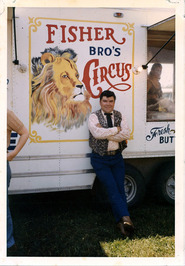
  A rough looking moving van became our elephant and lead stock truck. The inside received a bulkhead to separate the animals. The area over the cab was outfitted to haul hay. By adding a trailer hitch, this truck could pull the trailer modified to be our ticket office and popcorn wagon. With yellow paint and a yardstick, I figured out how to emblazon the exterior of the elephant truck with giant lettering “Fisher Bros Circus.” Eager to accomplish anything I could, learning as I went, I created solutions that were unique for this interesting industry.   

The show was operating on a financial shoestring and in true show business fashion, frantic preparations accelerated to a panicked crescendo that accompanied opening day. When we moved all of the equipment to the opening town several miles away, we discovered crucial elements missing. Many items were needed for tonight’s show. We had no light bulbs for the big top chandeliers. BK had only fourteen dollars and needed to get soup for the cookhouse.  

Fortunately, a friend and fan of the circus, Lou Kretchmer was visiting in his Cadillac with his Scotty trailer towed behind. He loved to sell advertising banners to the local merchants to hang in the tent for extra income. He was sent downtown to swap a banner ad for some light bulbs. He discovered there was only one hardware store in town that had what we needed. They bought an ad banner in exchange for the bulbs and we were in business.  

We found out later that there was no chain to secure the elephant.  Lou was sent back to the same hardware store to sell another banner for the chain.  

Our show was little more than a raggedy big top with a few tired vehicles transformed to carry specific loads, and a handful of people who handled multiple tasks. After making the jump back from the sister show to pick up the elephant opening day, I was painting finishing touches on whatever needed my magic.  Lou and Melvin were strategizing. They had a plan to make money.  

At the last minute they took the cookhouse tent and set it up on the midway to become a sideshow. They put four animals inside, gave an opening pitch to the gathered crowd and charged twenty-five cents to go inside. The large crowd was eager to see this attraction. Later they realized someone would have to put it up and down every day. I was then given my Cherry Pie.  

Now that we were on the road, my role as fabricator and decorator evolved. I was erecting and running the side show tent, with a reward of a portion of the proceeds. Right out of high school, I was traveling with a big top circus making one day stands. The daily routine of erecting tents, arranging equipment and setting up the apparatus required coordinated teamwork.  At seventeen, the initiation rites into the flurry of activity that is the circus was introduced to me. I enjoyed being immersed in the myriad tasks of setting up a portion of the tented city, producing my portion of the two performances daily. With the daily contribution to the entertainment of another community complete, taking the show down and loading it in preparation for the jump to the next town was an activity that kept me busy. 

Brownie

Brownie Silverlake was a funny man. I knew him as an elderly dynamo with plenty to say about everything. The Silverlake family owned the circus. He was the clown of the circus by reputation and role. 

The traveling tented circus was a study in efficiency. The daily routine of erecting the large tents, seats, and rigging receive constant scrutiny. The result was work accomplished without wasted motion. The rookie had plenty of hardworking and experienced role models to learn from. The brightest rookies surpassed their peers with novel ways of effectiveness. Efficiency made the massive job possible daily as the tented city took shape in another town.  

The circus is a magical place made up of many common things. Worn wooden planks and poles tell the silent story about their career. The sepia canvas overhead gathered odd patterns formed by the countless encounters with man and mud, an amorphous testimony to the determination of the crew to move the show under all weather conditions.  

Geometrical patterns of rope and fabric combine to make up the big top tangible proof that sailmakers of yesteryear are still alive. A plethora of knots and rope used to secure countless components were the likes of which a macramé aficionado could appreciate. 

Include unusual displays of animal achievements. Alongside the stereotypical hucksterism and choreographed thrills that kept the audience in suspense. Enjoy hypnotic patterns made by jugglers, aerialists in colorful costumes and unexpected clown comedy surprises. Add to this eclectic mix the music of the circus.  All of this created a genuinely enlightening folk art entertainment. These simple elements combined to create a unique living and breathing art form known as the circus performance. 

Just as my father watched the circus come to town with his young friend, I began the same ritual of waiting until the circus came into my town. I got up early to see the tents go up. When old enough, I would volunteer to help with the work of setting-up the circus to earn a ticket to see the show.  

It may have been every boy’s dream to one day to run away and join the circus. Few ever did. They missed out on mustering the courage to follow an intuitive hunch. To me the idea was irresistible. I came to realize that this was perhaps the smartest thing I ever did. It took guts and determination to do what was deep in my heart in spite of popular general opinion and prejudice. Finally, here I am old enough to be on my own and with it. Immersed in the daily circus routine that my dad had only observed, I am living his dream. 

Many times during the performance Brownie appeared dressed as a clown. First he showed up with a llama who could jump a hurdle, do a front knee walk, lay down, sit up and then kneel to bow. The manner in which the llama performed these feats was something the audience loved.  

Later in the show Brownie appeared with a pony that would run around the ring and change directions on command. The little horse could walk the ring curb with his front feet, perform a waltz, then rear and bow, all for a tidbit of carrot as his reward.  

Later a herd of goats came in and stood in position on pedestals. The variety of goats included a very exotic looking one with long course hair that undulated as it moved, to those with mighty winding horns. Mixed in were the common farm goats filled the ranks with playful manner. This made them fun to watch. One by one the goats performed their rehearsed act with the agility for which they are known. Brownie led his charges through the routine of jumping through hoops, rolling a barrel, and balancing on a ball, while one of the other animals, acted as a comedian and seemed to purposefully botch up the clown’s tricks.  

The most unusual of Brownie’s furry performers appeared late in the show. The crowd always reacted with a unanimous gasp at the sight of Brownie and his male baboon. The baboon was comical as he proceeded to ride a bicycle or walk on his hands. Midway through the routine, Brownie would feign sitting down. Brownie would then pretend to light up a cigarette for a smoke break.  

As the audience carefully witnessed this somewhat out of character activity, suddenly a small green hand would reach up and grab the smoldering cigarette from out of his mouth. At this, Brownie would jump up in surprise to see the baboon with a lit cigarette in his mouth. As this primate was puffing away, he prompted a round of giggles and roars of laughter from the audience. 

The elephant act was incredible. After the pachyderm bowed, stood and sat up on the tub, the show ended. On the heels of the satisfied, exiting patrons, the tear down process began. The frenzied pace of work resumed and in about the same amount of time it took me to pack up the drums, the seats were loaded, sidewall was on the ground and removal of the poles holding up the tent had begun. I had to quickly pack up my drums and get out of the tent for fear that the canvas would come down on my head.  

Once the drums were loaded in the truck, I saw the canvas on the ground and an elephant had started pulling tent stakes. This was a rhythmic dance for the pachyderm, going three steps forward with her head going down while the handler wrapped the chain hanging from the elephant’s neck around the stake. On command, her head went up and a fore foot kicked the chain. In that one swift movement another stake was dislodged.  

I also saw the canvas boss shout orders in an attempt to give order to the assembly of workers now walking on top of the canvas. He ordered them into one long row pulling together on the edge of the tent. As I watched, they folded it up. These activities had been a source of fascination for me since I was a kid.  

Now as if waking in a dream, in the midst of it all, while scanning the darkness I saw a friendly figure with a bucket. It was Brownie making sure his goat co-stars and the other animals including the ride ponies were well fed, watered and bedded down for the night.  

In just forty-five minutes the circus show had ended and all of the equipment was loaded. A little bit of camaraderie took place at the cookhouse, but the pre-dawn wakeup call came early. One-by-one we found our bunks to get some sleep. 

On awakening I saw the dark sky had begun to turn red. Some of the truck engines warmed up and the drivers drank their coffee and made last-minute preparations. The big top and its crew headed out to be the first to perform their important task. 

Brownie enlisted help in the morning to load the livestock, picket line and leave the manure in a pile. The animal trucks were the last of the show equipment to leave the lot. The performers with their private trailers had the luxury of getting additional sleep before heading out. One-by-one the tail-lights of the show trucks disappeared in the darkness as they left the lot and rounded the first corner. I rode shotgun in the cab of the elephant truck, anxious for the adventure this new day would bring.    

Later that morning the trek to the next town was complete. The trucks were in their assigned parking spots and the fast pace of work had begun. In contrast to this frenzied routine was the old man, the patriarch of the family that owned the show. The concise manner in which he assumed his first task – to unload the animals – was at a calm pace.  

Brownie walked through the wet grass with two metal stakes and a sledge hammer. The site for the picket line, the device used to secure livestock in green grass was carefully selected. Optimum nourishment for the livestock was his priority. Once the stakes were driven, a thick rope was stretched between them and secured with a half-hitch at either end. Next the ramp was unloaded with the help of another worker and the animals were unloaded.  

Brownie took good care of the animals, after all they were his property. He made sure that they were carefully guided down the ramp and properly secured in wholesome locations. He also found time for an enthusiastic and interested young rookie who zeroed in on this circus personality. At his core, Brownie was a genuine and kind man with a serene demeanor.           

Remarkable stories flowed at the cookhouse table long after our daily meals were over. The stories continued as I tagged along with him to tend to his menagerie. I became a willing volunteer to help with many tasks. While helping Brownie care for the animals, I received the same kindness and encouragement he provided the livestock he loved like his own family. 

I received instructions on how to properly care for the animals and to water them. First carefully place the bucket of water inside the radius of the rope that secured the animal to the picket line. Let the bail of the bucket fall away from the animal so that it does not accidentally get stuck on the snap on the halter secured to the animal’s head. Then allow him to take a drink. Just as predicted, the ponies would put their nose in the water and take a good long draw. Then, as I watched, the pony would raise his head and look around for a few moments to think about something, then go back to the bucket and take another long drink. 

“Boys who are in a hurry when they are watering often miss this,” he would explain while pointing out this tendency for the pony to pause, “and the animal doesn’t get all they want to drink.” 

Under his tutelage, I learned to not to be in a hurry when I water the ponies. 

Brownie was a gentle man and the animals sensed this and appeared to trust him. Patience came to Brownie naturally from the accumulated years spent on the road performing, training and accomplishing tasks with a variety of animals. He was born on a traveling show that used teams of baggage horses to move the wagons overland. The elephants were sometimes literally walked to the next town. He gained and was in possession of a rare wisdom as a result.  The age long ago provided him a quality of horse sense that I imagine was universal in an earlier time. 

I benefitted from his animal philosophy and the curious aspects that no longer exist in our culture. While part of this circus family, I became efficient, learned how to travel light, and developed a kind heart toward all animals. I became, to others, what his example was to me. The most valuable gift you can give another person is to be a source of kindness and fun.             

Living my dream was only part of why I was here on the circus. A year prior I realized I was not happy at home. I was tired of over-reactive parents and the constant battling among my siblings. I sought to make an improvement and the circus had my attention. My father sensing this struck a bargain with me. He would cooperate with getting me and my drums to the show if I would promise to return to get my last year of school complete. I agreed to this. 

  While on the road, I inquired among the showmen about the skills I could acquire back at school that would be considered handy around the circus. I was encouraged to learn welding. Needing only two more credits to graduate upon my return, I took music and art classes and was awarded an independent study pass that allowed complete freedom to come and go as I pleased. 

I spent a lot of time at the library reading about the circus. At night school, I attended a welding class with a bunch of roughnecks honing their skills and seeking the certification required for this trade. I later found out that my dad would frequently visit my counselor, begging him to talk me out of becoming a circus man – what he considered to be a hair-brained scheme. My counselor looked at my dad in disbelief.  

He said, “all day long I deal with kids that are about to graduate who don’t know what they want to do. This kid is on fire! He knows what he wants to do … Leave him alone.”   

I was able to graduate in January before my seventeenth birthday. As soon as I was able, I left to return to the circus. 

The circus is not on the road during the winter. This is when building, painting and maintenance take place. I was welcomed as a budding artist, enthusiastic about the creation of circus art. I began to ply my trade in winter quarters on the show fleet.   

When I arrived at the circus winter quarters, I was eager to resume the routine of helping Brownie take care of the animals. My days filled with painting festive designs and lettering of all sorts on the circus fleet but every evening before supper, I tagged along with Brownie among the labyrinth of warm and smelly stalls, paddocks and the wooden housing in the barn filled with livestock. The routine was the same. Amidst the sounds of the critters communicating their anxious cries of feed me noises, Brownie carried a bucket and scoop to the feed barrel to fill it and then to visit each stall. Once the animals all had a mouthful of feed, the barn became remarkably quiet again, aside from the subtle crunching and chewing noise. Then he went to where the summer hay was stored to get a square bale to feed the animals. 

One of my favorite memories occurred in this special place. Brownie would cut the twine on a bale and pull the strings out from around the hay in order to prepare to distribute the flakes to the animals as soon as they finished their grain. In this moment, he would pause. He never missed an opportunity to perform. I wondered if he came up with these funny bits to pass the time while he was alone simply to entertain himself.  

Standing there with the bale twines hanging from his hand he would glance around, looking for a place to put them. This gesture was silly, because for the last umpteen years every piece of twine was discarded over the same wooden fence rail in the corner of the walkway. This was obvious by the massive pile of twine reminiscent of a snowdrift. When Brownie would see this, he’d perk up and seem to decide for the first time that this is where the twine would go. Satisfied with his decision, he placed the twine on top of the pile and brush his hands together to emphasize that they were empty. Then he would pause again with another gesture equally calculated and twice as entertaining to contemplate the growing mountain of twine.   

As if inspired, he would perk up and lean towards me to confide, “Someday, I’m going to think of something to make with all of that.” 
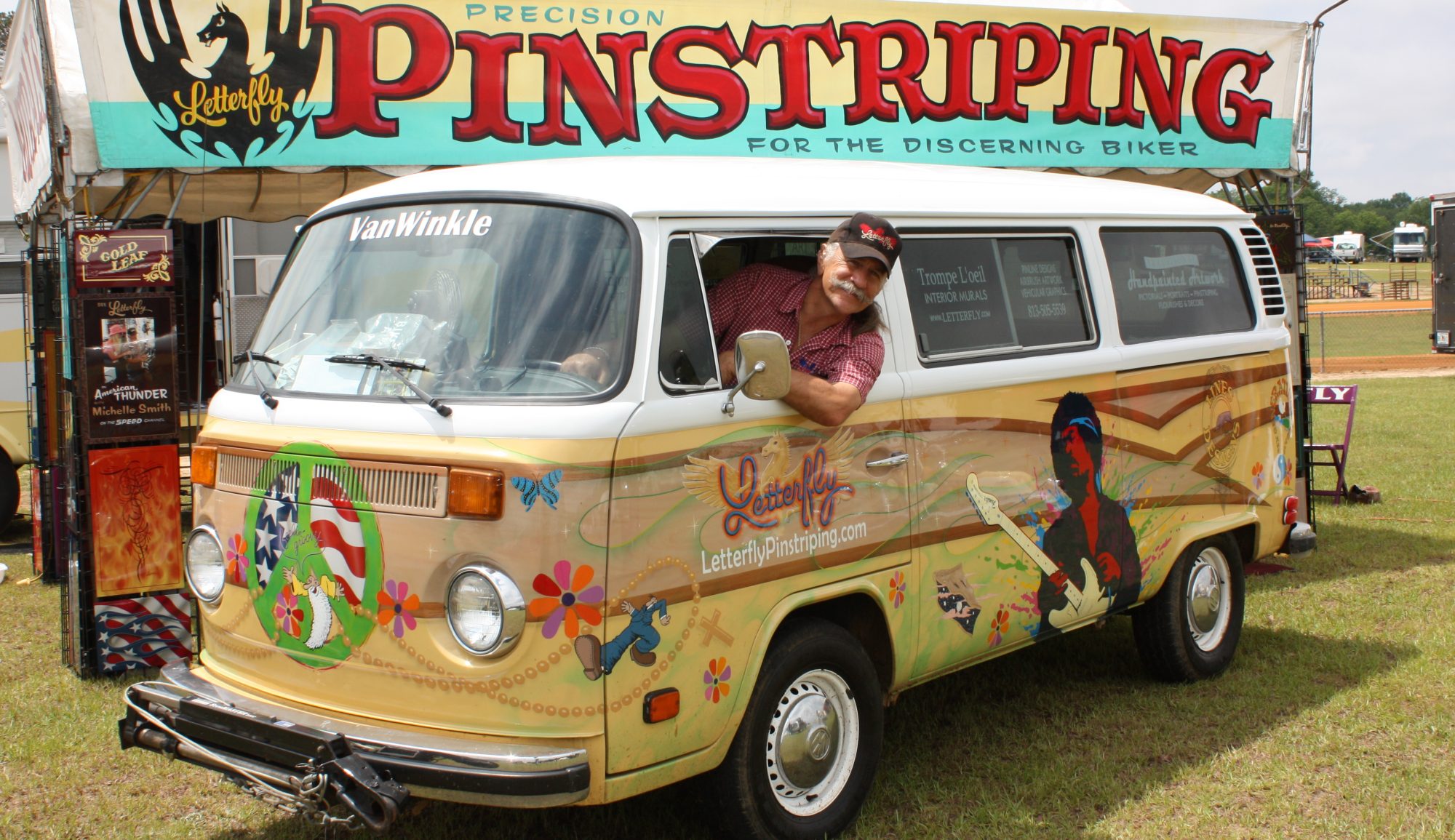
Two Trips

The greatest risk taken daily is when we get behind the wheel. Many of the experiences on the highway made circus workers into safer drivers. Yet, there were many mishaps along the way with the variety of specialized vehicles coupled with their unusual cargo. The fleet on a circus included many truck and trailer configurations and each had their own peculiar handling and safety considerations that often were learned on the job. Aside from tearing the downspout off the side of the house with the family car, I had little time behind the wheel in the suburbs before I hit the road. That would change.

Going across the endless expanse of this country, the open road is where I feel at home behind the wheel. But getting there was not without mishaps. Gratefully, I am alive to tell you about these experiences.

At sixteen years old, I spent the summer playing drums in the circus band between my junior and senior years.  Each morning I rode shotgun in the truck that hauled the elephants, an old gasoline powered semi-truck with a multiple-speed standard stick-shift transmission.

I was content to experience those early mornings as a passenger, listening to the colorful stories of show business experiences that my host accumulated due to being born into this business.  I was taught trucker’s etiquette and other rules of the road.  I learned to go down a mountain grade in the same gear as you went up to utilize the compression of the engine to assist with braking, rather than taxing and overheating the conventional braking system. These and other skills were learned through observation during these early mornings with an experienced driver.

During that summer away from home, we played one-night stands in the mountains of Kentucky, Tennessee, Virginia and the Carolinas.  By paying attention to the procedure for climbing and descending mountain grades, the drivers of the show trucks went painfully slow, but made it safely to each location.

One morning as I gulped down my coffee in preparation for a long ride to the next town, I learned one of the drivers had quit.  The manager was one driver short when he came to me.  I explained that I didn’t know how to shift the gears on a multiple-speed standard transmission. After additional deliberation the manager elected to put another kid in the truck with me. He wasn’t old enough to have a driver’s license but was familiar with the mechanics of shifting the manual transmission.  Although reluctant, soon I sat behind the biggest steering wheel I had ever seen in my life! The load was a cargo of wild animals, the side show tent and related equipment – all dependent on me to get them to the next town.

I was instructed to follow the elephant truck.  As we inched our way off the circus lot and onto the road, the younger kid did display a working knowledge of shifting gears and in no time, we were keeping up with the pachyderms. Entering some rugged inclines, we had to gear down to match the pace of the heavier vehicle we were following.  At a snail’s pace, there was plenty of time to see the sights.  As our altitude increased, the occasional gap in the trees that lined the road yielded breathtaking views of the Appalachian scenery.

When we reached the top of the mountain, the elephant truck pulled over to the side of the road.  As I waited, the driver walked back to give us instructions. 

“Leave it in low gear as we go down this grade” he said, “and when you see me start to go faster, just mash in the clutch and keep up.”

All went well going down that long curvy mountain road.  The compression of the engine held the rig in check so the descent was slow and safe.  When we entered the bottomlands, the elephant truck began to pull away. I did as instructed and mashed in the clutch.  We were freewheeling.  The jump to the next town now involved a faster rate of speed.  Soon we would be sitting in the cookhouse.  The road resembled a roller coaster. At one point I became concerned about our excessive speed. I let up on the clutch pedal that I had been holding to the floor, as per instructions: “mash in the clutch and keep up.”

My passenger noticed an unusual noise.  His expression of eyebrows up and down while looking around caused concern to arise in me.

“We had a blowout!” he exclaimed.

I looked for a place to pull over.  At a wide area on top of a hill, I parked the rig and he jumped out to look at the tires.  In a moment he got back in the cab of the truck. With no change in his facial expression he reported, “All of the tires are fine.”

I attempted to move the truck by shifting into first gear but the truck wouldn’t move.  I tried again, frantically retracing steps I had recently learned.  Mash the clutch pedal down and push the stick into first gear, then let it out slowly and give it some gas.  Although the engine ran, none of my efforts would make the truck move forward. I experimented.  I soon discovered I didn’t need to engage the clutch to get the truck into gear- any gear for that matter. The truck would not move.

My sidekick disappeared to flag down the next show vehicle driving by.  When the rig arrived, our situation was assessed. Since the kid was on a set up crew he was taken along to go to the next location to go to work. I was left alone on the side of the road with the disabled truck.

To find comfort in this awkward situation, I climbed up to the top of the rig and reclined on the roof over the wild animals. From there I could look back up the highway. I sought a glimpse of the mechanic’s big red truck pulling his house trailer. I had plenty of time to see the sights, study the trees and watch the birds in flight.  I waited for Ralph who would know what to do.

As each far-off sound grew into a recognizable tire roar, I strained to see if it was the mechanics rig.  Countless times, I heard a monotone crescendo that would raise my hope.  But a car would emerge from around that distant curve in the road, and I would melt back into my original position to wait for the next vehicle.

When the red nose of the tool truck finally rounded the bend, I immediately stood up on the roof of the broken-down rig and waved my arms frantically. Ralph the mechanic guided his rig to a stop behind the cage truck.

“What’s the matter?” he asked. 

“I don’t know, Ralph,” I offered, “but I can get it to go in any gear without using the clutch.”

Ralph first looked into the cab of the truck to familiarize himself with this symptom. As he manipulated the stick shift his facial expression changed and he gave me a menacing look.  He then got out and looked under the truck at the transmission.  Recognizing the culprit, his diagnosis was swift and silent. 

He offered, “Wait here, I’ll have to double back with another truck to tow this in.”

Frustrated and alone, I watched Ralph’s rig inch away and disappear over the distant hill.

Once again, I had plenty of time on my hands.  I climbed back onto the roof of the cages and sat there.  Ralph would get his rig to the next town and unhook one of the other circus trucks to double back. Doubling back consumed lots of time.  Of those remaining miles ahead of this disabled rig, Ralph would have to travel them three times.  I waited.  I missed the hot breakfast at the cookhouse and would be unpopular with the side show crew who needed this equipment before their tent could go up.  The animals on board would be hot and hungry too.  The plywood doors that covered the cage bars wouldn’t be removed until the rig arrived at our destination.  Then the animals would receive their food and water.  They waited in the dark, on the side of the road, just like me.

My usual exuberance eroded further as I sought to understand what had happened with the truck. The minutes blended into the height of day until Ralph’s return jostled me from slumber.

Ralph wasn’t at all happy. When a fleet makes one day stands, the mechanic, out of necessity, must stay with the broken-down vehicle non-stop until it is fixed so as to not interrupt the momentum of the caravan.  Ralph would stay up all night working on this truck if necessary to have it ready for the jump in the morning.

He had brought along another driver to steer the broken truck as it was towed behind the bobtail semi-tractor. Harold the elephant man had a grin on his face. I was no longer needed.

As I slipped into a blend of grief, guilt and shame, I tried to understand what I did. After all, I had followed the instructions that I had been given. 

I recalled Melvin’s instructions,” Leave it in first gear and follow me down the mountain, when you see me pull out, mash the clutch in and keep up.”

So that’s what I had done. Exactly.

When we arrived at the circus lot, all the tents were erected and everything was ready for the afternoon show.  I began to carry my black fiber drum cases into the eerie silence of the Big top and hoist them onto the bandstand.  As everybody got their much-needed rest, I set up my drum kit.  I lifted each drum from its protective case and clamped it into position. I reviewed once more the truck instruction scenario: “Leave it in first gear…”

When the last wing nut secured the final cymbal, all that was left was for me to arrange my sticks. As activities on the midway began to stir, I was hungry having missed all the meals. I would make a meal out of a box of popcorn.

Soon the hub-bub of ballyhoo began. The gathering crowd became the reason why we are here. The audience filed into the tent and the seats began to fill. A whistle blew. This was the start of yet another show. I settled into drumming. I provide the heartbeat and punctuation for the performers. At last, comfort returned. 

I made my contribution to the show my very best. Drumming adds a lot to the live show of the circus and drums provide the heartbeat and sets the pace that audience and performer rely upon. My job was to creatively emphasize key portions of the acts to create moods, heighten audience awareness and to accent achievements. My responsibility was to make the show even more lively and entertaining.

As the drummer, I add new heights, create suspense, and call attention to the subtler aspects of each performer’s routine. As they take their bow and style for the audience, the riffs created just for them increase the response they receive. When I was successful, the audience had more to appreciate and the performer received a bigger applause. Later, at the cookhouse the performers would mention their appreciation to me.  As a drummer I was constantly creative, experimenting with countless fills, licks and rhythmic combinations of sounds available from a set of drums.  Never bored, my aspiration was to be one of the best in the business. And with that, another show came to an exciting conclusion. Finally, it was time to go to the cookhouse. 

The portable tables found everyone fussing about the broke down side show truck. I felt alone as I stood in line for my food. Still very much the rookie, I didn’t understand what it was that I did that caused the truck to breakdown.  While I ate, the mechanic entered the cookhouse tent. Ralph had grease all over him that provided contrast to his white gap tooth smile. He also had a foreign looking disc in pieces, in his hand. He sought me out recognizing an opportunity to make the entire crew laugh.

“Drummer boy,” He said good-naturedly but sternly in front of everyone, “you made two trips in one: your first and your last!”

The Circus

“It takes courage to grow up 

and become who you really are.”

e. e. cummings

Cherry Pie

Bill imprinted his son with a love for the circus due to the experience he had as a boy. The primary reason for this fascination was the enormity of the tented city and the swiftness of moving every day by rail. Several trains brought attractions from all over the world, the infrastructure to support hundreds of people, and the venue for the audience along with an amazing number of animals.

The amount of work accomplished rapidly on the giant tented circus during the golden age of the big top, utilized many clever devices unique to the culture to facilitate these accomplishments. For those brave enough to join, in the midst of this staggering amount of work getting done every day, every new rookie was asked a question, “Do you want some cherry pie?”

Have you have ever been the greenhorn? Perhaps you remember the anguish of learning a new job, wondering “will I ever fit in?” and the struggle to learn an unfamiliar skill from a new boss. The offer of a delectable confection interrupted those distractions for a moment, and promoted a predictable response.

“Yeah!”

He next received instructions to announce this eagerness to the nearby canvas boss, menagerie superintendent, side show captain, or prop hostler overseeing part of the many set-up processes all going on at the same time. Once this eager worker announced he wanted some cherry pie, that was the inside cue to give him an additional task.

Assessing the workload, available labor and balancing progress, the boss looked around and evaluated tasks that needed additional help; driving stakes, unloading and carrying ring curb, arranging prop trunks, moving seat planks into position, or any part of the many routines going on. The expectant rookie was assigned an additional task, followed with instructions to get it done every day and at night make sure he got it loaded onto the right wagon.

This creative way of assigning specific tasks was just one of the reasons the circus was able to accomplish so much each day. The rest of the troop then had a laugh at the expense of the bewildered recruit. They welcomed him to the crew, and the tented city went up a little faster from that day forward. 

The year was 1970. I spent fourteen glorious weeks, from June until September, on the Clark and Walters Circus. The Silverlake family operation had been purchased a few years prior from a showman in Oklahoma. Brownie was the Patriarch of all things circus. As was typical with circus families, all members of the Silverlake family had an act and a specialty task. They all pitched in with the operation of the show and worked together as a team.

I was eager to learn all I could in order to become a valuable showman. Franklin taught me how to splice three strand manila rope. I learned the proper way to install a twist lock plug on the end of an electric cord from Jimmie. And Melvin showed me how to solder a damaged microphone connection. I also learned how to sew a baseball stitch to repair a hole in the big top from Jack, the canvas boss, and even how to twist a whip-popper, the special part on the end of the whip that makes the noise, among other specialties.

 Brownie had time to share stories as he took care of the animals, so I typically followed him around as his helper. I learned about his wagon show days on the M L Clark Circus when he was a boy. I remember his story about when the Mighty Haag Circus was confronted with a steep and dangerous highway grade. This is when the elephants were literally walked over the mountains through to the other side, even though the teams and wagons kept to the roads.

Brownie tutored me with the same kindness he showed the animals in his care. As a newcomer to the show, my job was to play the drums during the show to accompany the calliope music of Bobby Green.  The rest of the time I was all over the circus lot involved in a litany of creative tasks. These included the set-up, maintenance, caretaking of animals, but my creative drive found expression with paint as I lettered Tickets, Jungle Beasts, Alive and decorative accents on the rolling stock. While we toured Appalachia, they tried the cherry pie trick on me, but because I was motivated and eager, the trick was irrelevant.

That summer whet my appetite to live a more interesting life. It filled me with an enthusiasm and a decision to continue my career in show business. Returning home at the end of the summer, I took welding at night. In January, after graduating from high school early, my fascinating career began. My creative drive, ambition and gift as a painter took precedence over all else and, I began to combine being an artist with travel.

Drummer (part 2)


I was obsessed with becoming a better drummer as I began my sophomore year. I had taken lessons at Indiana University and practiced every day during the previous year.

                Bloomington High School had a gifted band teacher who motivated his students to pursue music as a career. At the beginning of the year Mr. Traub placed me in the band room during an hour the classroom wasn’t being used so I could practice and he monitored my progress. He noticed my improvement and by mid-football season he started me through the ranks. I was placed in the marching band as a tenor drum player and by the beginning of the second semester I was the first- chair snare drummer for the Symphonic Wind Ensemble. This was the equivalent of joining the college orchestra.

I met Karen while in the band that year too. She was an aggressive red head. She knew what she wanted. I had been a sheltered, reclusive and socially clumsy kid. A whole new world opened to me. Karen always had something in mind and she knew exactly what to do. After school and all summer long, she taught me all physical aspects of relationship between the sexes. Eager to be with her, I would do almost whatever she wanted me to do.

This university town had no jobs for a fourteen-year-old because of the abundance of college students. It was early summer when the Deggeller Shows brought a bunch of carnival rides to the university campus for the Fun Frolic. I was there early looking for a job. Despite this not being a traveling circus, it did qualify as show business.  I got a job helping set up the Merry-Go-Round, working with a man and his son with whom I became friends. Together we worked and eventually hung the last horse on the ride. We then started to assemble the kiddie rides. Unloading the specially-shaped steel components from trucks with broken bulb glass on the floor revealed an interesting contrast to the form of show biz I was familiar with. Behind the scenes, I was seeing the amusement business as it really was. Once the rides were ready, I returned home to clean the dirt and grease off of me. I was told to return the next day, so I must have done a good job.

When the festival started, I ran one of the kiddie rides. My job was to stand at the controls, welcome the patrons, and make sure they were settled into their seats before turning the switch to start the ride. If no one was waiting in line, I gave my passengers an extra-long ride. I was grateful to have employment for the week and it filled me with a feeling of accomplishment.  Karen hung around while I worked, but something was clearly bothering her.

“I think it’s terrible,” she wailed, “that you work all the time.”

Her inability to empathize with the value of this opportunity combined with a feeling of frustration that grew in my gut. This strong sensation literally reached up inside me and grabbed me much like the reaction that took my voice when I watched bullies pick on my brother. Karen maintained this negativity all the time I did my job. She insisted that I take a day off and accompany her around to all the rides. Reluctantly, I did what she asked.

The next day, I explained to my boss my plans to escort her around the festival grounds instead of returning to my post. When I returned the following day, I discovered my job had been filled. I learned two valuable lessons on one day; never let them discover that they can get along without you, and career always comes before girlfriend.

While excelling at math, John learned the machine language computers spoke. At Bloomington in high school, he wrote elaborate programs using punch card sequences that would solve mathematical problems. He understood and developed a mastery of complicated systems using binary code.

My father’s climb through the ranks and his ambition with newly acquired graphic skills landed him a job in the Lutheran synod offices in downtown Chicago. The family would move again, this time to the suburbs of a sprawling metropolis. My family moved twice during my high school years. First to Bloomington, Indiana so Dad could expand his skills at Indiana University with a second Master’s Degree. Then, two years later to Chicago, Illinois so he could fill an important role downtown. He used the Airstream to move the bulk of our possessions, with the exception of the piano.

John graduated from high school as the family moved from Indiana to the Chicago suburbs.  John stayed behind and began his college years at Indiana University. The students were older but still mean to John. He chose to withdraw and excel academically. He took classes for many years until exhausting the curriculum. From there he launched his career as a computer programmer.

All the summer school college students eventually went home. A short window of opportunity existed so I started looking for a job. I went into the Lucky Steer Steak House. The boss asked me if I could start immediately. He then showed me the dish room with hundreds of dirty dishes piled up to the ceiling. I started immediately. Three days later I was cooking steaks. Dad learned of and appreciated my ambition. He was busy moving the family’s belongings to Chicago with the airstream and waited for the last minute before taking me with him.

I arrived at our new home late at night and slept a few hours. The next day was my first day of school. In the morning, I was dropped off early in front of an unfamiliar school. I received my class assignments at the administration office at Arlington Heights High School. I searched up and down the hallways for the room numbers on my list, and finally gave up. I could not find them.

Not knowing which way my home was, I had no options. Frustrated, all I could do was sit down on the front steps of the school while the classes were going on. A friendly counselor saw me from a distance and came to sit down next to me to find out what was going on. He looked at my admissions card and he too realized that I had been given room numbers that did not exist. Confusion at the Chicago school system started with this debacle on my first day and spiraled down from there. As I entered my junior year, the tainted perception of my new school and surroundings bred a new-found apathy and defiance.  Expecting the same positive experience that I enjoyed in band in Indiana, I soon realized that Fritz Shmoyer, the band teacher, was incompetent and simply coasting along on tenure. He was apathetic about his job and didn’t encourage any students. Because I made this comparison, I knew he was a slug and began my defiant response to his pathetic efforts.

Fortunately, John stayed in Bloomington. Paula and I were relieved that none of our new colleagues would ever know about our brother, but we found a new set of frustrations. The big city pace of suburban Chicago, the dysfunctional school system, and the beat among our fast-paced peers had its own mix that led to a new exasperation for myself and Paula. 

Also fortunately, the art department at my new school was outstanding and far better than any previous art classes. Mr. Pink became an advocate for my ambitions. He encouraged my emerging skills and created many artistic opportunities for me.

Drummer

I was obsessed with becoming a better drummer as I began my sophomore year. I had taken lessons at Indiana University and practiced every day during the previous year.

                Bloomington High School had a gifted band teacher who motivated his students to pursue music as a career. At the beginning of the year Mr. Traub placed me in the band room during an hour the classroom wasn’t being used so I could practice and he monitored my progress. He noticed my improvement and by mid-football season he started me through the ranks. I was placed in the marching band as a tenor drum player and by the beginning of the second semester I was the first- chair snare drummer for the Symphonic Wind Ensemble. This was the equivalent of joining the college orchestra.

I met Karen while in the band that year too. She was an aggressive red head. She knew what she wanted. I had been a sheltered, reclusive and socially clumsy kid. A whole new world opened to me. Karen always had something in mind and she knew exactly what to do. After school and all summer long, she taught me all physical aspects of relationship between the sexes. Eager to be with her, I would do almost whatever she wanted me to do.

This university town had no jobs for a fourteen-year-old because of the abundance of college students. It was early summer when the Deggeller Shows brought a bunch of carnival rides to the university campus for the Fun Frolic. I was there early looking for a job. Despite this not being a traveling circus, it did qualify as show business.  I got a job helping set up the Merry-Go-Round, working with a man and his son with whom I became friends. Together we worked and eventually hung the last horse on the ride. We then started to assemble the kiddie rides. Unloading the specially-shaped steel components from trucks with broken bulb glass on the floor revealed an interesting contrast to the form of show biz I was familiar with. Behind the scenes, I was seeing the amusement business as it really was. Once the rides were ready, I returned home to clean the dirt and grease off of me. I was told to return the next day, so I must have done a good job.

When the festival started, I ran one of the kiddie rides. My job was to stand at the controls, welcome the patrons, and make sure they were settled into their seats before turning the switch to start the ride. If no one was waiting in line, I gave my passengers an extra-long ride. I was grateful to have employment for the week and it filled me with a feeling of accomplishment.  Karen hung around while I worked, but something was clearly bothering her.

“I think it’s terrible,” she wailed, “that you work all the time.”

Her inability to empathize with the value of this opportunity combined with a feeling of frustration that grew in my gut. This strong sensation literally reached up inside me and grabbed me much like the reaction that took my voice when I watched bullies pick on my brother. Karen maintained this negativity all the time I did my job. She insisted that I take a day off and accompany her around to all the rides. Reluctantly, I did what she asked.

The next day, I explained to my boss my plans to escort her around the festival grounds instead of returning to my post. When I returned the following day, I discovered my job had been filled. I learned two valuable lessons on one day; never let them discover that they can get along without you, and career always comes before girlfriend.

While excelling at math, John learned the machine language computers spoke. At Bloomington in high school, he wrote elaborate programs using punch card sequences that would solve mathematical problems. He understood and developed a mastery of complicated systems using binary code.

My father’s climb through the ranks and his ambition with newly acquired graphic skills landed him a job in the Lutheran synod offices in downtown Chicago. The family would move again, this time to the suburbs of a sprawling metropolis. My family moved twice during my high school years. First to Bloomington, Indiana so Dad could expand his skills at Indiana University with a second Master’s Degree. Then, two years later to Chicago, Illinois so he could fill an important role downtown. He used the Airstream to move the bulk of our possessions, with the exception of the piano.

John graduated from high school as the family moved from Indiana to the Chicago suburbs.  John stayed behind and began his college years at Indiana University. The students were older but still mean to John. He chose to withdraw and excel academically. He took classes for many years until exhausting the curriculum. From there he launched his career as a computer programmer.

All the summer school college students eventually went home. A short window of opportunity existed so I started looking for a job. I went into the Lucky Steer Steak House. The boss asked me if I could start immediately. He then showed me the dish room with hundreds of dirty dishes piled up to the ceiling. I started immediately. Three days later I was cooking steaks. Dad learned of and appreciated my ambition. He was busy moving the family’s belongings to Chicago with the airstream and waited for the last minute before taking me with him.

I arrived at our new home late at night and slept a few hours. The next day was my first day of school. In the morning, I was dropped off early in front of an unfamiliar school. I received my class assignments at the administration office at Arlington Heights High School. I searched up and down the hallways for the room numbers on my list, and finally gave up. I could not find them.

Not knowing which way my home was, I had no options. Frustrated, all I could do was sit down on the front steps of the school while the classes were going on. A friendly counselor saw me from a distance and came to sit down next to me to find out what was going on. He looked at my admissions card and he too realized that I had been given room numbers that did not exist. Confusion at the Chicago school system started with this debacle on my first day and spiraled down from there. As I entered my junior year, the tainted perception of my new school and surroundings bred a new-found apathy and defiance.  Expecting the same positive experience that I enjoyed in band in Indiana, I soon realized that Fritz Shmoyer, the band teacher, was incompetent and simply coasting along on tenure. He was apathetic about his job and didn’t encourage any students. Because I made this comparison, I knew he was a slug and began my defiant response to his pathetic efforts.

Fortunately, John stayed in Bloomington. Paula and I were relieved that none of our new colleagues would ever know about our brother, but we found a new set of frustrations. The big city pace of suburban Chicago, the dysfunctional school system, and the beat among our fast-paced peers had its own mix that led to a new exasperation for myself and Paula. 

Also fortunately, the art department at my new school was outstanding and far better than any previous art classes. Mr. Pink became an advocate for my ambitions. He encouraged my emerging skills and created many artistic opportunities for me.

The Move

During the years of evolving in his profession in Springfield, Ohio, my dad became aware of how rapid graphic technology was developing. Changes were taking place with photography, film making, sound technology and education. His beloved boss was retiring and that would change his position in the hierarchy. He recognized a possible opportunity. He desired additional education to augment his skills with new audio-visual knowledge. That meant change.

The family moved to Bloomington, Indiana as I entered junior high school. Dad attended classes at Indiana University. The move into a compact home in a neighborhood with a dense population of kids also required us to ride a bus to school.

Moving away from the environs of childhood in Ohio at a tender age, we had to make new friends in another town. This disruption frustrated our meager attempts to fit in. The home situation remained frustrating and my sister and I realized being associated with John was a detriment. As we advanced through the grades, we formulated a way to stay far away from him and be safe. When Paula and I passed one another in the hall at junior high school, rather than acknowledge each other, we remained anonymous in an effort to avoid the risk of association. We would resume being fast friends at home in safety.

At that time, I was on fire to become a good drummer. The music department at IU provided me with an opportunity to take lessons from a great drumming college student. After my junior high school classes each Thursday, I went over to the IU campus to take my lesson. Afterwards I met dad, who was working in the graphics lab. He would show me what he was doing with photography and sometimes set me up in an empty darkroom with an enlarger and show me how to make my own prints.

By this time my circus producing abilities matured. By summer I would put on an even larger production, adopting the name my dad and his friend Fred used many years ago; Spark Circus.

I began building cages for chickens, rabbits and the turtles I accumulated. While I painted promotional signs, Paula began making hats and necklaces out of packing peanuts and paper bowls. The neighborhood kids were curious about what we were doing and were recruited one by one to help. Soon we had two crews; the boys helping me with manly activities and the girls making prize and craft items under Paula’s watchful eye.

The masculine duties were pounding stakes into the ground and setting up and climbing the center pole we erected in the backyard. Stretching a rope tight enough to walk across became a challenge that required accumulating ever larger stretching-devices. We practiced Indian dancing routines, acrobat tumbling and hanging upside-down from the trapeze bar on the swing-set. We rehearsed these acts until we achieved an admirable level of perfection.

thumbnail 2

During the girl’s production of a mountain of prizes, Paula would pause to rehearse one of the skits she created. We had learned about skits on family vacation. The Lutheran church had a family summer camp near Lakeside, Ohio. While there, mom and dad would compose a clever skit and the entire family would act it out in front of the others. Paula had begun writing stories in her Pinfoot the Pony comics. Now inspired by our family vacation skits, she created routines for her peers to perform.

One routine Paula created for our circus utilized a chorus line of her girls pointing in rhythm, one at a time, and then changing their pose and repeating a cute-over-there dialog that ended with all of them falling in a heap.

Thanks to an abundance of Beatle wigs and a neighbor kid with a buzz haircut, the circus had a barber shop skit that began with a very furry head and ended up with a faux surprised kid with a bald noggin.

All this rehearsing united us on circus day when, like a real show, all of our equipment and our big top (a converted army surplus parachute) was marched, carried or pulled to the vacant lot next to the local swimming pool to be set up. We arranged the set-up to occur in the morning by our team of kids, followed by presenting five shows. The activity brought the entire neighborhood together. My circus benefited the community pool and produced a considerable profit for my investment. It also gave me the idea for a career path to pursue.

Family Vacations

Every summer, our family took two vacations, one to the sand dunes area near Lake Michigan – either Ludington or Muskegon, just to relax and the other was a road trip to a different destination. We started these camp outings with a borrowed tent packed into the family station wagon. Once together at the national park, after setting up on our site, we then marveled at the other camping configurations. Sleeping on the ground only happened once. This ordeal was not something my mother savored or wanted to do again and that introduced the idea of finding a travel trailer.

Once home, they researched the best camping trailer to purchase and began a search for a good used one. There were many to look at. Frequent short trips around the area included a foray to look at an old trailer. We had to go along, I’m not sure why. They finally did find one to buy. An Airstream trailer that could house us all.

Mother often asked a question at the end of the day, “What did you enjoy most about today?”

On that particular day, all three of us answered in unison, “Not having to go look at another trailer.”

Equipped with this Airstream, many faraway destinations became achievable in comfort. Dad made several improvements to the trailer over the years. Our trips took us to places we could not have seen without it. We camped near the New York World’s Fair, Colonial Williamsburg, and attended the Centennial of the battle at Gettysburg. One trip took us to see cousins in faraway Connecticut and one year we even made it to the Smokey Mountains.

The Newspaper Business

When my brother became eleven, he secured a paper route, on which I helped. This gave us responsibility, income and introduced us to some of our neighbors. John finally found a safe way to interact with others as he provided this service to his customers. Rather than becoming more social, I became adept at rolling my papers so I could throw them while pedaling my bicycle along my route to accomplish this duty in record time. The element I did not like was collecting the money at the end of the week. That part required that I become social and interact with others. One week I failed to collect enough money to pay for my papers. Instead of my payment envelope containing the full amount, I wrote an angry note to the man who collected the money. When I returned from my paper route that day, he was waiting with my mother in the living room.

“David,” my mother asked, while the man looked on, “what does this note mean?”

“I don’t know,” I sheepishly replied.

“You agreed to do every part of your responsibility when you took this paper route didn’t you?” She inquired and then added, “This note isn’t very nice. Is it David?”

“What are you going to do about it?” she asked. 

I turned to the man who had been waiting with my mother and apologized, “I’m sorry,”

I said, “I will go and collect all the money tomorrow after school.”